
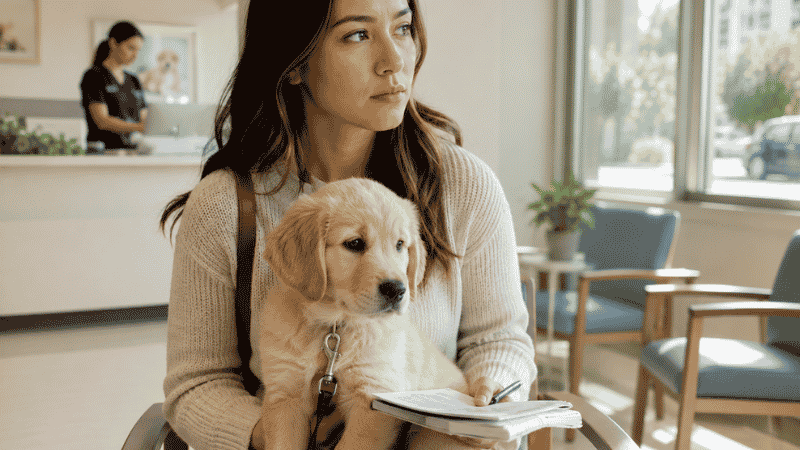
The first time you take your puppy to the vet for their vaccinations, you might find yourself staring at a schedule that looks like a foreign language. DHPP. Bordetella. Leptospirosis. Core versus non-core. Two to four weeks apart. The vet is explaining everything clearly, but your puppy is doing something adorable on the table, and honestly, your brain checked out around “adenovirus.”
You go home with a printout. You lose the printout. Three weeks later, you’re Googling “what shots does my puppy need” at midnight because you can’t remember if the next appointment is at 12 weeks or 16 weeks.
This guide is the one you should have been given on day one. It explains the complete puppy vaccination schedule in plain language — what each shot does, exactly when to get it, how much the whole first year costs, and what to watch for after each visit. No medical jargon, no lost printouts.
Key Takeaways
- Puppies need 3 to 4 vet visits in the first 16 weeks specifically for vaccinations, plus a one-year booster visit.
- Core vaccines — the ones every puppy needs regardless of lifestyle — include DHPP (a combination shot) and rabies. Everything else is lifestyle-dependent.
- The full first-year vaccination series typically costs $200 to $400 total, depending on location and which optional vaccines your vet recommends.
- Your puppy can go outside after their first vaccination — but should avoid dog parks, pet stores, and areas frequented by unknown dogs until the full series is complete at 16–18 weeks.
- Mild reactions after vaccines (sleepiness, slight soreness) are normal for 24–48 hours. Specific symptoms warrant a call to your vet immediately.
Why Puppies Need So Many Shots — The Short Version
If you’ve wondered why the vaccination schedule involves so many visits and so many individual doses, the biology behind it is actually straightforward.
Puppies are born with temporary immunity borrowed from their mother — antibodies passed through her colostrum (the first milk) that protect them in the first weeks of life. The problem is that this maternal immunity also blocks vaccines. Give a vaccine too early and those maternal antibodies will neutralize it before the puppy’s own immune system can respond.
Here’s the catch: maternal immunity fades at different rates in different puppies. Some puppies lose it at 6 weeks; others hold onto it until 14 weeks. There’s no way to know exactly when each individual puppy’s window of vulnerability opens.
This is why the vaccination schedule involves a series of doses spaced 2 to 4 weeks apart — not because the vet is trying to fill your calendar, but because the series ensures that at least one dose lands during the window when the puppy’s immune system is ready to respond. Each dose builds on the last, progressively strengthening protection.
By the time the series is complete at 16 to 18 weeks, your puppy has solid, lasting immunity against the diseases the vaccines cover.
Core vs. Non-Core Vaccines: The Essential Distinction
Before getting into the schedule, it helps to understand this division — it’s the key to making sense of everything your vet recommends.

Core Vaccines — Every Puppy Needs These
Core vaccines protect against diseases that are widespread, highly contagious, and severe enough that the risk applies to virtually every dog regardless of lifestyle. The American Veterinary Medical Association and the American Animal Hospital Association both classify these as essential for all puppies.
DHPP (also written as DA2PP, DAPP, or DHLPP depending on the clinic): This is a single combination shot that protects against four diseases:
- Distemper — a serious viral disease affecting the respiratory, GI, and nervous systems. No cure exists; it is often fatal.
- Hepatitis (Adenovirus) — affects the liver and other organs; can cause death in severe cases.
- Parvovirus — an extremely contagious GI disease that causes bloody diarrhea, rapid dehydration, and can kill puppies within 48 to 72 hours without treatment.
- Parainfluenza — a respiratory virus that contributes to kennel cough.
Rabies — Required by law in every U.S. state. Rabies is fatal once symptoms appear and can be transmitted to humans, which is why it carries legal requirements that other vaccines do not.
Non-Core Vaccines — Based on Your Puppy’s Lifestyle
These are genuinely valuable vaccines, but whether your puppy needs them depends on their specific risk exposure. Your vet will ask about your lifestyle, location, and how your puppy will interact with other dogs.
Bordetella (Kennel Cough) — Highly recommended for any puppy who will attend puppy classes, boarding, grooming facilities, dog parks, or daycare. If your puppy’s life will involve regular contact with other dogs, this one is essentially non-negotiable in practice even though it’s technically “optional.”
Leptospirosis — A bacterial disease spread through contaminated water and soil, and transmissible to humans. Recommended in areas with wildlife exposure, standing water, or known leptospirosis cases. More relevant than many owners realize — even urban dogs who walk on grass can be exposed.
Lyme Disease — Relevant in tick-heavy regions, particularly the Northeast, Upper Midwest, and Pacific Coast. If you live in or regularly visit areas with high tick populations, discuss this with your vet.
Canine Influenza (Dog Flu) — Recommended for dogs who frequently board, attend daycare, or travel to areas with active outbreaks. Two strains exist (H3N2 and H3N8); some vaccines cover both.
The Complete Puppy Vaccination Schedule
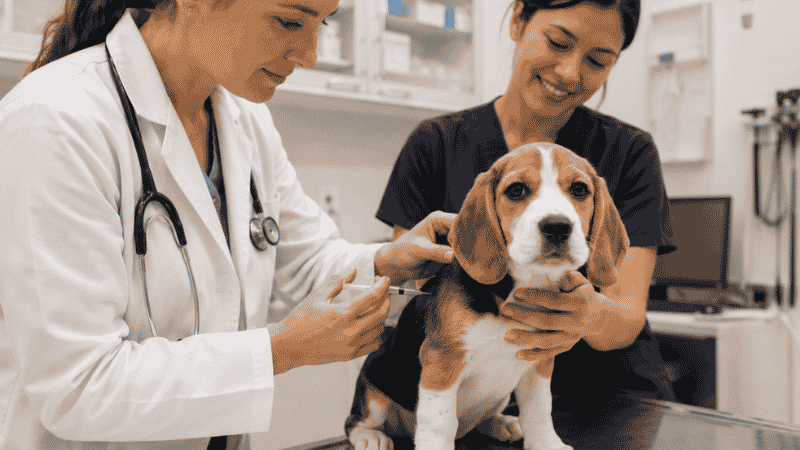
Here is the full schedule from your puppy’s first shots through their one-year booster. Note that exact timing is determined by your vet based on your puppy’s age and health — this is the standard framework recommended by veterinary guidelines.
6 to 8 Weeks — The First Visit
Core: First DHPP dose Optional: Bordetella (if early socialization or daycare is planned)
This is usually the age at which puppies come home from a breeder or rescue. The first DHPP starts building the foundation of immunity. Your vet will also do a thorough physical examination, check for parasites, discuss deworming, and talk through nutrition and feeding.
This visit is important even if your breeder claims the puppy already received their “first shot” — you need to know exactly what was given and when, and your vet needs to establish a baseline record for your specific puppy.
10 to 12 Weeks — Building Immunity
Core: Second DHPP dose Optional: Bordetella (if not given at 6–8 weeks), first Leptospirosis dose, Lyme disease, Canine Influenza (first dose)
The second DHPP builds on the first. By this point, some maternal antibodies have faded for many puppies, meaning this dose is doing real immune-system work rather than just waiting in reserve.
If Leptospirosis is recommended for your area, it starts here as a two-dose series given 3 to 4 weeks apart.
This is also the visit where socialization becomes a more urgent conversation. The critical socialization window — when puppies most easily adapt to new experiences — closes around 12 to 16 weeks. Your vet will advise on how to safely begin socialization before the vaccine series is complete.
16 to 18 Weeks — The Final Puppy Series
Core: Third DHPP dose, Rabies vaccine Optional: Second Leptospirosis dose, Lyme disease booster (if started), Canine Influenza booster, Bordetella booster
This is the most important visit in the puppy series. The third DHPP completes the core protection, and the rabies vaccine is administered — legally required and medically critical. After this visit, your puppy has completed their primary series and has solid protection against the major diseases.
If your puppy came home later (say, at 12 weeks), your vet may adjust the schedule to compress or extend the timeline appropriately. The specific timing matters less than the intervals between doses and completing the series.
12 to 16 Months — The One-Year Booster
Core: DHPP booster, Rabies booster Optional: Leptospirosis annual booster, Bordetella booster, Lyme disease booster, Canine Influenza booster
This visit is one new owners commonly forget to schedule. The one-year booster is not optional — it reinforces the puppy series and transitions your dog into their adult vaccination schedule. Mark it on your calendar from the day you leave the final puppy visit.
After this point, most adult dogs follow a schedule of DHPP every 1 to 3 years (depending on the vaccine formulation and your vet’s recommendation) and rabies every 1 to 3 years as required by local law.
What It All Costs: An Honest First-Year Breakdown
Vaccination costs vary significantly by location, clinic type, and which optional vaccines are included. Here is a realistic estimate for most U.S. owners:
| Visit | Approximate Cost |
|---|---|
| 6–8 week visit (exam + DHPP) | $75–$130 |
| 10–12 week visit (exam + DHPP + optional vaccines) | $75–$150 |
| 16–18 week visit (exam + DHPP + rabies) | $75–$150 |
| 12–16 month booster visit | $75–$130 |
| Total First-Year Estimate | $300–$560 |
A few things that affect cost significantly:
Location: Urban veterinary clinics in high-cost-of-living areas typically charge more than rural or suburban practices. The same vaccine series in Manhattan may cost twice what it costs in rural Tennessee.
Low-cost clinics: Many communities have low-cost vaccination clinics through humane societies, rescue organizations, or municipal programs. These are legitimate options for core vaccines, though they typically don’t include the physical examination that a regular vet visit does.
Wellness packages: Many veterinary practices offer bundled first-year packages that include all exams, vaccines, and sometimes additional services like microchipping or deworming at a reduced total cost. Ask about these at your first visit — they frequently save $50 to $100 compared to paying per visit.
Pet insurance: Some pet insurance plans include a wellness rider that covers routine care including vaccinations. If you’re considering insurance (which makes sense to evaluate before your puppy has any health history), check whether the plan covers preventive care.
Can My Puppy Go Outside Before Vaccinations Are Complete?
This is the question that generates the most confusion and the most conflicting advice online. Here is the practical answer.

The concern: Parvo in particular is extremely hardy — it can survive in soil and outdoor environments for months to years. Areas frequented by unknown dogs (dog parks, pet store entrances, popular walking paths) carry genuine risk for unvaccinated puppies.
The reality: Complete isolation until 16 weeks creates its own problem — that’s exactly the critical socialization window when puppies need exposure to the world to develop into well-adjusted adult dogs. A puppy that misses this window often struggles with anxiety, fear, and behavioral problems that last a lifetime.
The sensible balance:
- Safe: Your own yard (if your dogs are vaccinated), visits to homes of vaccinated dogs, controlled puppy classes held in sanitized indoor spaces, being carried in areas you cannot control
- Avoid until fully vaccinated: Dog parks, pet store floors, shared outdoor water bowls, areas with unknown dog traffic, boarding facilities
Your vet will give you specific guidance based on your local area’s disease prevalence. In regions with known parvo outbreaks, they may recommend more caution. In lower-risk areas, they may give more flexibility.
The AVSAB (American Veterinary Society of Animal Behavior) specifically states that the risks of under-socialization outweigh the risks of disease exposure for most puppies — and that puppy classes beginning after the first DHPP dose are appropriate and important.
After Each Vaccination: What to Watch For
This is the section most guides skip entirely. New owners go home after their puppy’s shots and have no idea what’s normal versus what requires a phone call.

What’s Normal in the First 24 to 48 Hours
- Mild lethargy or sleepiness — your puppy may nap more than usual and seem less playful
- Slight soreness or tenderness at the injection site — they may flinch if you touch that area
- Reduced appetite for a meal or two
- A small, firm lump at the injection site that fades over a few weeks
All of the above are normal immune responses. Keep things calm, offer water, and let your puppy rest.
Call Your Vet If You See
- Facial swelling, especially around the muzzle or eyes
- Hives (raised bumps across the skin)
- Vomiting or diarrhea that starts within an hour or two of the vaccination
- Difficulty breathing, wheezing, or labored respiration
- Sudden collapse or extreme weakness
- The injection-site lump grows larger, becomes warm or painful, or doesn’t fade within a month
These signs can indicate an allergic reaction to the vaccine — uncommon, but possible. Severe reactions typically appear within 30 to 60 minutes of the injection, which is why many vets suggest waiting in the parking lot for a few minutes after each appointment.
One Practical Tip for Every Vaccination Day
Schedule vaccination appointments for a day when you can be home. Not because something is likely to go wrong, but because a tired, slightly sore puppy who has just had a physically and emotionally intense vet visit is genuinely better off with you around. Keep the day low-key — short walks, quiet play, easy meals. It makes the whole experience easier for your puppy, and easier for you.
What If You Miss a Scheduled Appointment?
Life happens. If you miss a scheduled vaccination appointment by a week or two, don’t panic — call your vet and reschedule as soon as possible. Missing by a short window doesn’t require restarting the series.
If the gap is longer — say, several months — your vet will assess the situation and may recommend restarting part or all of the series depending on your puppy’s age and what was already given. The protective immunity from each dose does fade over time if the next dose isn’t given within the recommended interval.
What you should never do is simply skip a scheduled booster and assume the previous doses are sufficient. The series is designed as a whole — each dose builds on the last, and stopping partway through leaves your puppy partially but not fully protected.
A Note on Parvovirus: Why New Owners Should Take It Seriously
Of all the diseases covered by the puppy vaccination schedule, parvovirus deserves special mention — not to frighten you, but because its combination of characteristics makes it uniquely dangerous for unvaccinated puppies.
Parvo is extraordinarily contagious. An infected dog sheds billions of viral particles in their feces, and the virus can survive in outdoor environments for 6 months to a year or longer. A puppy can contract it by walking through an area where an infected dog passed through weeks earlier.
The disease progresses rapidly. Symptoms begin with loss of appetite and lethargy, then progress to vomiting and severe bloody diarrhea. Without intensive veterinary treatment, puppies can die from dehydration within 48 to 72 hours of symptom onset. Treatment — IV fluids, anti-nausea medications, antibiotics for secondary infections — can run $1,500 to $3,000 or more, and there is no guarantee of survival even with treatment.
The DHPP vaccine is highly effective against parvovirus. A fully vaccinated dog has strong, lasting protection. This is why completing the series on schedule matters — parvo is exactly the kind of disease the vaccination schedule exists to prevent.
FAQ: What New Puppy Owners Actually Ask
When does a puppy need their first vaccination? Most puppies receive their first DHPP at 6 to 8 weeks of age. If your puppy came from a breeder, they may have already received a dose — always get the exact records and share them with your vet at the first appointment.
How many shots does a puppy need in total? For core vaccines alone, 3 doses of DHPP plus 1 rabies vaccine in the first year, followed by one-year boosters. Including optional vaccines recommended for your lifestyle, total injections vary but typically range from 4 to 8 across the first-year visits.
Can my puppy go to the dog park after their first shot? No. After the first shot, your puppy has partial but not complete protection. Dog parks specifically carry higher risk because they attract many dogs whose vaccination status you cannot verify. Wait until 1 to 2 weeks after the final DHPP dose (at 16 to 18 weeks) before visiting dog parks.
What is the DHPP vaccine? DHPP is a combination vaccine that protects against four diseases in one injection: Distemper, Hepatitis (Adenovirus), Parvovirus, and Parainfluenza. It may also be labeled DAPP, DA2PP, or DHLPP depending on whether leptospirosis is included.
Is the rabies vaccine required by law? Yes. Rabies vaccination is legally required for dogs in every U.S. state, though the specific requirements (age of first vaccine, booster frequency) vary by state and sometimes by county. Your vet will be familiar with the requirements in your area.
My puppy had a reaction after their shot — what do I do? Mild reactions (lethargy, soreness) are normal and self-resolving. Seek veterinary care immediately for: facial swelling, hives, vomiting within an hour of the shot, difficulty breathing, or collapse. If in doubt, call your vet.
How much do puppy vaccinations cost? Expect to spend $300 to $560 across the first-year series including all vet visit fees, core vaccines, and commonly recommended optional vaccines. This varies significantly by location and clinic type. Ask about wellness packages at your first visit.
Building the Foundation: What Comes After Vaccinations
Completing your puppy’s vaccination schedule is one of the most important things you’ll do in the first year — but it’s the beginning of a lifelong health relationship, not a one-time task.
After the first-year series, most dogs move to an adult schedule of core boosters every 1 to 3 years. Your vet will remind you, but the responsibility ultimately lies with you to keep those appointments. A dog that stays current on vaccinations throughout their life has significantly better odds of avoiding the diseases that cut canine lives short.
The first year is intense. The vet appointments, the schedule tracking, the watching for reactions — it adds up. But by the time your puppy turns one and you walk out of that final booster appointment, you’ve done something genuinely important for them. They’re protected. And that’s worth every single visit.
References
- American Animal Hospital Association. (2022). AAHA Canine Vaccination Guidelines. aaha.org
- American Veterinary Medical Association. (2024). Vaccination FAQ for Dog Owners. avma.org
- American Veterinary Society of Animal Behavior. (2021). AVSAB Position Statement on Puppy Socialization. avsab.org
- Greene, C.E., & Schultz, R.D. (2006). Immunoprophylaxis. In Infectious Diseases of the Dog and Cat (3rd ed.). Saunders Elsevier.
- Sykes, J.E. (2013). Canine and Feline Infectious Diseases. Elsevier Saunders.