
If you’ve ever noticed tiny, black poppy-seed-like specks on your cat’s chin, you’ve likely encountered the frustrating world of Cat Chin Acne. It starts innocently enough—a few blackheads here and there. But for many pet parents, this minor skin irritation quickly spirals into a cycle of swelling, crusting, and painful chin flare-ups that just won’t go away.
As a dedicated cat advocate, I see the same story every day: a worried owner swaps their plastic bowls for ceramic ones, believing they’ve solved the problem, only to find the cat acne chin returning weeks later. Why? Because the “ceramic is best” narrative is missing some crucial scientific details.
Choosing the right dish is only half the battle. To truly protect your feline friend, you need to understand the hidden mechanics of bacterial growth and skin health. In this guide, we’re peeling back the layers on Cat Chin Acne to reveal why your “safe” ceramic bowl might be part of the problem—and how you can finally clear that chin for good.
The Ceramic Myth: Why Your “Safe” Bowl Might Be the Culprit
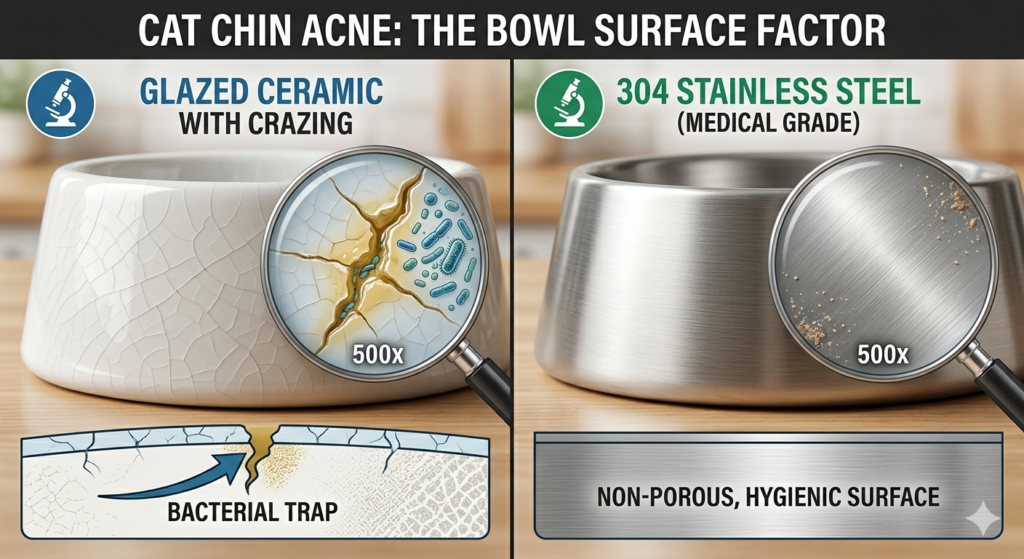
We’ve all heard it: “Plastic is porous and traps bacteria; switch to ceramic.” While it’s true that plastic is a nightmare for feline skin, ceramic isn’t always the hero we think it is. The issue lies in the quality of the glaze and the inevitable wear and tear of daily use.
The Hidden Danger of “Crazing”
Over time, even high-quality ceramic develops microscopic cracks known as crazing. These fissures occur when the ceramic expands and contracts at different rates than the glaze—often triggered by hot dishwashers or microwave use.
These cracks are often invisible to the naked eye but are deep enough to host thousands of Staphylococcus bacteria. When your cat’s chin rubs against these cracks during dinner, those bacteria migrate directly into their hair follicles. Data shows that even after standard hand-washing, bacteria levels in crazed ceramic can remain 40% higher than on smooth surfaces.
Porosity and Persistent Oils
If the glaze on your ceramic bowl is thin or low-fired, the material remains porous. Cat food is naturally oily, and these fats seep into the ceramic body itself. Even with hot soapy water, you can’t always reach the oils trapped beneath the surface. This creates a “rancid” environment that irritates the sensitive skin on a cat acne chin every time they take a bite.
Understanding Cat Chin Acne: Causes Beyond the Bowl
While the bowl is the most common trigger, Cat Chin Acne is a complex condition involving the overproduction of keratin (a protein found in skin). When too much keratin is produced, it gets trapped in the hair follicles, forming those signature blackheads or “comedones.”
H3: Stress, Hormones, and Hygiene
Cats are creatures of habit. A sudden move, a new pet, or even a change in their litter box location can spike cortisol levels, leading to oily skin. Additionally, the chin is a “blind spot” for grooming. Cats can’t lick their own chins, making it the perfect place for food residue and sebum to accumulate and clog pores.
The Material Comparison: What Should You Use?
| Material | Bacteria Resistance | Durability | Safety Note |
| 304 Stainless Steel | ⭐⭐⭐⭐⭐ | High | Non-porous and medical grade. |
| Tempered Glass | ⭐⭐⭐⭐ | Medium | Easy to see when it’s dirty. |
| High-Fired Ceramic | ⭐⭐ | Medium | Risk of “crazing” over time. |
| Plastic | ⭐ | Low | Never use for acne-prone cats. |
Treatment 101: How to Get Rid of Cat Acne on Chin?
If you’re currently staring at a crusty chin, don’t panic. Knowing how to get rid of cat acne on chin starts with a gentle, consistent routine.
- Warm Compresses (The 40°C Rule): Soak a clean cloth in warm water (approx. 100°F / 38°C-40°C). Hold it to the chin for 30-60 seconds twice a day. This melts the waxy sebum and opens the follicles.
- Gentle Disinfecting: Use a vet-approved antiseptic like 0.05% Chlorhexidine wipes. Avoid human acne medications like benzoyl peroxide or Salicylic acid, which are far too harsh and can cause chemical burns on feline skin.
- The Golden Rule: Never, ever squeeze the blackheads. Squeezing can push the infection deeper into the dermis, leading to painful abscesses or cellulitis.
Case Study: Luna, a 3-year-old Siamese, suffered from chronic acne despite using expensive ceramic bowls. Her owner switched to wide, shallow 304 stainless steel plates and started a twice-daily warm compress routine. Within 14 days, Luna’s skin barrier was fully restored without the need for oral antibiotics.
(Pro Tips for Success)
- The Dishwasher Advantage: If you must use ceramic, run it through the dishwasher on a high-heat sanitizing cycle daily.
- The “Sniff Test”: If your cat’s bowl has a faint smell even after washing, a bacterial biofilm has likely formed. It’s time to replace it.
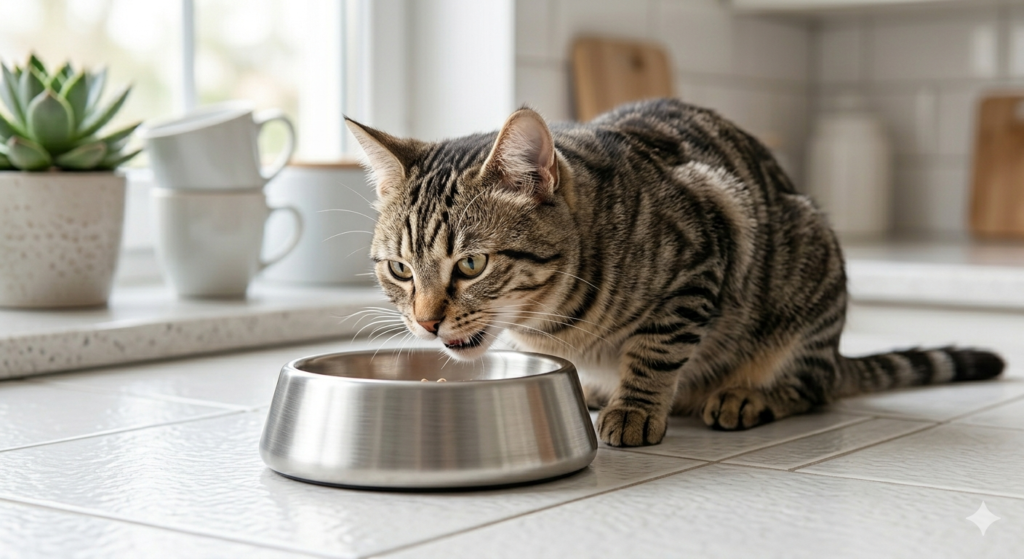
- Whisker Relief: Use wide, shallow saucers. If a cat’s whiskers or chin frequently hit the sides of a deep bowl, the friction increases oil production.
Frequently Asked Questions (FAQ)
Q: Is cat chin acne contagious to other cats? A: No, it is not contagious. However, if multiple cats share the same bacteria-laden bowl, they may all develop symptoms independently.
Q: Can I use green tea to clean the chin? A: Yes! The polyphenols in green tea have natural anti-inflammatory and mildly antibacterial properties. A warm green tea bag makes an excellent compress for mild cases.
Q: When should I see a vet? A: If the chin looks red, swollen, bleeding, or if your cat seems to be in pain (pawing at the face), it’s time for a professional. Secondary fungal or bacterial infections often require prescription topicals.
Conclusion: Consistency is the Cure
Managing Cat Chin Acne is a marathon, not a sprint. It’s about creating an environment where bacteria can’t thrive. By moving beyond the “ceramic myth” and focusing on truly non-porous materials like 304 stainless steel or glass, you’re giving your cat’s skin the break it deserves.
Mild suggestion: Tonight, run your finger along the rim of your cat’s bowl. If it feels even slightly rough or has a “slimy” film that won’t go away, it’s time for an upgrade. A healthy chin starts with a truly clean dish!