
Close your eyes and imagine your dog’s excitement when they see their leash—now imagine that same excitement when they see a brush. For many, pet grooming feels like a chore or a necessary evil to combat “doggy smell.” But in 2026, we’ve unlocked a new perspective: grooming is the ultimate “silent health check.”
A clean coat isn’t just about aesthetics; it’s about thermal regulation, skin biome integrity, and early disease detection. Whether you are dropping your pup off at a bustling pet smart grooming salon or waiting for the doorbell to ring for pet mobile grooming services, you are investing in your pet’s longevity. As a health-focused blogger, I’ve seen grooming sessions reveal everything from hidden ticks to early-stage mammary tumors. Let’s explore how professional grooming has evolved into a cornerstone of modern pet wellness.
The Science of Shine: Why Professional Pet Grooming is Preventative Medicine
In the veterinary world, we often say the skin is the mirror of internal health. Regular pet grooming does more than just remove dead hair; it stimulates blood flow and distributes natural oils that protect the skin barrier.
The “Hands-On” Health Scan
A professional groomer touches every inch of your pet—places you might miss during daily cuddles. In 2026, many groomers use “tactile mapping” to feel for heat, swelling, or irregular bumps. For breeds like Golden Retrievers or Persian cats, where thick fur hides the skin, these sessions are the only way to spot “hot spots” (moist dermatitis) before they turn into painful infections requiring antibiotics.
Thermal Regulation and the Undercoat Myth
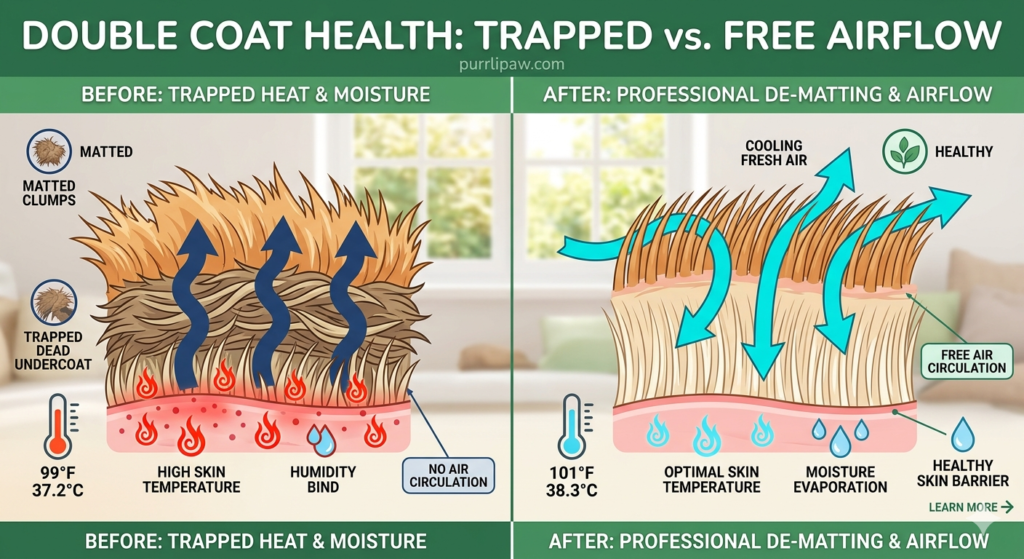
Many owners believe shaving a dog in summer keeps them cool. This is a dangerous myth. A dog’s coat acts as insulation against both heat and cold. Professional pet grooming focuses on “de-shedding”—removing the dead, trapped undercoat that blocks airflow—rather than shaving. By clearing the “biological felt,” you allow your pet’s skin to breathe, maintaining a steady core temperature of around 38.5°C.
Salon vs. Van: Deciding Between Pet Smart Grooming and Mobile Services
The 2026 grooming market offers two distinct paths. Your choice depends on your pet’s personality and your own schedule.
The Corporate Efficiency of Pet Smart Grooming
For active families, pet smart grooming remains a top-tier choice. These facilities offer a “one-stop-shop” experience. While you browse for the latest ergonomic harnesses, your pet receives a standardized, high-quality treatment. These salons are ideal for well-socialized dogs who enjoy the sights and sounds of other animals. Plus, their digital booking systems make it easy to snag a last-minute “Bath & Brush” appointment.
The Low-Stress Luxury of Pet Mobile Grooming Services
If your cat views the carrier as a “doom crate” or your senior dog struggles with arthritis, pet mobile grooming services are a game-changer. A fully equipped, climate-controlled van arrives at your doorstep, providing a 1-on-1, “Fear-Free” environment.
- Pros: No car sickness, no barking neighbors, and no cages.
- Data Point: Studies show that mobile grooming can reduce a pet’s cortisol levels by up to 35% compared to traditional salon environments. It’s the “concierge medicine” of the grooming world.
DIY Pet Grooming at Home: 2026 Pro Tools and Techniques
Between professional appointments, “maintenance grooming” is your best bonding opportunity. But doing it wrong can lead to “grooming phobia.”
The “Cooperative Care” Approach
In 2026, we don’t “force” pets into grooming. We use cooperative care. This means using a “lick mat” with peanut butter or Greek yogurt to create a positive association with the brush.
- The Quick Check: When clipping nails, look for the “grey dot” inside the nail—that’s your signal to stop.
- Temperature Matters: Always keep bath water between 35-37°C. Anything hotter can irritate sensitive canine skin, which is much thinner than human skin.
Career Spotlight: How to Become a Pet Groomer from Scratch
With the pet industry hitting record highs in 2026, many are looking to turn their passion into a paycheck. If you’ve ever wondered how to become a pet groomer, here is your 3-step roadmap:
- Get Certified: While not always legally required, a certificate from the National Dog Groomers Association of America (NDGAA) or an equivalent body sets you apart. You’ll learn anatomy, skin pathology, and breed-standard styling.
- Apprenticeship is Key: You can’t learn to handle a nervous 100lb Akita from a YouTube video. Most successful groomers start as “bathers” in shops like pet smart grooming, learning the ropes under a mentor.
- Specialize in 2026 Trends: The most profitable groomers today specialize in “Creative Grooming” (pet-safe dyes) or “Geriatric Care” (handling elderly pets with specialized hydraulic equipment).
(Pro Grooming Hacks for a Happy Pet)
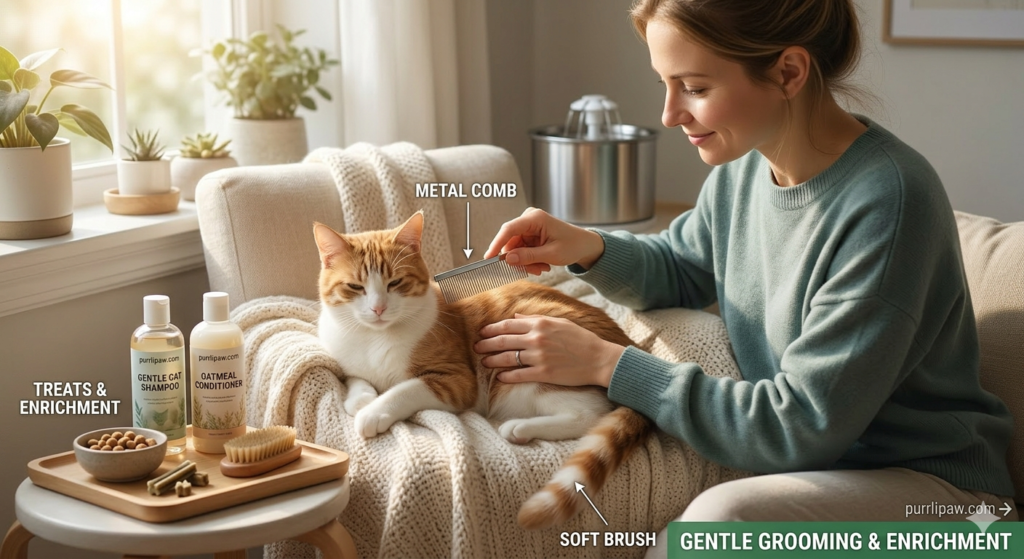
- The “Metal Comb” Test: After brushing with a slicker brush, always run a metal comb through the fur. If it catches, there’s a hidden mat that could cause skin sores.
- Paws and Ears First: These are the most sensitive areas. Handle them daily—even when not grooming—so your pet becomes desensitized to touch.
- Hydration Boost: Did you know that well-hydrated pets have more elastic skin that is less prone to “clipping irritation”? Ensure they use a stainless steel water fountain to keep their skin supple from the inside out.
FAQ: Common Grooming Dilemmas Solved
Q: How often should I truly groom my pet? A: Short-haired dogs need a bath every 6-8 weeks, but long-haired breeds or cats require daily brushing to prevent painful matting.
Q: Why does my pet act “weird” after a grooming session? A: It’s often a “sensory reset.” They feel lighter and the air feels different on their skin. However, if they are hiding or lethargic, check for razor burn or ear irritation.
Q: Can I use human shampoo on my dog? A: Never. Human skin has a pH of about 5.5 (acidic), while dog skin is closer to 7.0 (neutral). Using our shampoo strips their acid mantle, leaving them vulnerable to bacteria.
Conclusion: The Art of the Brush
At the end of the day, pet grooming isn’t about vanity—it’s about the profound vow we take to care for those who cannot care for themselves. Whether you choose the bustling community of pet smart grooming or the intimate care of pet mobile grooming services, you are telling your pet: “I see you, I feel you, and I want you to be comfortable.”
Sincere suggestion:Start small. Tonight, spend just five minutes brushing your pet’s favorite spot. It’s not just about the fur; it’s about the heartbeat beneath it.