
There is a profound, almost hypnotic tranquility that comes with keeping an aquarium. Watching a flash of color dart through swaying green plants isn’t just a hobby; it’s a form of living art. However, many newcomers quickly find themselves overwhelmed when their “easy” pet becomes a source of stress.
As a long-time aquarium enthusiast and health blogger, I’ve seen it all. The secret to success? Realizing that fish care is actually 90% water care and 10% fish care. If you manage the ecosystem, the fish will take care of themselves.
In this comprehensive guide, we’ll break down the barriers to entry, debunk common myths about siamese fish care, and provide a step-by-step roadmap for anyone wondering: how to take care of a fish?
The Foundation of Success: Understanding the Ecosystem
Before you even buy a net, you must understand that an aquarium is a closed biological loop. In the wild, nature handles waste. In your living room, that’s your job.
1. The Nitrogen Cycle: Your Tank’s Life Support
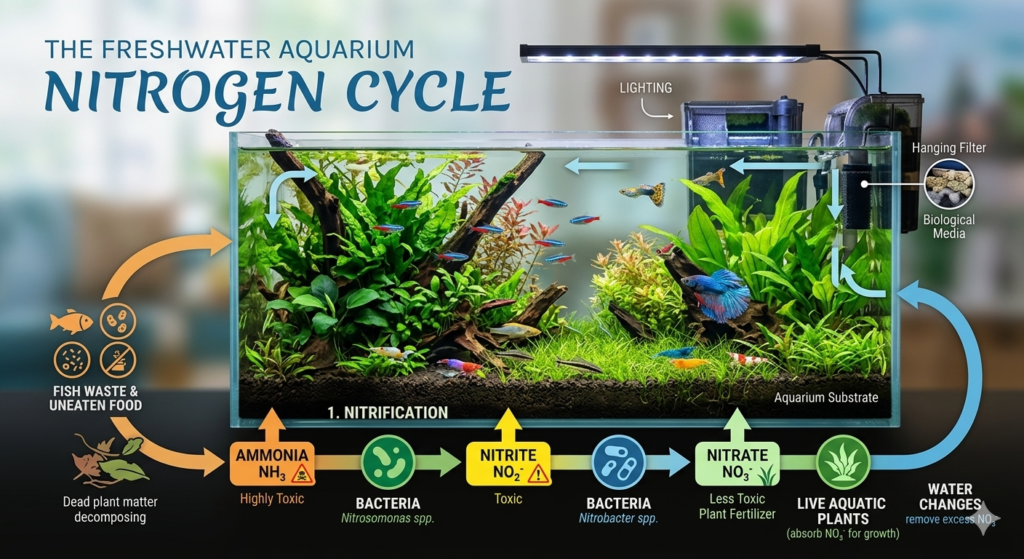
The most critical part of fish care is the “Nitrogen Cycle.” Fish produce ammonia through waste, which is highly toxic. Beneficial bacteria must colonize your filter media to convert ammonia into nitrites (also toxic) and finally into nitrates (relatively safe).
- The Data: Ammonia and Nitrite levels must be 0 ppm before adding fish.
- The Timeline: A “Fishless Cycle” typically takes 2 to 4 weeks. Using a bottled bacterial starter can accelerate this, but patience is your best equipment.
2. Choosing the Right Tank Size
The “Goldfish Bowl” is the biggest tragedy in the hobby. Smaller volumes of water are harder to manage because toxins build up faster.
- Pro Tip: For beginners, a 10-gallon or 20-gallon long tank is the gold standard. It provides enough water volume to buffer mistakes and offers plenty of horizontal swimming space.
Special Focus: Betta and Siamese Fish Care Tips
The Betta fish is perhaps the most iconic beginner pet, but it is also the most mistreated. Proper betta fish care requires moving past the “office desk jar” mentality.
1. The Reality of Siamese Fish Care
The term “Siamese Fighting Fish” often leads people to believe these fish are only about aggression. In reality, siamese fish care is about providing a sanctuary for a highly intelligent, territorial creature.
- Temperature is Non-Negotiable: Bettas are tropical. They require a steady temperature of 78-80°F (25-27°C). In a small, unheated bowl, their metabolism slows down, their immune system crashes, and they become lethargic.
- Low-Flow Filtration: Bettas have heavy, flowing fins. Strong filter currents can toss them around like a leaf in a hurricane. Use a sponge filter or a filter with an adjustable flow.
2. Enrichment and Tank Mates
Can a Betta have friends? It depends. While two males will fight to the death, a single male can often live with “peaceful” bottom-dwellers like Corydoras catfish or Amano shrimp, provided the tank is at least 10 gallons.
- The “Mirror” Trick: For mental stimulation, show your Betta a mirror for 3-5 minutes a day. It allows them to “flare” and exercise their muscles, but doing it longer will cause chronic stress.
Maintenance Lab: How to Take Care of a Fish Daily
Consistency beats intensity every time. Here is your “Health Blogger” approved maintenance schedule for top-tier fish care.
The Weekly Water Change (25%)
Never drain the whole tank! Removing all the water shocks the fish and kills your beneficial bacteria.
- Siphon the substrate: Use a gravel vacuum to remove 25% of the water along with fish waste.
- Match the temperature: Ensure the new water is within 2°F of the tank water.
- Condition the water: Always use a high-quality dechlorinator to remove chlorine and chloramines from tap water.
Feeding: The Two-Minute Rule
Overfeeding is the #1 cause of fish death. Most fish have stomachs the size of their eyes.
- Procedure: Feed only what they can consume in 2 minutes.
- Variety: Rotate between high-quality pellets, frozen bloodworms, and daphnia to ensure a complete amino acid profile.
Frequently Asked Questions (FAQ)
Q: How to take care of a fish if I go on vacation? A: If you are away for less than 5 days, most healthy adult fish are fine without food. “Holiday feeding blocks” often dissolve and ruin your water quality. For longer trips, an automatic feeder or a trusted friend is better—but hide the fish food and only leave pre-measured portions!
Q: Why is my fish hiding all the time? A: This is usually a sign of stress or lack of “cover.” Ironically, the more plants and caves you provide, the more you will see your fish, as they feel secure enough to venture out.
Q: Can I use tap water for my tank? A: Only if treated. Tap water contains chemicals that are safe for humans but burn a fish’s gills. Always use a water conditioner.
Conclusion: A Window into a Hidden World
Mastering fish care is a journey of observation and patience. Whether you are dedicated to betta fish care or a diverse community tank, you are creating a tiny slice of the natural world in your home.
A Final Suggestion: Don’t rush. Add one fish at a time, test your water regularly, and spend 10 minutes a day just watching. Your fish will tell you everything you need to know about their health—you just have to learn their silent language.