We’ve all been there. You’re at work, checking your pet camera, and you see your automatic litter box spinning while your cat curiously pokes a paw inside. Your heart skips a beat. You bought this tech to make life easier, not to create a 24/7 anxiety machine. In 2026, finding a safe automatic litter box shouldn’t feel like a gamble, yet “convenience” often masks serious design flaws.
At Purrlipaw, we believe a smart home should never be a dangerous home. After stress-testing dozens of models, we’ve boiled safety down to three non-negotiable standards. If a machine doesn’t hit all three, it doesn’t belong in your living room.
Standard 1: Structural Integrity and the “No-Pinch” Rule
The biggest hidden danger in the industry is the “scissor effect.” This happens when a rotating drum meets a fixed base. If there is a gap that closes during the cleaning cycle, it creates a mechanical shear point.
Why “Open-Top” Designs Win
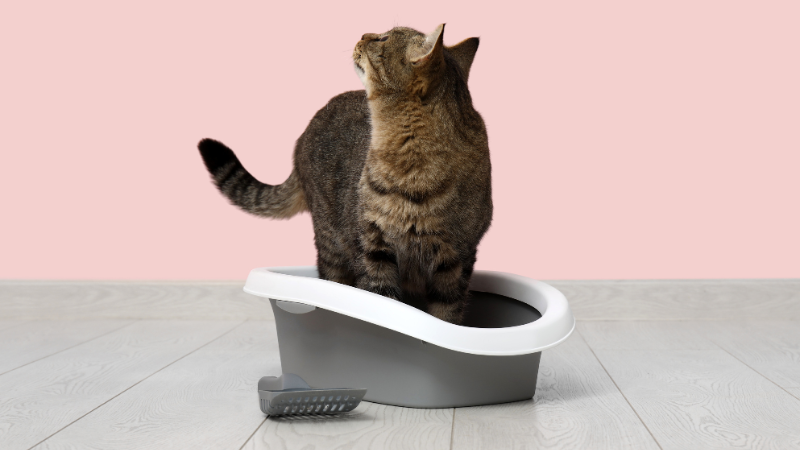
Traditional “closed-globe” models can trap a cat inside if the power cuts or the sensor fails. A truly safe automatic litter box should feature an open-entry or “split-shell” design. This ensures that even if the motor is moving, there is no physical point where a cat’s neck or limb can be pinched between two hard surfaces.
Standard 2: Triple-Layer Sensor Redundancy
A single sensor is a single point of failure. If your machine only relies on weight, what happens when a tiny 1.5lb kitten wanders in? The machine might not even feel them.
Moving Beyond Simple Weight Scales
To ensure automatic litter box safety, you need a “redundant” system. This means the machine cross-references data from three sources:
- High-Precision Weight Scales: To detect even the lightest movement.
- Infrared (PIR) Curtains: To “see” a cat entering the splash zone before they even touch the litter.
- Motor Resistance Detection: A “Plan C” where the motor instantly reverses if it feels even a few grams of physical resistance.
According to a study on feline environmental stressors by the Cornell Feline Health Center, a cat’s sense of security is tied to their ability to escape a space quickly. A machine that stops before contact is made is essential for their mental well-being.
Standard 3: Fail-Safe Logic and “Ghost” Recoveries
What happens when the Wi-Fi goes down or the power blinks? Many “budget” smart boxes perform a “hard reset” where they return to a home position without checking if a cat is inside first.
The “App-to-Machine” Safety Lock
A safe automatic litter box must have “Safe-Start” logic. This means if the sensors were blocked during a power outage, the machine stays locked until a human manually clears it via the app. It’s better to have a dirty box for an hour than a dangerous machine running blindly.

Addressing the “Litter Box Aversion” Pain Point
Safety isn’t just about physical injury; it’s about psychological trauma. If a machine makes a loud, grinding noise or moves aggressively, your cat might develop “litter box aversion.” This leads to peeing on rugs or, worse, urinary blockages from holding it in.
- Noise Levels: Look for machines under 35dB.
- Gradual Starts: The cleaning cycle should start with a slow, silent tilt rather than a sudden jolt.
FAQ: How to Spot a “Lemon” Before You Buy
Q: Are rotating drum boxes inherently dangerous? A: Not all of them. However, you must check if the “entry port” ever crosses a “fixed edge.” If it does, and there is no physical shroud covering that gap, it’s a design risk.
Q: Can I use an automatic box for a 2-month-old kitten? A: Most brands say yes, but we say no. Leave it unplugged and use it as a regular box until they hit at least 3lbs to ensure the weight sensors can accurately track them.
Q: How do I know if my sensors are failing? A: If your app shows “Cat Entered” when no cat is there, your sensors are likely dusty. Wipe them down immediately.
The Purrlipaw Commitment
We don’t just sell litter boxes; we sell peace of mind for the “helicopter pet parent.” Our designs prioritize physical escape routes and multi-sensor logic over flashy, unnecessary features.
Ready to upgrade to a safer home? * Browse our Ultra-Safe Smart Series.
- Download our 2026 Pet Tech Safety Checklist to audit your current devices.