
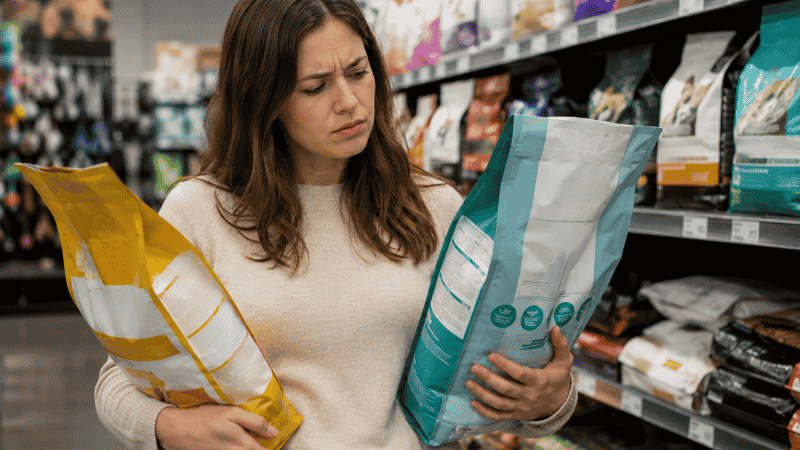
You’re standing in the pet food aisle, and you’ve been there for twenty minutes.
The bags all say things like “optimal nutrition” and “scientifically formulated” and “real chicken as the first ingredient.” Every bag looks trustworthy. Every bag looks different. You pick one up, put it back, pick up another one. You Google “best puppy food” on your phone and immediately get twelve conflicting listicles, three Reddit arguments, and a sponsored result.
You put your phone away and stare at the shelves again.
This is one of the most common experiences for new puppy owners, and it’s entirely understandable. Puppy nutrition is genuinely important — the food you choose in the first year affects your puppy’s bone development, immune function, brain development, and long-term health. But it doesn’t have to be complicated, and most of the confusion comes from marketing language rather than any real complexity.
This guide strips all of that away. By the end, you’ll know exactly what to look for on a label, what to avoid, how to choose between dry and wet food, and when to make the switch to adult food — all based on what actually matters for your specific puppy.
Key Takeaways
- Puppy food is not optional. Adult dog food lacks the calorie density, protein levels, and specific nutrients puppies need for healthy development. Feeding adult food to a puppy is one of the most common and consequential mistakes new owners make.
- Look for the AAFCO statement — specifically the phrase “formulated to meet the nutritional levels established by AAFCO for growth” or “all life stages.” This single line tells you more about a food’s quality than any marketing claim on the front of the bag.
- Dry kibble is the practical choice for most owners — it’s cost-effective, good for dental health, easy to store, and appropriate for most puppies from 8 weeks onward.
- Large breed puppies need a large breed formula. A regular puppy food fed to a Great Dane or Labrador can accelerate growth too quickly, increasing the risk of painful joint and bone conditions.
- Don’t switch foods suddenly. Any food change — whether you’re changing brands, formulas, or transitioning to adult food — should happen gradually over 7 to 10 days.
Puppy Food vs. Adult Dog Food: Why It Actually Matters
This is the single most important distinction in puppy nutrition, and it’s worth understanding clearly before anything else.
Puppies are not small adult dogs. Their nutritional requirements during the first year of life are fundamentally different — higher protein for muscle development, higher fat for brain development and energy, specific calcium-to-phosphorus ratios for bone growth, and DHA (an omega-3 fatty acid) for brain and vision development. Adult dog food is formulated for maintenance — keeping an already-developed adult healthy — not for building a body from scratch.
Feeding an adult food to a puppy doesn’t mean they’ll immediately become sick. What it means is that they may grow more slowly, have less energy, develop weaker bones, and potentially show neurological deficits — effects that often aren’t visible in the short term but show up later in life.
The opposite problem exists too: some owners continue feeding puppy food well into adulthood. Puppy food is calorie-dense by design. An adult dog eating puppy food long-term is likely to gain excess weight, which puts stress on joints and increases risk of diabetes and other metabolic conditions.
The right food for your puppy is puppy food — specifically, one formulated for their life stage and ideally for their breed size. Everything else follows from there.
The One Label Claim That Actually Matters: The AAFCO Statement
The pet food industry is largely unregulated when it comes to marketing language. “Premium,” “natural,” “holistic,” “gourmet,” “high-protein” — none of these terms have legal definitions. A brand can put any of them on a bag without meeting any specific standard.

The one claim that is regulated and meaningful is the AAFCO nutritional adequacy statement. AAFCO (Association of American Feed Control Officials) sets the standards for complete and balanced pet nutrition in the United States. Every reputable puppy food will carry one of two AAFCO statements:
Statement 1 — Formulation Method: “[Product name] is formulated to meet the nutritional levels established by the AAFCO Dog Food Nutrient Profiles for growth/all life stages.”
This means the food was formulated by a nutritionist to meet AAFCO’s nutrient requirements on paper.
Statement 2 — Feeding Trial Method: “Animal feeding tests using AAFCO procedures substantiate that [product name] provides complete and balanced nutrition for growth/all life stages.”
This is the stronger statement. It means the food was actually fed to real dogs in a controlled trial and shown to support healthy development. When available, this is the better option.
What you must see for a puppy: The word “growth” or “all life stages” in the AAFCO statement. A food labeled only for “adult maintenance” is not appropriate for a growing puppy. This is the single most important thing to check before putting any puppy food in your cart.
Understanding Puppy Food Labels
Once you’ve confirmed the AAFCO statement, the ingredient list is your next stop. Here’s how to read it without getting lost.
The ingredient order matters — but only somewhat
Ingredients are listed by weight before processing. This is why “chicken” appearing first sounds impressive but doesn’t tell the whole story — raw chicken is about 70% water, so after cooking, it drops significantly in the final composition. “Chicken meal” (dehydrated chicken) actually provides more protein per pound than fresh chicken in a label, even though it appears less appetizing.
What you want to see near the top of the ingredient list:
- A named animal protein (chicken, beef, salmon, turkey, lamb) — not generic “meat” or “animal by-products”
- Whole grains or digestible carbohydrate sources if the food is grain-inclusive (brown rice, oatmeal, barley, sweet potato)
- Named fat sources (chicken fat, salmon oil) rather than generic “animal fat”
Nutrients to look for
Protein: Puppies need higher protein than adults — at minimum 22% crude protein on the guaranteed analysis panel, though most quality puppy foods exceed this.
Fat: At minimum 8% crude fat for puppies. Fat is the primary energy source for puppies and is critical for brain development.
DHA: Look for salmon oil, fish oil, or DHA specifically listed. Some labels now call this out explicitly in their marketing. It supports brain development and vision and is particularly important in the first several months of life.
Calcium and phosphorus: These need to be present in the right ratio (roughly 1:1 to 2:1 calcium to phosphorus) for healthy bone development. For large breed puppies specifically, excessive calcium can cause developmental orthopedic disease — which is why large breed formulas restrict calcium levels compared to standard puppy foods.
Ingredients to be cautious about
- Artificial colors, artificial flavors, artificial preservatives (BHA, BHT, ethoxyquin): Not necessarily dangerous in small amounts, but unnecessary and a marker of lower-quality manufacturing.
- Excessive fillers: Corn syrup, wheat flour in large quantities, or multiple grain fragments listed separately (which inflates the apparent protein level).
- Vague protein sources: “Meat by-products” without specifying the animal source. By-products themselves aren’t inherently bad — they include organ meat, which is nutritious — but the lack of specificity is a quality signal.
Dry Food vs. Wet Food vs. Raw: Which One Is Right?
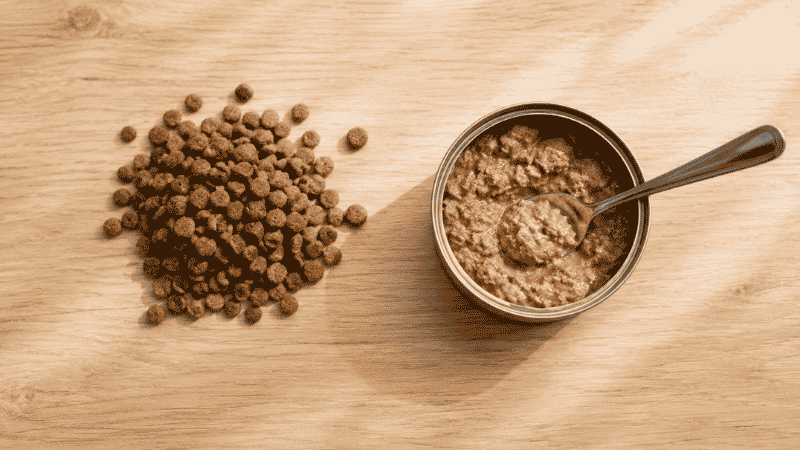
Dry Kibble — The Practical Choice for Most Owners
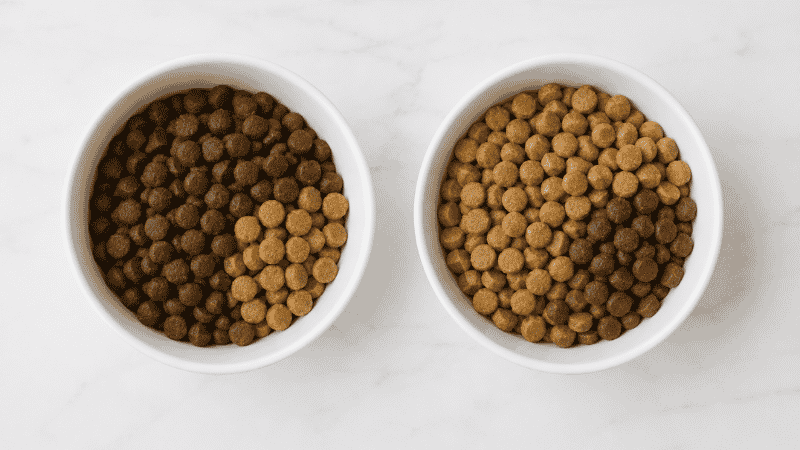
Dry kibble is the most widely used puppy food format for good reasons. It’s the most cost-effective option per calorie, it stores easily, it doesn’t spoil quickly once the bag is open (typically good for 4 to 6 weeks after opening if stored correctly), and the texture provides mild mechanical abrasion that supports dental health.
Quality dry kibbles are complete and balanced on their own — no supplementation required. This simplicity is particularly valuable for first-time owners who have enough to manage already.
Best for: Most puppies, most owners, most situations. Start here unless there’s a specific reason not to.
One important note on storage: Store dry kibble in a sealed container, not the original bag, in a cool dry location. Heat and humidity accelerate fat oxidation, making the food rancid faster than the “best by” date suggests.
Wet Food — Good Supplement, Expensive Main Diet
Wet food (canned or pouch) has a higher moisture content (typically 75 to 80% water), making it more palatable for picky eaters and easier to eat for puppies who haven’t fully developed their chewing ability yet. It’s also highly digestible.
The main limitations: it’s significantly more expensive to use as a sole diet, it spoils within 2 to 4 days once opened (must be refrigerated), and it provides no dental benefit.
Best for: Picky puppies, puppies recovering from illness or with reduced appetite, or as a topper mixed with dry kibble to increase palatability without breaking the budget.
Raw Feeding — Not Recommended for New Owners
Raw diets — either commercial raw or homemade — have dedicated advocates, but they also carry genuine risks that make them inappropriate as a starting point for new puppy owners.
Commercial raw is expensive and requires careful freezer management. Homemade raw requires nutritionist guidance to achieve balance — the vast majority of homemade raw diets that have been analyzed are nutritionally incomplete. And raw meat carries bacterial contamination risks (Salmonella, Listeria, E. coli) that pose health risks both to your puppy and to the humans in your household.
If raw feeding is something you’re committed to exploring, consult a board-certified veterinary nutritionist before starting. This is not a “figure it out from a blog post” decision.
Grain-Free: Necessary or Marketing?
Grain-free puppy food became enormously popular based on the assumption that grains are inherently problematic for dogs. The evidence does not support this.
Dogs are facultative omnivores — they can digest grains efficiently. More significantly, the FDA issued an investigation in 2018 linking grain-free diets (particularly those high in legumes like peas and lentils) to dilated cardiomyopathy (DCM) in dogs. The investigation is ongoing and the link isn’t fully understood, but it has shifted the veterinary consensus away from grain-free as a default choice.
Unless your puppy has a confirmed grain allergy (diagnosed by a veterinarian, not assumed based on itching or loose stools), a grain-inclusive food from a reputable manufacturer is the safer, better-supported choice.
By Breed Size: What Your Puppy Specifically Needs
Small and Toy Breeds (adult weight under 20 lbs)
Small breed puppies have faster metabolisms, smaller stomachs, and a higher risk of hypoglycemia (low blood sugar) between meals. They need calorie-dense food in small amounts, fed frequently.
Look for: A formula specifically labeled “small breed puppy.” These typically have smaller kibble pieces (easier to chew), higher calorie density per cup, and are formulated for the higher metabolic rate.
Key concern: Hypoglycemia. Small breed puppies should never go more than 4 to 5 hours between meals in the first few months. If your puppy seems weak, shaky, or disoriented, a small amount of honey or corn syrup rubbed on their gums followed by immediate veterinary contact is the emergency response.
Medium Breeds (adult weight 20–50 lbs)
The most flexible category. A standard puppy formula from a reputable brand is appropriate. Focus on the AAFCO statement and ingredient quality rather than finding a breed-specific formula.
Large and Giant Breeds (adult weight 50+ lbs)
This is the category where food choice has the most serious health consequences. Large and giant breed puppies that grow too quickly — driven by excess calories and improper calcium levels — are at significantly elevated risk of developmental orthopedic diseases including hip dysplasia, elbow dysplasia, and osteochondrosis.

You must use a large breed puppy formula. These foods have:
- Controlled calcium levels (around 1.2 to 1.8% on a dry matter basis)
- Controlled phosphorus levels to maintain the right ratio
- Calorie levels that support steady growth without excess
Standard puppy food — even high-quality standard puppy food — has too much calcium for large breed puppies. This is not a preference; it’s a veterinary recommendation with significant evidence behind it.
Examples of breeds that require large breed formulas: Labrador Retriever, Golden Retriever, German Shepherd, Rottweiler, Boxer, Bernese Mountain Dog, Great Dane, Saint Bernard.
When and How to Switch to Adult Food
Knowing when to transition is as important as knowing what to feed. Staying on puppy food too long leads to excess weight; switching too early deprives a still-developing puppy of needed nutrients.
Timing by breed size
| Breed Size | Switch to Adult Food |
|---|---|
| Toy and Small breeds (under 20 lbs) | 9 to 12 months |
| Medium breeds (20–50 lbs) | 12 months |
| Large breeds (50–90 lbs) | 12 to 18 months |
| Giant breeds (90+ lbs) | 18 to 24 months |
The larger the breed, the longer they need the specific nutritional support of puppy food. A Great Dane is still actively developing at 18 months in ways a Chihuahua completed at 10 months.
How to transition without digestive upset
Sudden food changes cause diarrhea, vomiting, and food refusal in most puppies. Always transition gradually over 7 to 10 days:
Days 1–3: 75% old food, 25% new food Days 4–6: 50% old food, 50% new food Days 7–9: 25% old food, 75% new food Day 10: 100% new food
If loose stools develop at any point, slow the transition — stay at the current ratio for an extra 2 to 3 days before continuing. If vomiting or complete food refusal occurs, return to the previous ratio and consult your vet.
Common Feeding Mistakes New Owners Make
Feeding adult food because it was on sale. The short-term savings can result in long-term health costs — developmental delays, weaker bones, and immune deficiencies that show up months or years later.
Switching foods too often. Every time you change brands or formulas abruptly, you risk digestive upset. A food that’s working well and meets the AAFCO standards should stay consistent. Variety is not a nutritional requirement for dogs.
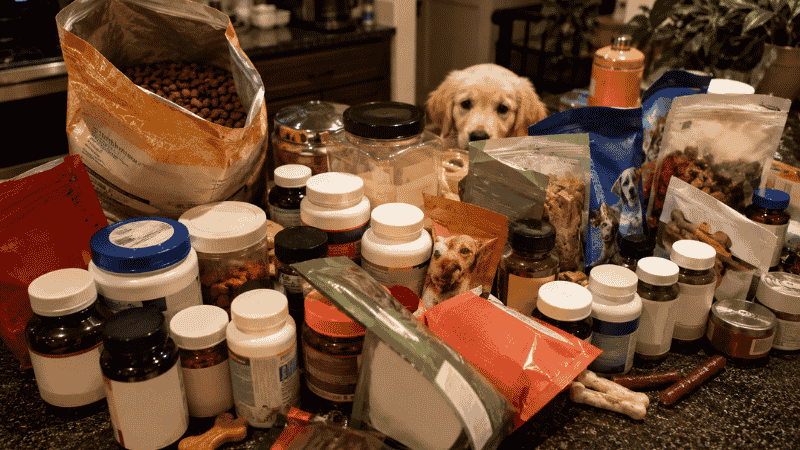
Over-supplementing. If you’re feeding a complete and balanced puppy food, additional vitamins, calcium supplements, or omega-3 supplements are not only unnecessary — some can actively cause harm. Excess calcium in particular is dangerous for large breed puppies. Supplements are for puppies eating incomplete diets or those with veterinarian-identified deficiencies.
Judging quality by price alone. Some of the most heavily marketed (and most expensive) puppy foods have faced recalls, nutritional investigations, or DCM associations. Price is not a reliable proxy for quality. The AAFCO statement and a track record with veterinary oversight matter more than the price per bag.
Feeding too many treats. Training treats should make up no more than 10% of your puppy’s daily caloric intake. If you’re doing intensive training sessions with treat rewards, reduce the amount of kibble at the next meal accordingly.
FAQ: What New Puppy Owners Actually Search For
What is the best food to feed a puppy? A complete and balanced puppy food carrying the AAFCO statement for “growth” or “all life stages,” from a manufacturer with a track record of nutritional research and quality control. For large breeds, specifically a large breed puppy formula. Beyond that, dry kibble from a brand recommended by your veterinarian is the practical starting point for most new owners.
Can I feed my puppy human food? Some human foods are safe in small quantities (plain cooked chicken, plain cooked rice, certain vegetables like carrots and green beans). Many human foods are toxic to dogs — grapes, raisins, onions, garlic, chocolate, xylitol (found in many sugar-free products), macadamia nuts, and avocado. Human food should never make up a significant portion of a puppy’s diet, as it throws off the nutritional balance of their primary food.
Is grain-free food better for puppies? No. Grain-free food is not nutritionally superior for most puppies, and there is an active FDA investigation linking certain grain-free diets to heart disease in dogs. Unless your vet has diagnosed a specific grain allergy, a grain-inclusive food is the better choice.
When should I switch from puppy food to adult food? It depends on your puppy’s breed size. Small breeds at 9 to 12 months; medium breeds at 12 months; large breeds at 12 to 18 months; giant breeds at 18 to 24 months. Always transition gradually over 7 to 10 days.
How do I know if my puppy’s food is working? Signs of a food that suits your puppy: consistent energy levels, firm well-formed stools (not too hard, not loose), coat that looks healthy and shiny, steady weight gain, and enthusiastic eating without digestive upset. Signs to discuss with your vet: chronic loose stools, dull coat, low energy, excessive gas, or persistent itching (which can indicate a food sensitivity).
Should I add anything to my puppy’s food? If you’re feeding a complete and balanced puppy food, no supplements are necessary. Adding fish oil is a popular choice for coat health — this is generally safe and may have benefits, but discuss it with your vet before adding anything to ensure the total diet remains balanced.
Can puppies drink milk? Most puppies are lactose intolerant after weaning. Cow’s milk can cause diarrhea and stomach upset. Fresh water is the only drink your puppy needs after 8 weeks of age.
The Bottom Line
Puppy food doesn’t have to be complicated. The fundamentals are genuinely straightforward.
Find a food with the AAFCO growth statement. Choose a large breed formula if your puppy will be a large or giant breed adult. Stick with dry kibble unless there’s a specific reason not to. Transition gradually when you switch. Skip the grain-free trend. And when in doubt, ask your vet — they know your specific puppy, your specific region, and your specific situation better than any bag of food can account for.
The right food, fed consistently at the right times, is one of the most significant things you can do for your puppy’s long-term health. Get that foundation right in year one and you’ve done something that will pay dividends for the next decade of their life.

References
- Association of American Feed Control Officials. (2026). AAFCO Dog Food Nutrient Profiles. aafco.org
- U.S. Food and Drug Administration. (2024). FDA Investigation into Potential Link between Certain Diets and Canine Dilated Cardiomyopathy. fda.gov
- American College of Veterinary Nutrition. (2024). Selecting a Pet Food. acvn.org
- Fascetti, A.J., & Delaney, S.J. (2012). Applied Veterinary Clinical Nutrition. Wiley-Blackwell.
- Larson, J., & Newman, S.J. (2020). Developmental Orthopedic Disease in Large Breed Dogs. Veterinary Clinics of North America: Small Animal Practice.