
Here’s something most new puppy owners find out too late: the most important developmental window in your puppy’s entire life is already closing.
It starts at three weeks of age and ends — for most puppies — somewhere between 12 and 16 weeks. During this window, your puppy’s brain is biologically primed to accept new experiences as normal. Every person, surface, sound, animal, and environment they encounter during this period gets filed under “safe and familiar.” After the window closes, the same experiences get filed under “potentially threatening” — and that filing is much harder to undo.
This is why a dog that was never exposed to children becomes anxious around them as an adult. Why a dog that only knew one environment becomes stressed whenever it leaves. Why a dog that never heard loud sounds grows into an adult that trembles at thunderstorms.
The difference between a confident, easy-going adult dog and an anxious, reactive one is not usually genetics. It’s usually what happened — or didn’t happen — in those first sixteen weeks.
If your puppy is under 16 weeks right now, you have time. This guide tells you exactly what to do with it.
Key Takeaways
- The critical socialization window opens at 3 weeks and closes between 12 and 16 weeks of age — the single most important developmental period in your puppy’s life.
- Socialization is not the same as playing with other dogs. It means systematic, positive exposure to people, surfaces, sounds, environments, handling, and animals of all kinds.
- The AVSAB (American Veterinary Society of Animal Behavior) states that the risks of inadequate socialization outweigh the risks of disease exposure — meaning socialization should begin before vaccinations are complete, with appropriate precautions.
- One frightening experience during the socialization window can create lasting fear. Quality of experiences matters as much as quantity.
- Under-socialized dogs are the number one reason dogs are surrendered to shelters, according to veterinary behavior specialists. Socialization is not optional — it is the foundation of your dog’s entire future temperament.
What Socialization Actually Means
The word “socialization” gets used loosely, and the loose version — taking your puppy to the dog park, letting them meet a few neighbors — misses most of what actually matters.
True socialization means systematic, positive exposure to the full range of experiences your puppy will encounter throughout their life. Not just other dogs. Not just the people in your household. Everything.
The goal is not to make your puppy excited about everything. It’s to make them neutral about everything — able to encounter a child on a bicycle, a man with a beard, a hardwood floor, a vacuum cleaner, or a thunderstorm and respond with curiosity or indifference rather than fear.
A properly socialized adult dog doesn’t need to love every experience. They need to be able to handle any experience without shutting down, reacting aggressively, or becoming overwhelmed. That capacity is built in the first sixteen weeks — and it is built deliberately, not accidentally.
Why the Window Closes — The Biology Behind It
Understanding why this window exists makes it easier to take it seriously.
Puppies are born with developing brains that need enormous amounts of input to wire themselves correctly. In the early weeks, the brain is actively building neural pathways — essentially deciding what’s normal and what’s dangerous based on direct experience.
During the socialization window, the brain’s fear response is relatively suppressed. Novel stimuli trigger curiosity rather than alarm. This is the biological mechanism that allows puppies to bond with their species, learn the rules of social interaction, and map out a “safe world” that includes the environments and beings they’ll live alongside.
After the window closes, the fear response matures. Unfamiliar things become genuinely threatening to the nervous system — not because your puppy is being dramatic, but because their brain is now doing exactly what it evolved to do: treat the unfamiliar as a potential danger.
You cannot replicate the socialization window by working harder later. You can desensitize an adult dog, but it takes significantly more time, effort, and professional support — and the results are rarely as complete or as stable as early socialization produces. The window is real, and it matters.
The Socialization Window — Week by Week
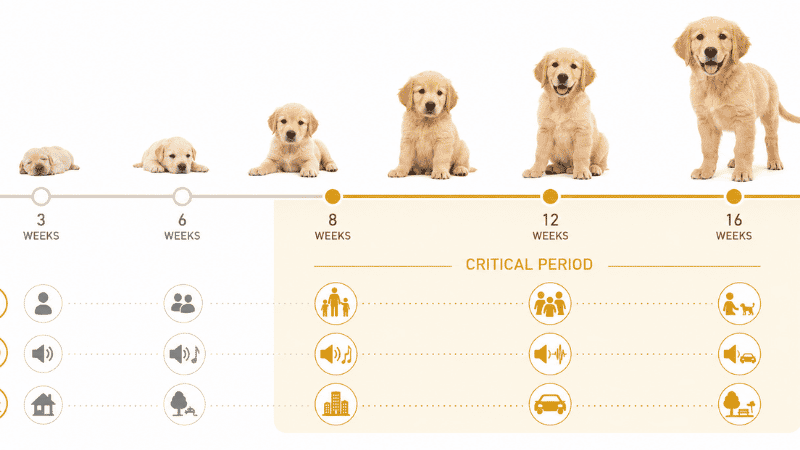
3 to 8 Weeks — With the Breeder or Rescue
During this phase, your puppy is ideally still with their mother and littermates, being handled gently by their breeder or rescue caregivers. This handling — being picked up, touched on their paws and ears, exposed to household sounds, introduced to different textures — is the foundation of socialization before you even bring them home.
When choosing a breeder or rescue, ask specifically about their socialization practices during this phase. A puppy raised in a quiet kennel with minimal human contact from 3 to 8 weeks starts the socialization window already behind.
What should be happening: Daily human handling, exposure to household sounds (TV, vacuum, kitchen noises), different flooring surfaces, gentle introduction to varied people.
8 to 12 Weeks — The Golden Window
This is the period when most puppies come home — and it’s also the most critical time for socialization. Your puppy’s brain is maximally receptive, their fear response is still relatively suppressed, and every positive experience during this window is being deeply encoded.
This is also the period before your puppy’s vaccination series is complete, which creates genuine tension: the most important time for socialization is simultaneously a period of real disease risk. The solution is not to wait — it’s to socialize strategically and safely.
What should be happening: Multiple new experiences daily, across all categories (see the checklist below). Every experience should be kept brief, positive, and within your puppy’s comfort zone.
12 to 16 Weeks — The Closing Window
The socialization window is narrowing. Fear responses are maturing. New experiences during this phase can still be positive, but require more careful management — a puppy that had a scary experience at 14 weeks is more likely to develop a lasting fear response than the same puppy at 9 weeks.
Vaccinations are typically completing or recently completed during this phase, which opens up more environments. Use this period to consolidate and expand the socialization you’ve already done.
What should be happening: Continued varied exposure, now including environments you couldn’t safely access earlier (pet-friendly stores, vaccination-complete puppy classes). Begin moving from passive exposure to active positive experiences.
16 Weeks and Beyond — After the Window
The critical window has closed, but socialization doesn’t stop being important. Continue introducing new experiences regularly throughout your puppy’s first year. The goal shifts from building the foundation to maintaining and expanding it.
Dogs that go through adolescence (typically 6 to 18 months) without continued varied experiences can develop new fears during this developmental phase — particularly during “fear periods” that often occur around 8 to 10 weeks and again around 6 to 14 months. Continued gentle exposure helps buffer against these.
Socializing Before Vaccinations Are Complete — How to Do It Safely
This is the question that paralyzes most new owners, and it deserves a direct answer.
The AVSAB’s official position is clear: the behavioral risks of inadequate socialization during the critical window outweigh the disease risks of careful, pre-vaccination exposure. Waiting until 16 to 18 weeks to begin socialization means the window has already closed. The solution is not avoiding socialization — it’s doing it thoughtfully.

Safe before vaccinations are complete:
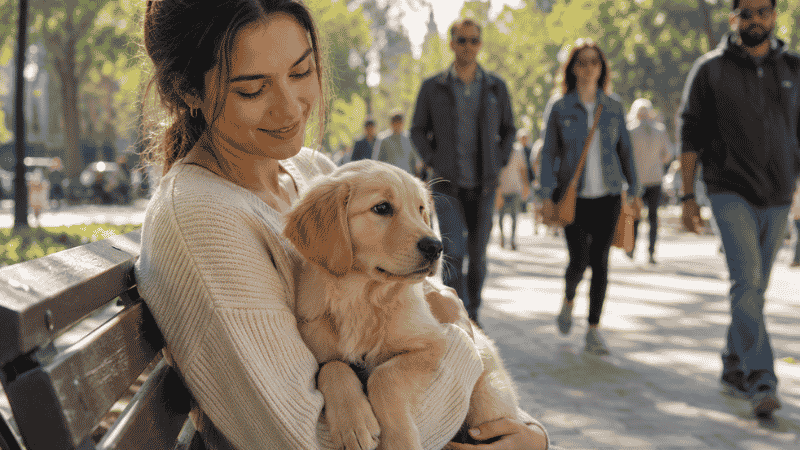
- Carrying your puppy in your arms in public spaces (they’re not touching potentially contaminated ground)
- Visiting homes of vaccinated, healthy dogs
- Puppy classes held in sanitized indoor facilities (most reputable classes require at least the first DHPP dose and accept puppies as young as 7 to 8 weeks for this reason)
- Sitting outside cafes, parks, or busy streets — letting your puppy observe the world from the safety of your lap or a carrier
- Car rides to new environments — observing from the parked car or being carried
- Exposure to all household experiences: sounds, surfaces, appliances, visitors
Avoid before vaccinations are complete:
- Dog parks and communal areas where dog traffic is heavy and vaccination status is unknown
- Pet store floors and communal pet areas
- Areas with known parvovirus activity (your vet will know if this applies to your region)
- Standing water or heavily trafficked grass areas where disease risk is higher
The key is that your puppy’s paws staying off high-risk surfaces doesn’t mean their brain has to stay inside. You can socialize your puppy’s nervous system enormously while keeping their physical exposure to pathogens minimal.
The Complete Puppy Socialization Checklist
Work through this list systematically during the 8 to 16 week window. Each item should be introduced at a pace your puppy is comfortable with — the goal is neutral curiosity, not forced tolerance.
People
- [ ] Men and women of different ages
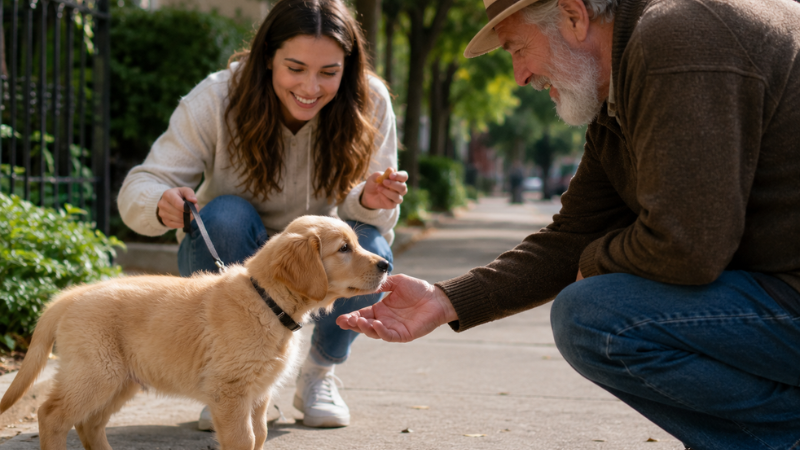
- [ ] Children (babies, toddlers, school-age, teenagers) — supervised, calm interactions
- [ ] People with facial hair, hats, hoods, sunglasses
- [ ] People in uniforms (postal workers, delivery drivers)
- [ ] People using mobility aids (wheelchairs, walkers, crutches)
- [ ] People carrying umbrellas, backpacks, large bags
- [ ] People of different ethnicities and appearances
- [ ] Crowds — busy streets, markets, outdoor events (observed from a safe distance or your arms)
Other Animals
- [ ] Vaccinated, friendly adult dogs (known dogs in known households)
- [ ] Other puppies in supervised play (puppy classes)
- [ ] Cats, if your household has them or you have access
- [ ] Livestock or urban wildlife observed from a safe distance (birds, squirrels)
Surfaces and Environments
- [ ] Hardwood floors, tile, carpet, linoleum
- [ ] Grass, gravel, concrete, sand
- [ ] Grates, metal surfaces, slippery floors
- [ ] Stairs (both going up and down)
- [ ] Ramps and uneven surfaces
- [ ] Puddles and water (if weather allows)
- [ ] Urban environments (sidewalks, storefronts, traffic)
- [ ] Quiet rural environments
- [ ] Elevators and escalators (observed or experienced)
- [ ] Cars and car travel
Sounds
- [ ] Traffic, horns, motorcycles
- [ ] Thunder (recordings at low volume, paired with treats)
- [ ] Fireworks and loud bangs (recordings)
- [ ] Household appliances: vacuum cleaner, hair dryer, blender, washing machine
- [ ] Children playing and shouting
- [ ] Doorbells and knocking
- [ ] Music of different kinds
- [ ] Crowds and busy public spaces
Handling (Critical for Vet and Grooming Tolerance)
- [ ] Paws touched, held, and squeezed gently
- [ ] Ears touched and gently examined
- [ ] Mouth opened and teeth checked
- [ ] Tail handled
- [ ] Being picked up and held in different positions
- [ ] Being restrained briefly and calmly
- [ ] Nail file or clippers near paws (without cutting)
- [ ] Brush and comb contact all over the body
- [ ] Being examined on a table (in preparation for vet visits)
Objects and Situations
- [ ] Umbrellas opening and closing
- [ ] Bicycles, skateboards, scooters (observed moving)
- [ ] Strollers and prams
- [ ] Plastic bags and rustling noises
- [ ] Hats and caps (worn by people your puppy knows)
- [ ] Carriers, crates, and car restraints
- [ ] Wearing a collar and harness (already happening, but note it here)
How to Introduce New Experiences the Right Way
The most common socialization mistake is not under-doing it — it’s doing it wrong. A puppy that has a frightening experience during the socialization window may develop a lasting fear of that specific thing, which is the opposite of what you’re trying to achieve.
The Three Rules of Good Socialization
Rule 1: Your puppy controls the pace. If your puppy shows hesitation, stress, or fear signals — yawning, lip licking, turning away, tucking their tail, trembling — they’re telling you you’ve moved too fast. Back up. Create more distance from the trigger. Let them observe from further away before moving closer. Never force or lure a frightened puppy toward something that’s scaring them.
Rule 2: Keep experiences overwhelmingly positive. Pair new experiences with high-value treats, play, and calm praise. The goal is to build an association: unfamiliar thing → good things happen. This means having treats in your pocket during every socialization outing, and being generous with them when your puppy shows calm, curious behavior.
Rule 3: Brief and frequent beats long and intense. Three 10-minute socialization outings in a day are better than one 30-minute marathon. Puppies have limited capacity for processing new input before they become overstimulated. When your puppy is tired, sniffing the ground, moving slowly, or struggling to focus, the session is over regardless of whether you’ve completed your checklist.
Reading Stress Signals
Knowing when your puppy is struggling is as important as knowing what to expose them to. Signs that a socialization experience has tipped from positive to stressful:
- Yawning repeatedly in a non-tired context
- Excessive lip licking or nose licking
- Turning their head or body away
- Tail tucked below the body line
- Ears pinned flat
- Refusing treats they would normally take eagerly
- Trembling or shaking
- Attempting to hide behind you or under furniture
- Barking, growling, or snapping
If you see these signals, calmly remove your puppy from the situation. Do not comfort in a way that seems to validate the fear (excessive “it’s okay, it’s okay” can reinforce the anxiety). Simply move away calmly and give your puppy a moment to decompress before trying again at a lower intensity.
Socialization for City and Apartment Dwellers
If you live in an urban apartment, the socialization checklist actually comes with some built-in advantages — density of sounds, people, and environments — but also some specific challenges.
The elevator: Many puppies struggle with elevators. Introduce them gradually — step into the elevator and immediately back out with a treat, then ride one floor, then two. Most puppies habituate quickly if the introduction is gradual and treat-paired.
The lobby: Apartment lobbies are excellent socialization environments — varied surfaces, strangers, sounds, and often other dogs. Make lobby time a dedicated socialization activity in the early weeks.
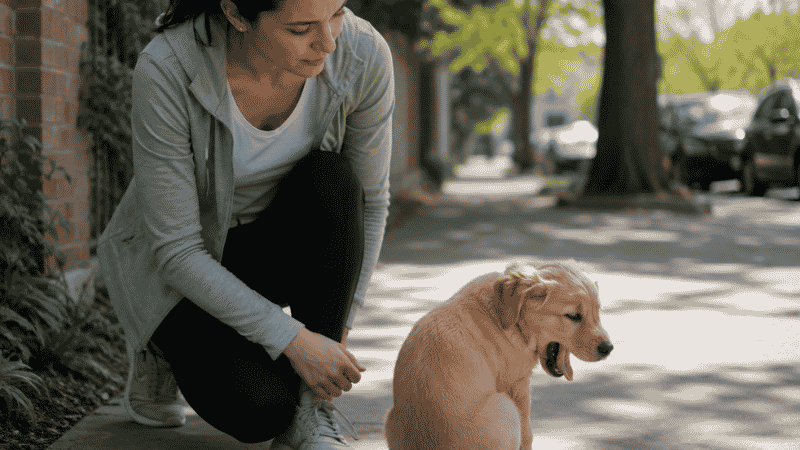
Street traffic: Urban puppies are exposed to traffic noise constantly, which is actually advantageous. Let your puppy sit on the sidewalk (carried if unvaccinated, on their own paws once vaccinated) and observe traffic from a comfortable distance.
The challenge — other dogs: Urban environments have many dogs in communal spaces (elevators, lobbies, hallways) whose vaccination status and temperament you don’t know. Before vaccinations are complete, asking passing dog owners to give your puppy space is completely reasonable. Most will understand. After vaccinations, structured puppy class interactions are safer than random hallway encounters for early dog-dog socialization.
Puppy Classes: The Most Underrated Socialization Tool
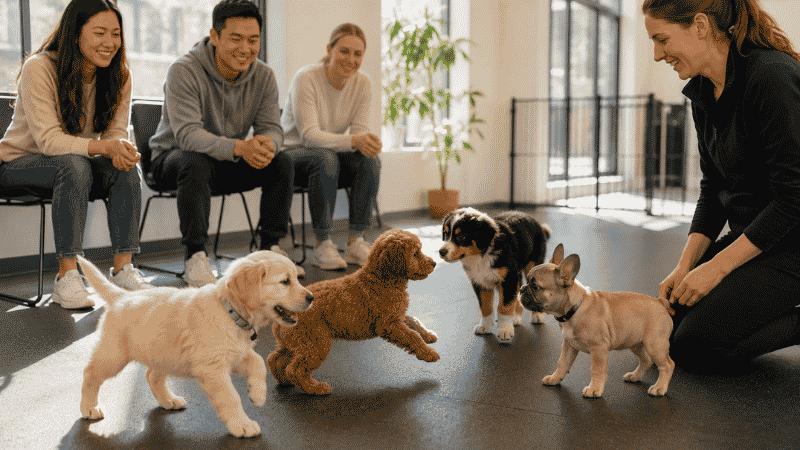
A well-run puppy class is one of the most valuable investments you can make in the first sixteen weeks. Here’s what most owners don’t realize: the primary benefit isn’t training. It’s socialization.
In a good puppy class, your puppy encounters multiple other puppies of different breeds and sizes in a controlled, positive environment. They practice dog-to-dog communication. They learn to recover from minor social mishaps (getting knocked over, being barked at) in a safe context. They practice focusing on you in a distracting environment. And they get handling practice from a trainer who knows how to do it well.
The AVSAB specifically endorses puppy classes beginning as early as 7 to 8 weeks of age, at least 7 days after the first DHPP vaccination, in facilities that require health screening for all attendees.
What to look for in a puppy class:
- Uses positive reinforcement exclusively — no punishment, no aversive tools
- Requires proof of vaccination (first DHPP minimum)
- Has structured play sessions with supervision, not uncontrolled free-for-alls
- Keeps class size small enough for individual attention
- Trainer has recognized credentials (CPDT-KA, KPA-CTP, or similar)
Red flags to avoid:
- Any trainer who advocates dominance theory, “alpha” concepts, or physical corrections
- Classes that use choke chains, prong collars, or shock collars at any age
- Unsupervised puppy play that allows bullying or overwhelm to continue unchecked
What Under-Socialization Actually Looks Like
It’s worth being specific about the consequences of missing the socialization window, not to create panic, but because new owners often don’t realize what they’re preventing until they see the alternative.
Under-socialized dogs commonly present as:
Fear-based reactivity: Barking, lunging, or growling at people, dogs, or objects on leash — almost always rooted in fear, not aggression. This is the most common behavioral issue in adult dogs and the one most directly linked to inadequate early socialization.
Generalized anxiety: Difficulty settling in new environments, stress during vet visits, inability to be left alone without significant distress, hypervigilance in normal situations.
Sound sensitivity: Severe fear responses to thunder, fireworks, traffic, or other loud sounds — sometimes to the point of self-injury.
Handling intolerance: Inability to be groomed, examined by a vet, or touched in specific ways — often requiring sedation for routine care.
These are not character flaws. They are predictable outcomes of a critical developmental period that didn’t receive adequate positive input. And they are almost entirely preventable with deliberate socialization in the first sixteen weeks.
FAQ: What New Puppy Owners Actually Search For
When should I start socializing my puppy? Immediately — from the day they come home, which is usually around 8 weeks. The critical window is already open and partially elapsed by this point. Every day matters.
Can I socialize my puppy before they’re fully vaccinated? Yes, with appropriate precautions. Carry your puppy in high-risk areas. Visit vaccinated dogs in clean homes. Attend puppy classes that require vaccination documentation. Avoid dog parks, pet store floors, and areas with unknown dog traffic. The AVSAB is explicit that the risk of under-socialization outweighs the risk of disease exposure when socialization is done thoughtfully.
How many new things should my puppy experience each day? There’s no magic number. Aim for at least one to two new experiences daily during the 8 to 16 week window, keeping each one brief (5 to 15 minutes) and positive. Quality of experience matters more than quantity — one deeply positive experience with a child is worth more than five rushed, stressful ones.
My puppy seems scared of everything — is that normal? Some puppies are naturally more cautious than others, often influenced by genetics and early litter experience. A cautious puppy isn’t broken — they just need a slower, more careful introduction pace. Always go at your puppy’s speed, never yours.
Is it too late to socialize my puppy if they’re already 4 months old? The critical window has closed, but socialization work continues to matter throughout the first year and beyond. Desensitization and counter-conditioning with a professional trainer can make significant improvements in older puppies and adult dogs — it simply requires more time and consistency than early socialization would have.
My puppy was traumatized by something during socialization — what now? First: don’t panic or over-react, as your calm response helps regulate your puppy. Avoid repeating the exact situation immediately. Allow recovery time. Reintroduce the trigger at a much lower intensity, at a greater distance, with high-value food — essentially starting over at the beginning of that specific exposure. If fear persists or generalizes, consult a certified behavior professional.
The Bottom Line
The socialization window is the most time-sensitive thing in puppy ownership. You can choose any food, any kennel, any collar — you can change your mind about all of those things at any time. But the socialization window opens at three weeks and closes at sixteen. That’s not a guideline. It’s neuroscience.
The good news: you don’t have to do it perfectly. You don’t need a structured program or a special class (though classes help). You need to show up consistently with treats, a calm demeanor, and a willingness to introduce your puppy to the world — one new thing at a time — before that window closes.
The dog you spend those sixteen weeks creating is the dog you’ll live with for the next decade. It’s the most important investment of puppy ownership, and it costs almost nothing except time and attention.
Start today.

References
- American Veterinary Society of Animal Behavior. (2021). AVSAB Position Statement on Puppy Socialization. avsab.org
- Scott, J.P., & Fuller, J.L. (1965). Genetics and the Social Behavior of the Dog. University of Chicago Press.
- Serpell, J. (Ed.). (2017). The Domestic Dog: Its Evolution, Behavior and Interactions with People (2nd ed.). Cambridge University Press.
- Herron, M.E., & Shreyer, T. (2014). The pet-friendly veterinary practice: a guide for practitioners. Veterinary Clinics of North America: Small Animal Practice, 44(3), 451–481.
- Howell, T.J., King, T., & Bennett, P.C. (2015). Puppy parties and beyond: the role of early age socialization practices on adult dog behavior. Veterinary Medicine: Research and Reports, 6, 143–153.