
We all remember the first day we brought them home—that tiny, vibrating ball of fur that claimed our hearts instantly. In that moment, we made a silent promise to protect them forever. But as the years tick by, a bittersweet question eventually shadows every cat parent’s mind: How much time do we truly have left together?
In 2026, the conversation around cat lifespan has undergone a radical transformation. We are no longer just passive observers of aging; we are active participants in “longevity management.” With advancements in feline geriatric medicine and a deeper understanding of indoor stressors, the ceiling for how long a cat can thrive is higher than ever before.
As a dedicated pet health blogger, I’ve seen cats defy the odds, reaching their late twenties with the grace of a kitten. But I’ve also seen how silent killers—like chronic dehydration and hidden dental disease—can cut a promising life short. Understanding the average cat lifespan is the first step in building a fortress around your cat’s health. Let’s dive into the data and the lifestyle shifts that can turn “average” into “extraordinary.”
The 2026 Reality Check: What is the Average Lifespan of a Cat Today?
When you search for the average lifespan of a cat, you’ll often see a range of 12 to 15 years. But in the modern veterinary landscape, this number is just a baseline. The truth is that a cat’s “expiration date” is heavily dictated by their environment and the preventative care they receive starting in kittenhood.
Indoor vs. Outdoor: The 10-Year Longevity Gap
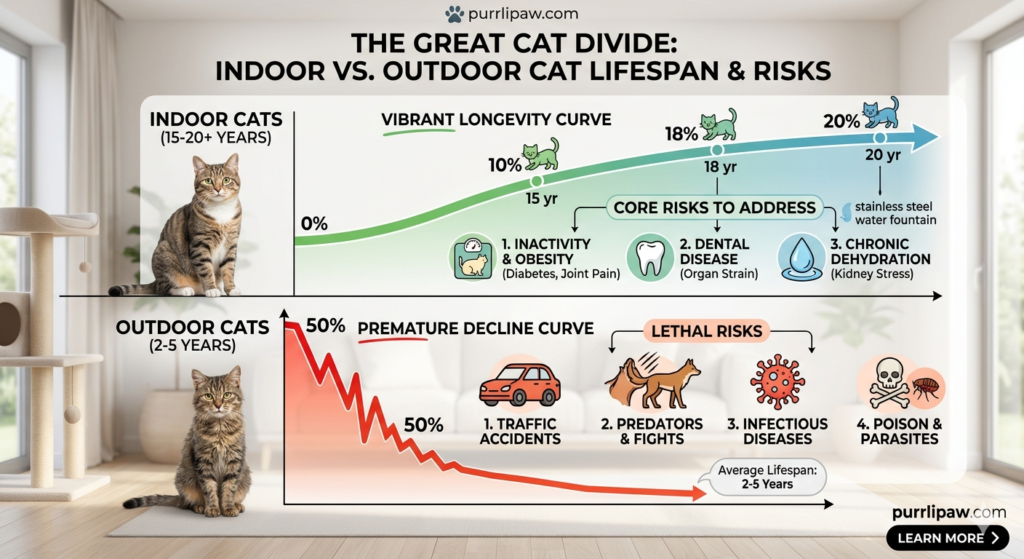
The single most significant factor in determining the average cat lifespan is their lifestyle. Statistics from the Feline Medicine Society show a staggering gap: indoor-only cats typically live 12–18 years, while outdoor cats often face a life expectancy of only 2–5 years due to predators, traffic, and infectious diseases. If you want to maximize your cat’s years, the “Indoor Revolution” is your most powerful tool.
How Breed Genetics Impact the Average Cat Lifespan
While “moggies” (mixed-breed cats) often benefit from hybrid vigor, certain breeds have their own unique timelines. For instance, Siamese and Burmese cats are legendary for their longevity, frequently pushing past the 20-year mark. Conversely, larger breeds like Maine Coons may face heart hurdles (like HCM) that require earlier medical intervention to maintain a healthy cat lifespan.
The “House Cat” Paradox: Why Is the Average Lifespan for a House Cat Rising?
It’s the golden question for every modern owner: What is the average lifespan for a house cat? While being strictly indoors protects them from external dangers, it introduces “lifestyle diseases” like boredom-induced stress and obesity.
The Metabolic Pillar: Defeating Obesity
In 2026, we’ve learned that fat isn’t just “fluff”—it’s an endocrine organ that produces chronic inflammation. An obese cat (even just 2lbs overweight) can lose up to 2 years of their potential cat lifespan. Switching to high-protein, moisture-rich diets that mimic their ancestral “mouse-based” calorie profile is the best way to keep their metabolism young.
Dental Health: The Surprising Link to Heart Longevity
Did you know that 80% of cats over age three have periodontal disease? Bacteria from the mouth travel through the bloodstream to the heart and kidneys. Regular dental cleanings can add significant time to the average lifespan of a cat by preventing systemic organ failure.
Troubleshooting Longevity: Why Quality of Life Matters
Reaching 20 years is a hollow victory if those years are filled with pain. To truly impact the average cat lifespan, we must focus on “Healthspan”—the period of life spent in good health.
The “Resting Respiratory Rate” (RRR) Protocol
One of the easiest ways to detect heart or lung issues early is to monitor your cat’s breathing while they sleep.
- The Goal: Under 30 breaths per minute.
- The Red Flag: If you consistently count over 35, it’s time for a vet visit. Early detection of congestive heart failure can extend a cat lifespan by years.
Environmental Enrichment and Cortisol
A sedentary, bored cat is a stressed cat. Chronic stress shortens telomeres (the caps on DNA), effectively accelerating aging. Adding vertical space, cat trees, and “puzzle feeders” reduces cortisol by up to 22%, keeping their cellular age younger than their chronological age.
FAQ: What is the Average Lifespan for a House Cat?
Q: Does spaying/neutering affect how long my cat will live? A: Absolutely. On average, neutered males live 62% longer than unneutered ones, and spayed females live 39% longer. This is largely due to the elimination of reproductive cancers and the urge to roam/fight.
Q: My cat is already 10. Is it too late to improve their lifespan? A: Never. Even small shifts—like switching to a stainless steel cat litter box for better hygiene or adding a water fountain to boost kidney perfusion—can have immediate benefits for a senior cat’s systemic health.
Q: What are the “Red Flags” of aging I should watch for? A: Look for changes in “The Three Ms”: Mobility (jumping less), Mouth (drooling/smell), and Mentation (staring at walls or late-night howling). Detecting these early is the key to beating the average cat lifespan stats.
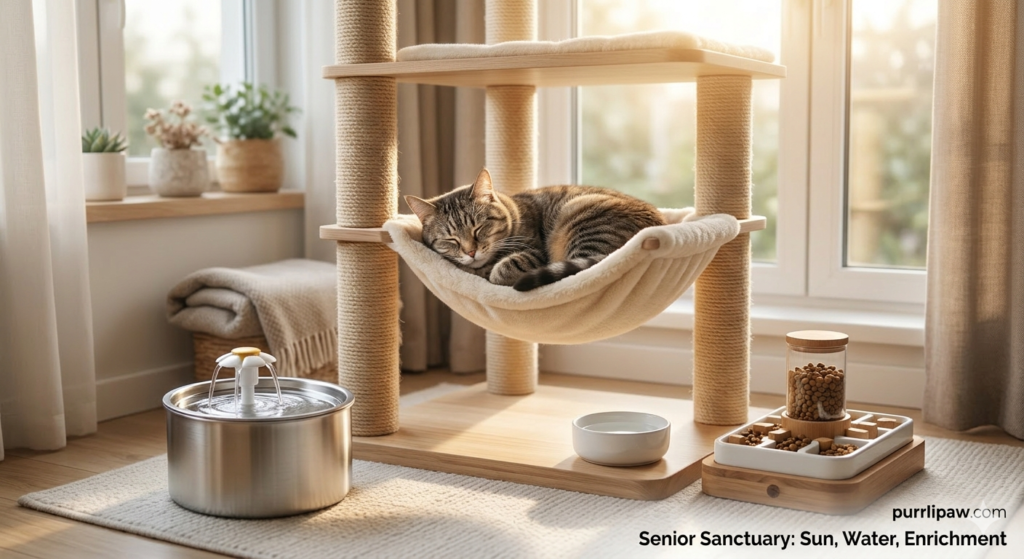
(Pro Tips for the Ultimate Senior Sanctuary)
- The “Two-Floor” Rule: As cats age, stairs become painful. Keep their food, water, and cat litter box on the same floor to prevent dehydration and “accidents.”
- Night Lights: Senior cats often develop “feline cognitive dysfunction” (dementia). A simple night light can help them navigate the house and reduce night-time anxiety.
- The 15°C Water Hack: Cats prefer water that is slightly cool but not ice-cold. Use a fountain to keep water aerated and at a temperature that encourages maximum hydration.
Conclusion: A Legacy of Love
The cat lifespan isn’t just a biological countdown; it’s a testament to the care and connection we provide. While the average lifespan of a cat gives us a baseline, your daily choices—from the quality of their water to the cleanliness of their environment—are the pen that writes their unique story.
Sincere suggestion: Don’t wait for a “Senior” label to start these habits. Whether your cat is two or twelve, start one new longevity habit today. Perhaps it’s a five-minute play session or a deep clean of their favorite sleeping spot. Every small action adds up to more purrs, more head-butts, and more years together.