
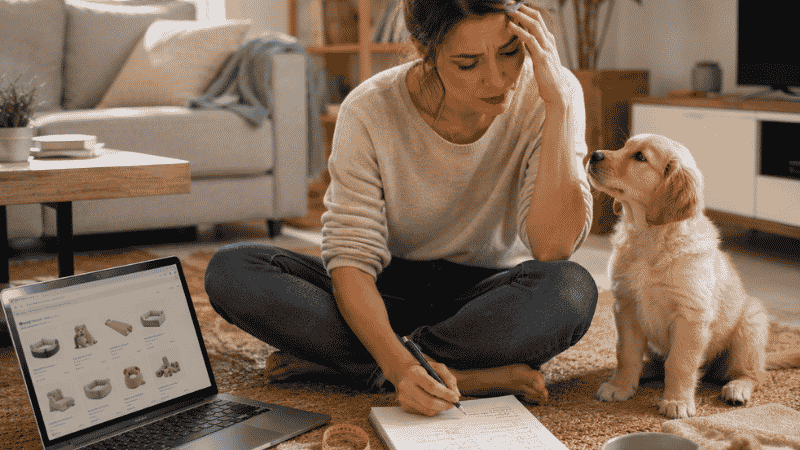
You’ve spent forty minutes on Amazon, opened six different product tabs, read three conflicting reviews, and you’re now somehow less sure than when you started.
Wire crate or plastic? How big? With a divider or without? Will it fit in your apartment? Is the $200 wooden one actually worth it, or is that just for people who want it to double as a side table?
The puppy kennel question trips up almost every first-time owner — not because it’s genuinely complicated, but because most guides either drown you in product specs or skip the basic logic entirely. This guide is going to cut through all of that.
By the end, you’ll know exactly what size kennel your puppy needs, which type suits your situation, how to set it up so your puppy actually wants to use it, and the mistakes that almost every new owner makes in week one. No filler, no fluff.
Key Takeaways
- A puppy kennel that’s too large is worse than one that’s too small — extra space defeats the whole purpose of kennel training and slows down potty training significantly.
- Wire kennels with divider panels are the best choice for most first-time owners: one purchase that grows with your puppy from 8 weeks to adulthood.
- The kennel should be placed where your family spends time — not in a laundry room or garage. Isolation makes the kennel feel like punishment, not a safe space.
- Most puppies take 3 to 7 days to comfortably accept a kennel when introduced correctly. Rushing this process is the single biggest mistake new owners make.
- A properly introduced kennel becomes your puppy’s voluntary retreat — somewhere they go on their own when they’re tired or overwhelmed.
First: What Is a Puppy Kennel, Actually?
The word “kennel” gets used loosely, which is part of why shopping for one is so confusing. Before you add anything to your cart, it helps to know what you’re actually looking for.
In the context of raising a puppy at home, a puppy kennel and a puppy crate refer to the same thing: an enclosed space that acts as your puppy’s den. It’s where they sleep, where they go when you can’t supervise them, and — if introduced properly — where they choose to rest on their own throughout the day.
This is different from a boarding kennel (a facility where you leave your dog while you travel) or an outdoor kennel run (a large fenced enclosure in a yard). For the purposes of this guide, we’re talking about the indoor kennel that lives in your home and becomes your puppy’s home base for the first year.
Why Your Puppy Actually Needs a Kennel
A lot of new owners resist the kennel at first. It feels a bit cold — like caging an animal when you want them to feel like family. This is completely understandable, and it’s also worth gently challenging.
Dogs are den animals. In the wild, they seek out small, enclosed spaces to rest because those spaces feel safe and protected. A properly sized kennel doesn’t feel like a cage to a dog — it feels like a den. Many dogs voluntarily retreat to their kennels throughout their lives, long after formal kennel training is complete, simply because it’s their space.
The practical benefits for new owners are significant too. A kennel:
- Dramatically speeds up potty training, because puppies instinctively avoid soiling where they sleep
- Prevents destructive chewing and household accidents when you can’t watch your puppy directly
- Gives your puppy a predictable place to decompress, which reduces anxiety
- Creates a safe space during chaotic moments — visitors arriving, construction noise, thunderstorms
The kennel isn’t a punishment tool. It’s a management tool that benefits both of you.
The Most Important Rule: Size
Get the size wrong and almost everything else stops working. This is the most consequential decision in the whole kennel-buying process, and it’s the one most first-time owners misunderstand.
Why Too Big Is a Problem
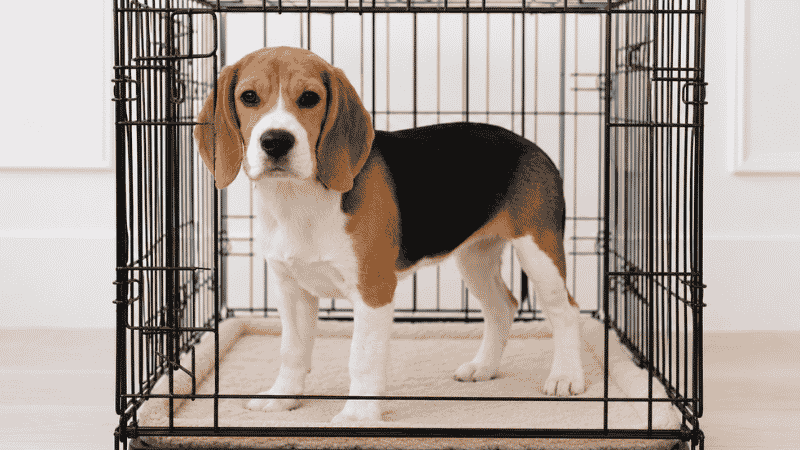
The kennel works for potty training because puppies have a natural instinct not to soil where they sleep. But that instinct only operates when the kennel is the right size. If the kennel is large enough that your puppy can sleep in one corner and relieve themselves in another without feeling like they’re soiling their bed — they will. Every time.
This is exactly why the popular advice to “buy big so they can grow into it” backfires so consistently with puppies. A 10-week-old Labrador in an adult-sized kennel is essentially living in a studio apartment with no designated bathroom — they’ll find a corner and use it, and you’ll wonder why the kennel training isn’t working.
The Correct Sizing Rule
Your puppy’s kennel should be large enough for them to:
- Stand up without their head touching the top
- Turn around in a full circle
- Lie down fully stretched out on their side
That’s it. No more than that. Any additional space gives them room to designate a “bathroom corner,” which defeats the entire purpose.
The Divider Panel Solution
Here’s the practical answer to the “but they’ll outgrow it” concern: buy a kennel sized for your puppy’s adult dimensions and use the included divider panel to make it smaller now.
Most wire kennels come with a divider — a removable panel that slides in to reduce the usable space. You start with the divider positioned to give your 8-week-old puppy just enough room, and you slide it back every few weeks as they grow. One purchase, the right size at every stage.
This is why wire kennels with dividers are the near-universal recommendation for puppies. It’s genuinely the most cost-effective approach.
Puppy Kennel Size Chart by Breed
Use this as your starting point. Measure your specific puppy and add 3–4 inches to both length and height for the final target dimensions.
| Breed Size | Example Breeds | Recommended Kennel Size |
|---|---|---|
| Extra Small (under 10 lbs adult) | Chihuahua, Yorkshire Terrier, Toy Poodle | 18″–22″ |
| Small (10–25 lbs adult) | Shih Tzu, Bichon Frise, French Bulldog | 24″–30″ |
| Medium (25–50 lbs adult) | Cocker Spaniel, Beagle, Bulldog | 30″–36″ |
| Large (50–90 lbs adult) | Labrador, Golden Retriever, Boxer | 36″–42″ |
| Extra Large (90+ lbs adult) | Great Dane, German Shepherd, Rottweiler | 42″–48″ |
A note on brachycephalic breeds: If you have a Pug, French Bulldog, or English Bulldog, size up by one category and prioritize ventilation. These breeds run warmer and need more airflow than average.
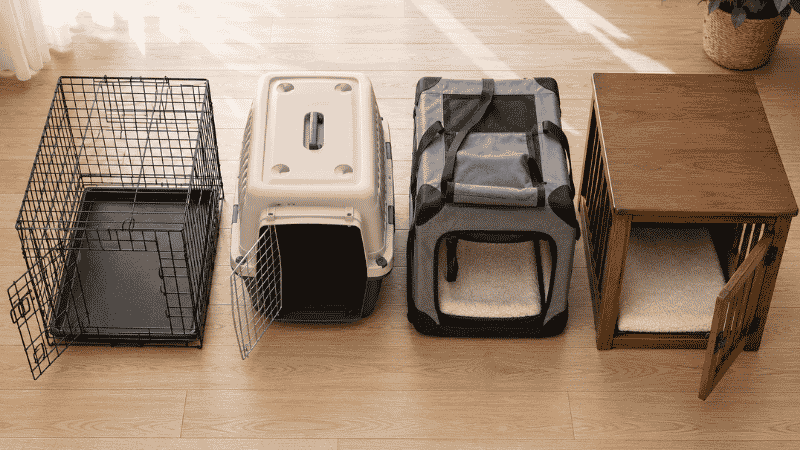
The 4 Types of Puppy Kennels — And Which One You Actually Need
Wire Kennels — Best for Most Puppies
This is the right choice for the majority of first-time owners, and here’s why: wire kennels offer the best combination of ventilation, visibility, and adaptability.
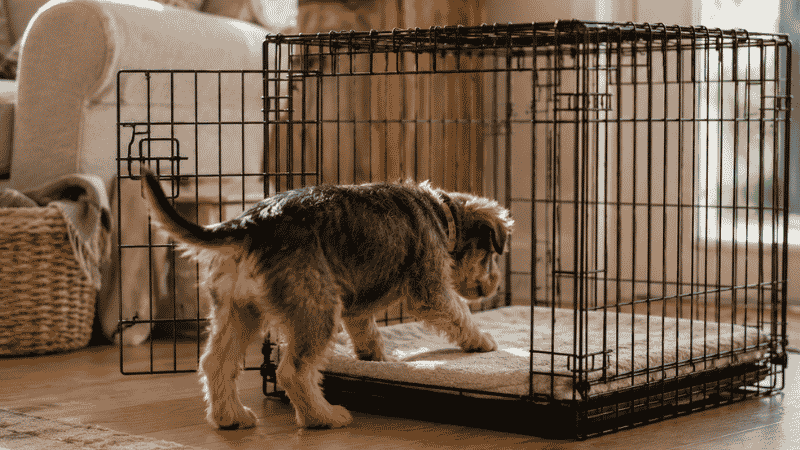
Your puppy can see you from inside the kennel, which reduces anxiety significantly in the early weeks. You can see them, which is useful when you’re monitoring whether they’re settled or distressed. The airflow is excellent, which matters during warmer months. And the divider panel system means one kennel covers the full puppy-to-adult journey.
The main downsides are aesthetic (they’re not exactly stylish) and the fact that they can rattle if your puppy paws at the sides. A kennel cover — a fabric drape that goes over three sides — solves the second problem and makes the space feel more den-like, which actually helps with acceptance.
Best for: Most puppies, especially medium to large breeds, apartment dwellers, anyone prioritizing potty training efficiency.
Plastic Kennels — Best for Travel
Plastic kennels (often called “airline crates”) are solid, enclosed on most sides with ventilation holes, and meet airline standards if you plan to fly with your dog. They feel more den-like than wire kennels because they’re darker and more enclosed, which some anxious puppies actually prefer.
The main limitations: no divider panel option in most models (meaning you’d need to buy a smaller one now and a larger one later), harder to fold and store, and the limited visibility can make the introduction process trickier.
Best for: Frequent travelers, puppies that seem to prefer enclosed dark spaces, small breeds.
Soft-Sided Kennels — Not for Young Puppies
Soft-sided kennels are lightweight, portable, and genuinely comfortable — but they’re not suitable for most young puppies. A puppy that chews, scratches, or pushes against the sides can damage the fabric, create an escape route, or ingest material. They’re also harder to clean thoroughly after accidents.
Think of soft-sided kennels as a graduation option — something you might use for a calm, fully kennel-trained adult dog during travel or at a hotel.
Best for: Well-trained adult dogs during travel. Not recommended for puppies under 12 months.
Furniture-Style Wooden Kennels — For Later
These are genuinely beautiful — solid wood structures that double as end tables or console tables, with a grated door that blends into your home decor. If you have a design-conscious home and you’ve been staring at the wire kennel thinking “this has to live in my living room for a year?”, the wooden option is worth knowing about.
The honest caveat: they’re expensive ($150–$400+), heavier and harder to reposition, more difficult to clean after accidents, and have no divider system. They work best for smaller breeds in their adult form, not as a training kennel for a young puppy.
Best for: Adult small-to-medium dogs, owners who prioritize aesthetics and have already completed kennel training.
Where to Put the Kennel in Your Home
This matters more than most guides acknowledge. The location of the kennel directly affects how quickly your puppy accepts it.
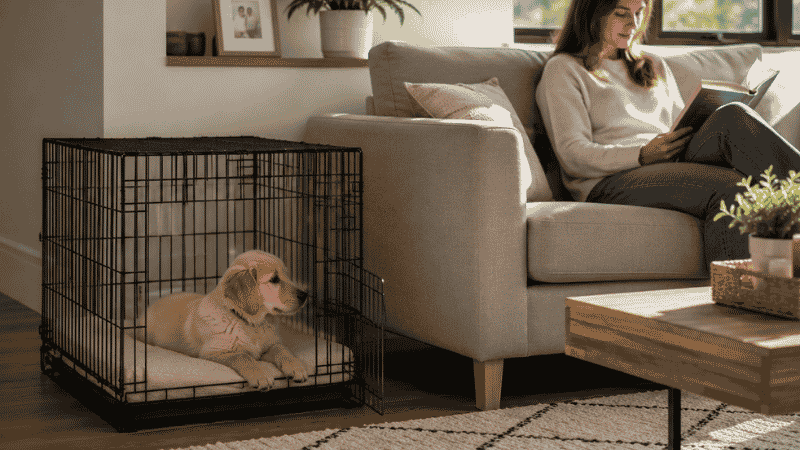
The right placement: In a main living area where your family spends time — the living room, bedroom, or open-plan kitchen. Your puppy should be able to see you and hear the normal sounds of the household while resting in the kennel. This makes the kennel feel like part of family life rather than exile.
The wrong placement: A laundry room, garage, utility room, or any space that’s isolated from where people actually live. Puppies placed in kennels away from human activity are more likely to cry persistently, develop separation anxiety, and resist the kennel long-term.
At night specifically, place the kennel in or near your bedroom for the first few weeks. The sound of your breathing and your presence dramatically reduces night-time crying. As your puppy settles, you can gradually move the kennel to wherever you want it to live permanently.
How to Introduce the Kennel So Your Puppy Actually Likes It
Buying the right kennel is step one. Getting your puppy to see it as a positive space is step two — and this is where many owners go wrong by moving too fast.
The cardinal rule: Never push your puppy into the kennel and close the door immediately. This creates a negative association that can take weeks to undo.
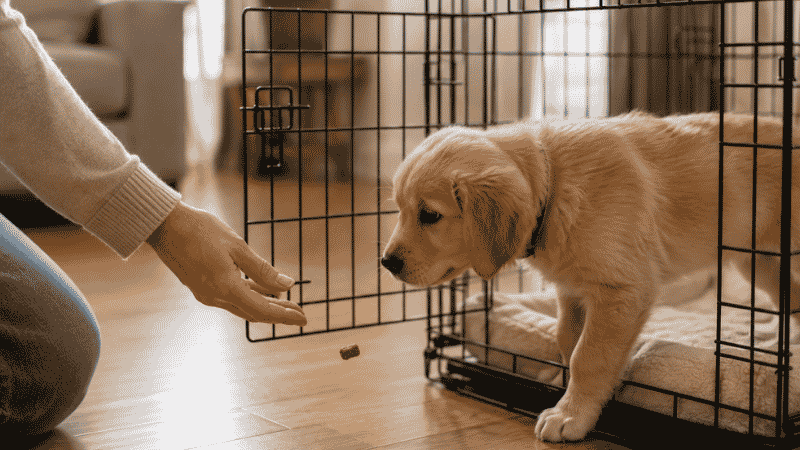
The correct approach — a 3-day introduction:
Day 1: Leave the kennel door open with a blanket inside that smells like you. Toss treats near the entrance, then just inside, without any pressure for the puppy to enter. Let curiosity do the work. Every time they investigate the kennel voluntarily, reward calmly.
Day 2: Encourage the puppy to go inside to eat some of their meal from a bowl placed at the back of the kennel. Still no closing the door. The goal is for the kennel to become associated with food, comfort, and positive experiences.
Day 3: Begin closing the door briefly — for 30 seconds while you’re sitting right there. Open before any distress. Gradually increase the duration. A Kong filled with peanut butter or a puppy-safe chew gives them something to focus on while the door is closed.
By day 4 or 5, most puppies will begin entering the kennel on their own. By the end of the first week, most can comfortably stay for 1–2 hours during the day.
Kennel Setup: What Goes Inside
Less is more in a puppy’s kennel, especially in the early weeks.
What should be inside:
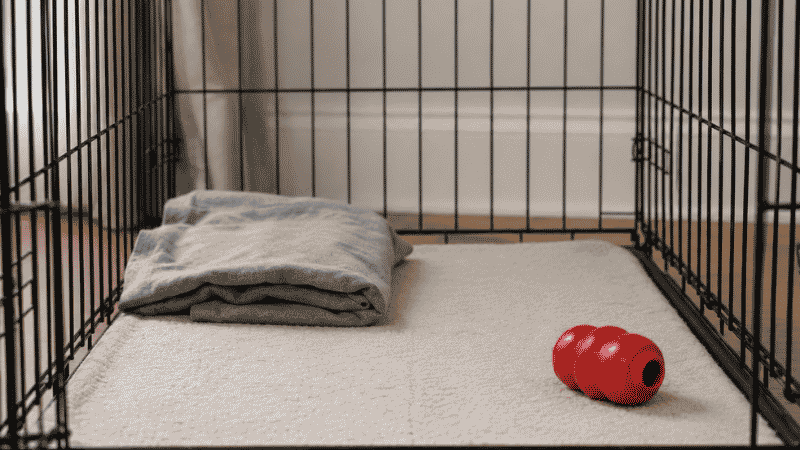
- A thin, washable crate pad or blanket (not bulky bedding a puppy could burrow under and overheat)
- An item with your scent — a worn t-shirt works better than any product marketed for this purpose
- A chew or Kong during the introduction phase to create positive association
What should NOT be inside:
- A water bowl — it tips, creates damp bedding, and isn’t necessary for reasonable kennel durations. Offer water immediately before and after kennel time.
- Toys with small parts that could be chewed off and swallowed unsupervised
- Bulky or expensive bedding before you know your puppy’s chewing habits
As your puppy matures and you understand their tendencies, you can add more comfort items. Start minimal and build up.
The Most Common Puppy Kennel Mistakes
Buying too big, skipping the divider. The single most common error. The kennel works because of the den instinct — too much space eliminates that entirely.
Using the kennel as punishment. If the kennel is where your puppy goes when they’ve done something wrong, it becomes associated with your anger and their distress. Kennel time should always be calm and matter-of-fact.
Expecting too much too soon. A puppy cannot hold their bladder overnight from day one. A general guideline is one hour per month of age — a 2-month-old puppy needs a bathroom break every 2 hours, including at night. Build up gradually.
Leaving them too long. No puppy should be in a kennel for more than 3–4 hours at a stretch during the day. If your schedule requires longer, a dog walker or puppy daycare for midday breaks is worth the investment. Long-term confinement damages the kennel’s effectiveness and the puppy’s wellbeing.
Giving up during the first night. Night one is usually the hardest. Puppies cry because they’ve left their littermates and everything familiar. Putting the kennel near your bed and keeping your hand near the door provides reassurance without creating habits you’ll need to break later. It gets better — usually within 3–5 nights.
When the Kennel Is Working (And When Something’s Off)
Signs the kennel introduction is going well:
- Your puppy enters voluntarily during the day
- Crying at night decreases noticeably by night 3–4
- Your puppy settles within 5–10 minutes of being kenneled
- No accidents inside the kennel after the first week
Signs something needs adjusting:
- Persistent, escalating crying that doesn’t calm within 15 minutes — the kennel may be too large, the location too isolated, or the introduction moved too fast
- Accidents inside the kennel consistently — almost always a size issue or the duration between bathroom breaks is too long
- Refusing to enter at all after a week of introduction — revisit the process, slow down, and increase the reward value
If you’re genuinely struggling after two weeks of consistent effort, a session with a certified puppy trainer is worth far more than any product adjustment.
FAQ: What New Puppy Owners Actually Search For
What size kennel do I need for a puppy? Size for your puppy’s adult dimensions and use a divider panel to make it smaller now. The puppy should be able to stand, turn around, and lie down — nothing more. See the size chart above for starting points by breed size.
Should I get a wire or plastic kennel for my puppy? For most first-time owners, a wire kennel with a divider panel is the best choice. It grows with your puppy, offers excellent ventilation and visibility, and is the most practical option for kennel training.
How long can a puppy stay in a kennel? A general guideline is one hour per month of age, plus one. A 2-month-old puppy can stay 3 hours maximum; a 3-month-old, 4 hours. At night, expect to take young puppies out once or twice until around 4 months of age.
Should I put a blanket in my puppy’s kennel? Yes — a thin, washable blanket or crate pad is fine. Avoid thick, fluffy bedding with young puppies who may chew or burrow. A worn item of your clothing provides comfort through scent.
My puppy cries all night in the kennel — what do I do? Move the kennel near your bed so your puppy can hear and smell you. Keep your hand near the door. Resist taking them out every time they cry — wait for a pause in the crying before opening the door, or you’ll train them that crying opens the door. It significantly improves by night 3–5 for most puppies.
Do I need to cover the kennel? Not required, but often helpful. A kennel cover (or a blanket draped over three sides, leaving the front open) creates a darker, more den-like environment that many puppies settle into faster. It also reduces visual stimulation, which helps with sleep.
When can my puppy sleep outside the kennel? Most owners begin giving puppies more freedom overnight around 4–6 months of age, once reliable potty training is established and destructive chewing has settled. There’s no universal timeline — it depends entirely on your specific puppy’s behaviour and your comfort level.
The Bottom Line
The puppy kennel question has a simpler answer than the internet makes it seem.
Get a wire kennel with a divider panel, sized for your puppy’s adult weight. Put it in a room where people spend time, not somewhere isolated. Introduce it slowly over 3–5 days using food and your scent. Keep the duration reasonable. Never use it as punishment.
That’s genuinely most of what you need to know. The kennel becomes one of the most useful tools in your first year — and one of the things you’ll be quietly grateful for at 2am when your puppy is settled and you don’t have to wonder where they are or what they’re chewing.
References
- American Kennel Club. (2026). How to Choose the Best Crate for Your Dog. akc.org
- Horwitz, D., & Mills, D. (2009). BSAVA Manual of Canine and Feline Behavioural Medicine (2nd ed.). British Small Animal Veterinary Association.
- American Veterinary Society of Animal Behavior. (2021). AVSAB Position Statement on Puppy Socialization. avsab.org
- Overall, K.L. (2013). Manual of Clinical Behavioral Medicine for Dogs and Cats. Elsevier Mosby.