
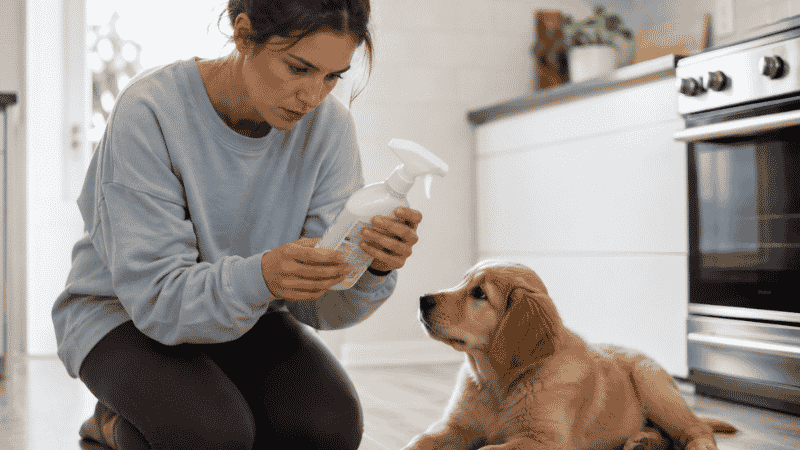
Picture this: you’ve just spent twenty minutes scrubbing your bathroom floor with your usual disinfectant spray. You feel good — the place smells clean, everything looks spotless. Then your puppy trots in, does three laps sniffing every inch of that freshly-mopped floor, and lies down right in the middle of it.
And then the thought hits you: Wait. Was that cleaner actually safe?
If you felt a small jolt of anxiety just reading that, you’re not alone. It’s one of the most common moments of dread for new dog owners — that split-second realization that your home cleaning routine was designed for a pet-free household, and nobody told you that the rules change the moment a puppy moves in.
Here’s the thing: the cleaning product industry isn’t built around your dog’s biology. Most standard household cleaners were formulated without dogs’ specific vulnerabilities in mind — their tendency to lick floors and surfaces, their proximity to the ground where chemical residue settles, and their respiratory systems that are significantly more sensitive to airborne fumes than ours.
This guide is going to cut through the marketing language, give you the actual science on what makes a cleaning product dangerous for dogs, help you audit what’s already under your sink, and point you toward pet safe cleaning products that actually work.
Key Takeaways
- The ASPCA Animal Poison Control Center receives over 400,000 calls per year about pet poisoning — household products including cleaners are among the top causes.
- Phenols, quaternary ammonium compounds (quats), and concentrated bleach are the three most dangerous cleaning ingredients for dogs, and they appear in many popular “everyday” products.
- Products labeled “natural” or “plant-based” are not automatically safe — essential oils like tea tree, eucalyptus, and pine are highly toxic to dogs even in small amounts.
- The most dangerous exposure route for puppies isn’t ingesting the cleaner directly — it’s licking paws and fur that have walked across recently-cleaned, still-damp surfaces.
- There are genuinely effective, truly pet safe cleaning products that clean and disinfect — you don’t have to choose between a clean home and a safe one.
Why Puppies Are More Vulnerable Than Adult Dogs (And Way More Vulnerable Than You)
Before getting into specific products, it helps to understand why dogs are more susceptible to cleaning product toxicity than humans — because the answer shapes every decision you’ll make afterward.
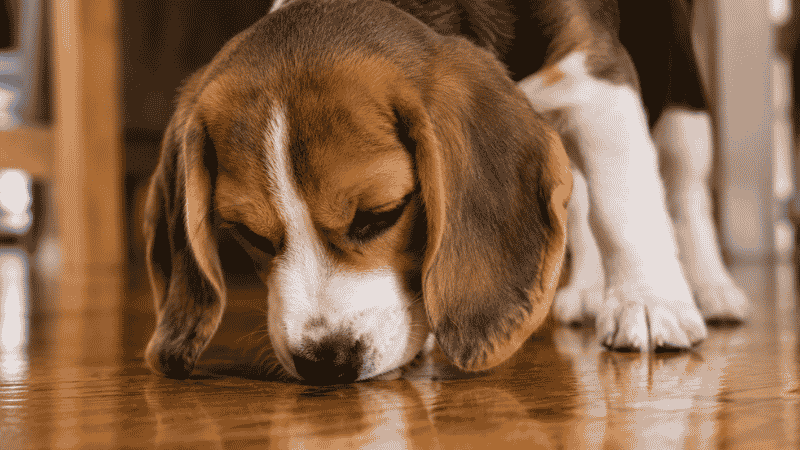
Dogs interact with cleaned surfaces differently than we do. They walk on floors with bare paws, then lick those paws. They press their noses directly against baseboards, cabinet fronts, and toilet seats. They lie with their faces inches from the floor for hours at a time. They breathe in chemical residue that has settled at ground level — where we rarely spend any time.
Puppies add another layer of vulnerability on top of this. Their immune systems are still developing, their livers can’t process toxins as efficiently as adult dogs, and their smaller body mass means a lower threshold for the dose at which a chemical becomes dangerous. What produces mild irritation in a 60-pound adult Lab can cause serious organ stress in a 10-pound puppy.
This is why “I’ve been using this bleach spray for years and my dog seems fine” is genuinely misleading logic. Chronic low-level exposure to certain chemicals can accumulate over time and show up as health problems years later — and by then, the connection to cleaning products is nearly impossible to trace.
The Toxic Ingredients You Need to Know By Name
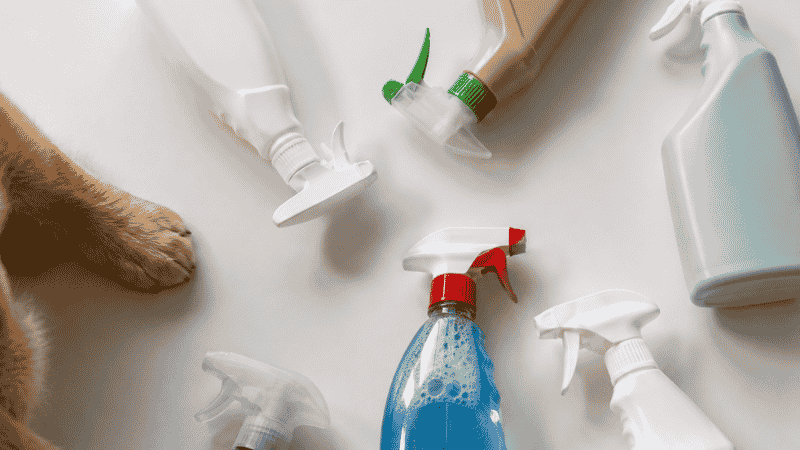
This is the section most cleaning product guides skip because it requires actual chemistry knowledge. But if you’re going to make informed decisions, you need to understand what’s on the label — not just what the packaging says on the front.
Phenols: The Hidden Danger in “Pine-Scented” Cleaners
Phenol-based compounds are found in many disinfectants, particularly products with a pine or “antiseptic” smell. Pine-Sol, Lysol Original, and many commercial floor cleaners contain phenols.
For dogs, phenol exposure causes liver and kidney damage even at relatively low levels. The liver simply can’t metabolize phenolic compounds efficiently, which is why repeated exposure — even in small amounts — is genuinely dangerous over time. If you have a product under your sink that smells strongly of pine and promises to “disinfect,” check the ingredient list for phenol, cresol, or any compound ending in “-phenol.”
Quaternary Ammonium Compounds (Quats): The Ones Hiding in “Disinfecting Wipes”
Quats are the active disinfecting ingredient in most surface wipes and multi-surface sprays — including many products marketed as “safer” alternatives to bleach. Clorox Disinfecting Wipes, Lysol Multi-Surface Cleaner, and numerous “antibacterial” sprays all contain quats.
In dogs, quat exposure causes respiratory irritation and, at higher concentrations, chemical burns to mucous membranes and the GI tract. The specific concern with puppies is their tendency to chew on surfaces — a puppy that chews the corner of a table recently wiped with a quat-containing product can ingest a meaningful dose.
Concentrated Bleach: Dangerous in Ways People Misunderstand
Bleach itself isn’t the primary concern — diluted bleach (1 part bleach to 32 parts water) that has been allowed to fully dry is actually considered relatively safe around pets by many veterinarians. The danger is concentrated bleach, bleach used in enclosed spaces with poor ventilation, and bleach that hasn’t been rinsed properly from surfaces.
The specific risk for puppies: the chlorine gases released during cleaning irritate the respiratory tract, and the alkaline pH of bleach causes chemical burns if licked from a surface that’s still wet. If you use bleach, dilute it heavily, ventilate the space completely, rinse surfaces with plain water afterward, and keep your puppy out of the room until it’s fully dry — not just damp.
Essential Oils: The “Natural” Ingredient That Isn’t Safe
This one surprises almost everyone. Essential oils are derived from plants, they sound natural and safe, and many are marketed specifically as “pet-friendly” alternatives to synthetic chemicals. Several are not safe for dogs — and some are genuinely dangerous.
According to the ASPCA, tea tree oil (melaleuca), eucalyptus, pennyroyal, cinnamon, clove, and pine oils are all toxic to dogs. Even diluted versions of these can cause neurological symptoms, liver damage, and skin irritation in puppies with repeated exposure. If a cleaning product is scented with any of these oils — even in small concentrations — it’s not a safe choice for a puppy household.
How to Audit What’s Already Under Your Sink
Before you go shopping, do this first. Pull out every cleaning product in your home and check each one against this ingredient list. You don’t need to throw everything away immediately — you just need to know what you’re working with.
Ingredients to remove from your puppy’s environment:
- Phenol / cresol / any compound ending in “-phenol”
- Quaternary ammonium compounds — look for “alkyl dimethyl benzyl ammonium chloride” or similar long chemical names
- Pine oil / pine-scented formulas (unless specifically confirmed phenol-free)
- Tea tree oil, eucalyptus oil, pennyroyal oil, cinnamon oil, clove oil
- Formaldehyde or formaldehyde-releasing preservatives (DMDM hydantoin, quaternium-15)
- Benzalkonium chloride (common in many “disinfecting” sprays)
Ingredients that are generally considered safe:
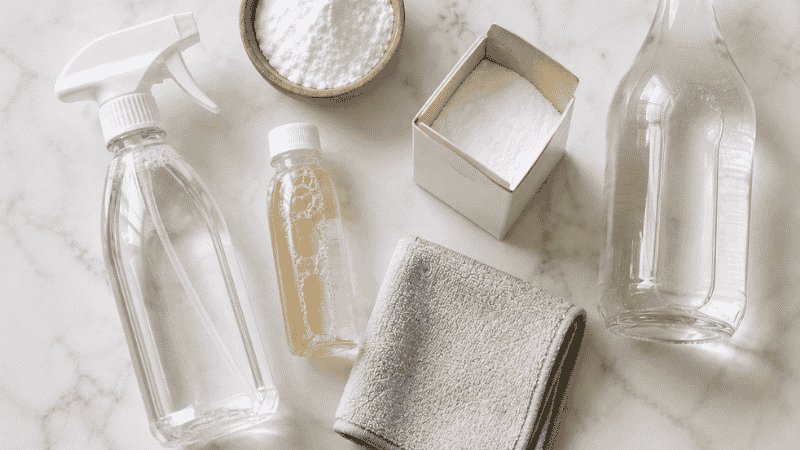
- Citric acid (in moderate concentrations)
- Baking soda (sodium bicarbonate)
- White vinegar — effective cleaner, but note: not a disinfectant
- Plant-derived surfactants (like coco glucoside or decyl glucoside) from reputable brands
- Accelerated hydrogen peroxide (found in some commercial pet-safe disinfectants)
- Enzymatic cleaners — specifically effective for pet waste, breaks down uric acid
Pet Safe Cleaning Products That Actually Work
Knowing what to avoid is half the equation. Here’s what to replace them with — organized by what you’re trying to clean, because the right tool matters.
For Floors (The Most Important Category for Puppy Owners)
Your floors are ground zero for puppy contact. Whatever you clean them with gets onto paws, then into mouths.
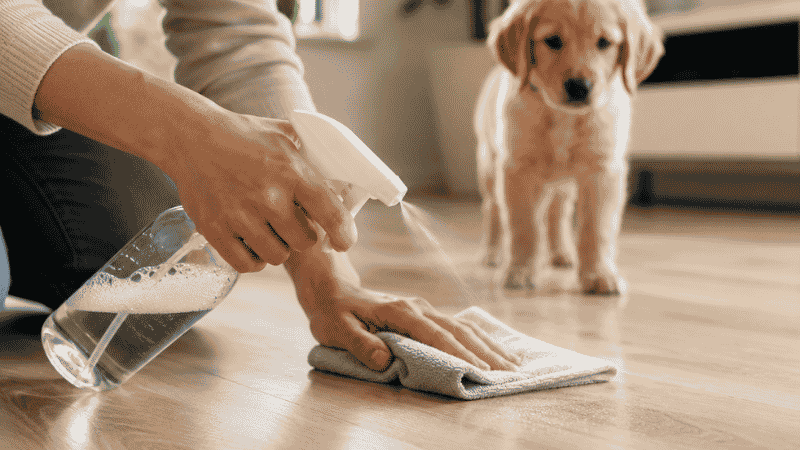
Enzymatic cleaners are the non-negotiable for any area where your puppy has had an accident. Products like Rocco & Roxie Professional Strength Stain & Odor Eliminator and Nature’s Miracle use biological enzymes to break down the uric acid in urine — which is the only way to actually eliminate the scent marker that tells your puppy “this is a bathroom.” Standard mops and floor cleaners don’t break down uric acid; they just clean around it.
For everyday mopping, look for pH-neutral floor cleaners with no added fragrances. Method’s Squirt + Mop Hard Floor Cleaner is genuinely effective, genuinely pet safe (no quats, no phenols, plant-derived ingredients), and available at most grocery stores. Bona’s Hardwood Floor Cleaner is another well-tested option that many veterinarians recommend by name.
For Surfaces (Counters, Cabinets, Food Bowls)
For general surface cleaning, plain dish soap and warm water is genuinely effective for most everyday cleaning tasks and is completely safe for surfaces your puppy licks or contacts. Dawn Free & Clear or any fragrance-free dish soap works.
For disinfection specifically, Force of Nature — a device that converts water, salt, and vinegar into hypochlorous acid — is EPA-registered as a disinfectant, kills 99.9% of bacteria and viruses, and is safe enough that it’s used in food preparation areas. It’s one of the few options that genuinely disinfects without any of the concerning ingredients. The upfront cost of the device is around $70, but the ongoing cost is low.
Seventh Generation’s Free & Clear line — specifically products with no synthetic fragrances, no dyes, and no chlorine bleach — is a well-researched option that’s widely available and consistently recommended by veterinary toxicologists as safe for pet households.
For Bathrooms
Bathrooms present specific challenges because they require genuine disinfection. The two safest options for bathrooms:
Diluted hydrogen peroxide (3%): Available at any pharmacy for under $2. Effective against many bacteria and viruses, safe when dry, no concerning residues. Spray, let sit 5 minutes, wipe clean.
Biokleen Bac-Out: A plant-enzyme-based cleaner that works on bathroom surfaces and is free from petroleum solvents, ammonia, chlorine, and synthetic fragrances. It doesn’t disinfect at the level of a hospital-grade product, but for routine bathroom cleaning in a home with a healthy puppy, it’s sufficient and genuinely safe.
For Laundry (Bedding, Towels, Your Puppy’s Belongings)
Puppies sleep on blankets and beds that get washed regularly. Many standard laundry detergents contain fragrances and optical brighteners that can cause skin irritation in sensitive puppies, especially if residue remains in fabric after washing.
Seventh Generation Free & Clear laundry detergent and Molly’s Suds are both fragrance-free, dye-free, and reliably gentle. For your puppy’s own bedding specifically, do a second rinse cycle to ensure no detergent residue remains — puppy skin is more sensitive than human skin and prolonged contact with detergent residue in fabric can cause contact dermatitis.
The 10-Minute Transition: What to Do If You Only Have a Few Minutes Right Now
If you’re reading this and your puppy is at home right now and you don’t have time to research and restock your entire cleaning supply collection, here’s the immediate action list:
Move these out of reach right now:
- Any cleaner with a strong pine scent
- Disinfecting wipes of any brand
- Anything labeled “kills 99.9% of germs” that isn’t a hydrogen peroxide or enzyme-based formula
- Anything with a warning label that includes phrases like “avoid contact with skin” or “use in well-ventilated area”
What you can safely use today with what you probably already have:
- Plain warm water + a drop of dish soap for most floor and surface cleaning
- Undiluted white vinegar for general cleaning (not disinfection)
- Baking soda paste for scrubbing
These aren’t perfect long-term solutions, but they’re genuinely safe for immediate use while you build out your pet-safe cleaning kit.
If Your Puppy Has Already Been Exposed: What to Do
This is the section nobody hopes to need, but every puppy owner should read before they need it.
Signs that a puppy may have been exposed to a toxic cleaning product:
- Excessive drooling or pawing at the mouth
- Vomiting, especially if it happens within 30 minutes of being in a cleaned area
- Red or irritated eyes, runny eyes
- Coughing, wheezing, or labored breathing
- Lethargy that comes on suddenly
- Pale or white gums (emergency)
- Seizures or muscle tremors (emergency — go immediately)
What to do:
If you suspect your puppy has licked a cleaned surface or ingested a cleaning product, don’t wait for symptoms. Call the ASPCA Animal Poison Control Center at (888) 426-4435 (note: there is a consultation fee) or the Pet Poison Helpline at (855) 764-7661 immediately. Have the product name and ingredients ready.
Do not induce vomiting unless specifically instructed to by a veterinarian or poison control specialist — for some cleaning products, vomiting makes the injury worse by bringing caustic material back through the esophagus.
If symptoms are already present — especially difficulty breathing, pale gums, or seizures — go directly to your nearest emergency veterinary clinic without calling first. Time matters.
FAQ: What Puppy Owners Actually Google
Are Clorox wipes safe for dogs? No — standard Clorox Disinfecting Wipes contain benzalkonium chloride, a quaternary ammonium compound that is toxic to dogs. Allow cleaned surfaces to fully dry before your dog has access, and consider switching to a safer alternative for areas your puppy contacts regularly.
Is Lysol safe around dogs? Most Lysol products contain either phenols or quats. Lysol Original Scent and Pine-Sol contain phenol-based compounds, which are particularly dangerous for dogs and cause liver damage with repeated exposure. Lysol should not be used on surfaces your puppy contacts unless the surface is thoroughly rinsed with water and fully dried before access.
Is vinegar safe to clean with around dogs? Yes — white vinegar is safe for dogs and can be used as a general-purpose cleaner. Important note: vinegar is not a disinfectant. It will clean surfaces but will not kill bacteria, viruses, or effectively neutralize urine odor. For pet urine, use an enzymatic cleaner instead.
What floor cleaner is safe for puppies? Method Squirt + Mop, Bona Hardwood Floor Cleaner, and any pH-neutral, fragrance-free floor cleaner without phenols or quats. After mopping, allow the floor to dry completely before letting your puppy back into the area.
Is bleach safe to use around dogs? Diluted bleach (1 part bleach to 32 parts water) that has been rinsed and fully dried is generally considered safe. Concentrated bleach, bleach in enclosed spaces, and bleach that hasn’t been properly rinsed off surfaces is not safe. When in doubt, choose a safer alternative.
Are “natural” or “plant-based” cleaners automatically safe for dogs? No — and this is one of the most common misconceptions. Tea tree oil, eucalyptus oil, pine oil, and several other plant-derived ingredients are toxic to dogs. Always check the specific ingredient list, not just the marketing claims on the front of the label.
What should I use to clean up puppy accidents? An enzymatic cleaner specifically formulated for pet waste. Rocco & Roxie, Nature’s Miracle, and Angry Orange (enzyme formula) are all effective. Avoid ammonia-based cleaners — the smell of ammonia mimics urine and can encourage your puppy to re-mark the same spot.
Building Your Pet-Safe Cleaning Kit: A Simple Shopping List
Here’s a practical starting point — everything you need to replace the products in your home that contain concerning ingredients:
The essential kit (under $60 total):
- Enzymatic pet cleaner for accidents: Rocco & Roxie or Nature’s Miracle (~$15)
- All-purpose surface cleaner: Seventh Generation Free & Clear (~$8)
- Floor cleaner: Method Squirt + Mop or Bona (~$10)
- Laundry detergent: Seventh Generation Free & Clear (~$15)
- Hydrogen peroxide 3% for bathroom disinfection: any pharmacy (~$2)
- Fragrance-free dish soap: Dawn Free & Clear or similar (~$5)
If you want to invest more:
- Force of Nature system for genuine disinfection (~$70 device, low ongoing cost)
- Biokleen Bac-Out for bathroom and general cleaning (~$12)
The Bottom Line: A Clean Home and a Safe One Are the Same Thing
Switching to pet safe cleaning products doesn’t mean accepting a less clean home. The products above clean effectively — some disinfect at a genuinely clinical level. The difference is that they do it without ingredients that accumulate in your puppy’s system over months and years.
The most important step isn’t buying new products. It’s doing the audit first — spending 20 minutes pulling everything out from under your sinks, reading the ingredients, and separating what stays from what goes. That single action will do more for your puppy’s long-term health than any specific product you could buy.
References
- ASPCA Animal Poison Control Center. (2024). Annual Report: Top Pet Toxins. aspca.org/apcc
- Khan, S.A., & McLean, M.K. (2012). Toxicology of frequently encountered nonfood chemical hazards in dogs and cats. Veterinary Clinics of North America: Small Animal Practice, 42(2), 361–382.
- Wismer, T. (2014). Household products and their toxic effects. Veterinary Medicine, 109(5).
- Environmental Protection Agency. (2024). Safer Choice Product Standards. epa.gov/saferchoice
- American Veterinary Medical Association. (2023). Household Chemical Hazards for Pets. avma.org