
It starts with one Amazon tab. Then three more. Then a Chewy cart with eleven items you’re not sure you actually need, a Reddit thread from 2019 that contradicts the blog post you just read, and a growing sense that you’ve somehow already failed before your puppy even arrives.
If that sounds familiar, take a breath. You haven’t failed. You’ve just hit the wall that every first-time dog owner hits — the moment when the excitement of “we’re getting a puppy!” collides with the reality of “wait, what do I actually need to do?”
This guide is built around one simple idea: new puppy preparation isn’t about buying everything — it’s about buying the right things in the right order. We’ve broken it into a before-they-arrive phase, a first-day setup, and a first-week toolkit, so you always know exactly what to focus on next.
By the end of this, your home will be ready, your shopping list will be sorted, and you can spend the night before pickup actually being excited instead of panicking.
Key Takeaways
- You need roughly 15–20 core items before your puppy comes home — not the 60+ that pet stores will try to sell you.
- The most important prep work isn’t shopping: it’s puppy-proofing your space and booking your first vet appointment, both of which cost nothing.
- A realistic first-year budget for supplies, food, and vet care runs $2,000–$4,000 — knowing this upfront prevents the most common new owner regret.
- Items are divided into Must-Have Before Day One, Get in Week One, and Nice to Have Later — so you know what to prioritize.
- The first 72 hours at home set the behavioral tone for months — your environment and routine matter more than any individual product you buy.
Before You Buy Anything: Two Things That Cost Nothing
Most new puppy guides jump straight to shopping lists. This one doesn’t, because there are two zero-cost steps that matter more than any product you could order.
Book Your Vet Appointment Now
Your puppy’s first vet visit should happen within the first week home — ideally within the first 48 to 72 hours. Many first-time owners wait until “something comes up,” but that first visit serves a purpose beyond checking for illness. It establishes your puppy’s health baseline, continues the vaccine series they started with the breeder, and gives you a professional set of eyes on whether what you’re observing at home is normal.
Call before your puppy arrives. Some clinics have 2–3 week wait times for new patients. You want this appointment on the calendar before day one, not scrambling to find a walk-in clinic at 11pm because your puppy sneezed three times and you’re convinced something is wrong.
Walk Through Your Home Like a Puppy Would
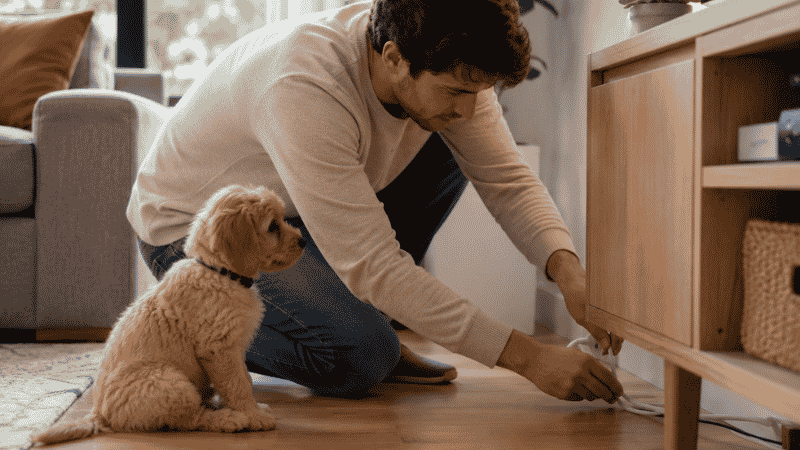
Get down on the floor — literally. Crawl around your living space and look for what’s at puppy height. You’re looking for electrical cords that can be chewed through, toxic houseplants (common offenders include pothos, aloe vera, and peace lilies), gaps behind appliances a small puppy could squeeze into, and anything on low shelves that’s chewable or swallowable.
This takes 20 minutes and can prevent an emergency vet visit that costs $1,500. The American Veterinary Medical Association estimates that accidental ingestion of household toxins is one of the top five reasons puppies end up in emergency care in their first year. Puppy-proofing isn’t optional — it’s the single highest-impact thing you can do before your puppy arrives.
The New Puppy Checklist: Organized by When You Actually Need It
Must-Have Before Day One
These are the non-negotiables. If your puppy arrives and you don’t have these, you’ll have a problem within the first few hours.
A properly-sized crate
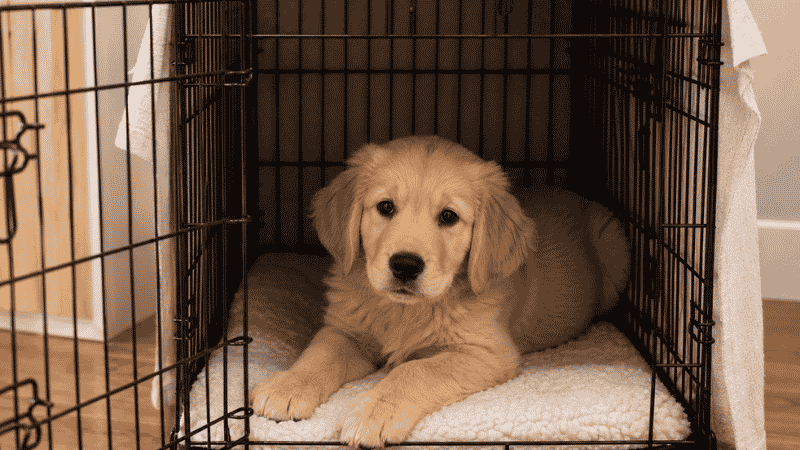
The crate is the single most important item on this list, and it’s the one new owners most often get wrong. The common mistake is buying one that’s “big enough to grow into.” A crate that’s too large defeats the entire purpose: puppies won’t soil where they sleep, but only if the space feels like a den, not a warehouse. If your puppy can walk to one corner and sleep in another, the crate is too big.
Buy for your puppy’s current size, or buy a crate with a divider panel that you can adjust as they grow. A divider costs almost nothing and saves you from buying two or three crates as your puppy gets bigger.
Food and water bowls
Stainless steel is the practical choice — it doesn’t harbor bacteria the way plastic does, it doesn’t tip over as easily as ceramic, and it lasts indefinitely. For large and giant breeds, a non-tip weighted bowl is worth the small extra cost because watching a Great Dane puppy wear their water bowl is less charming than it sounds.
One honest note: elevated bowls are marketed heavily as “better for digestion.” The research on this is mixed, and some studies suggest they may actually increase bloat risk in large breeds. Plain bowls at floor level are fine for most puppies.
Age-appropriate puppy food
This should be the specific food your breeder or rescue was feeding, if possible. Switching foods abruptly is one of the most common causes of puppy diarrhea in the first week home — not illness, just a diet change happening too fast. If you plan to change foods, ask for a small supply of the current food and transition over 7 to 10 days by mixing increasing amounts of the new food in.
Check that the bag says “formulated for puppies” or “all life stages” — not “adult” or “senior.” Large breeds need a formula specifically labeled for large breed puppies, which controls the calcium-to-phosphorus ratio to support slower, safer bone growth.
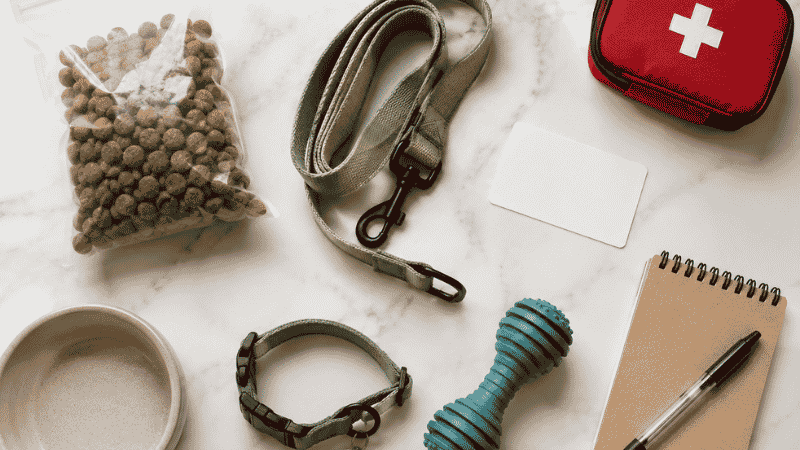
Collar with ID tag + leash
Your puppy should be wearing identification from the moment they arrive at your home. It takes one escaped door to turn a routine situation into a crisis. A simple flat collar with a buckle, fitted so you can slip two fingers underneath, is all you need. The ID tag should have your phone number — not your puppy’s name, which doesn’t help anyone who finds them.
The leash for early puppyhood doesn’t need to be fancy. A standard 4–6 foot nylon leash is perfect for potty training and early neighborhood walks. Save the retractable leash for later — they teach puppies to pull and don’t give you enough control when you’re still establishing walking habits.
Enzymatic cleaner — at least one large bottle
Not regular floor cleaner. Not vinegar. Enzymatic cleaner specifically formulated for pet urine. The reason is biological: dog urine contains uric acid, which standard cleaners don’t break down. If the uric acid remains in the floor or carpet, the scent remains — and your puppy’s nose is exponentially more sensitive than yours. Uric acid is the signal that says “this is a bathroom.” Only enzymatic cleaners actually neutralize it.
Buy more than you think you need. You will use it.
A designated puppy zone
Before your puppy arrives, set up a defined area where they’ll spend most of their first week. This isn’t a punishment — it’s a neurological kindness. Too much space too early overwhelms puppies and makes accidents nearly inevitable. A puppy zone with their crate, water bowl, and a few toys creates a manageable world that they can feel secure in while they’re adjusting.
An X-pen (exercise pen) is ideal for creating this zone flexibly, but baby gates across a doorway work just as well for smaller puppies.
Get in Week One
These items you can pick up in the first few days — you don’t need them on arrival, but you’ll want them quickly.
Chew toys and teething toys
Puppies chew for the same reason babies put everything in their mouths: their mouths are how they explore the world, and chewing relieves the discomfort of new teeth coming in. The goal isn’t to stop chewing — it’s to redirect it toward things you’re okay with.
Have at least three different textures available: something rubber (Kong-style), something softer (a plush toy), and something rope or braided. Different puppies prefer different textures, and you won’t know which yours is until you try. Whatever you offer, check that it’s appropriately sized — nothing small enough to be a choking hazard, and nothing that can be torn apart and swallowed in large pieces.
Training treats — small and soft
Training treats should be small (the size of a pea or smaller), soft enough to eat quickly without chewing, and something your puppy goes genuinely crazy for. The treat needs to be consumed in under two seconds so your puppy’s attention comes back to you immediately after the reward.
High-value treats — tiny pieces of boiled chicken, commercially made soft training treats, or even small pieces of cheese — are not for everyday snacking. They’re currency. Use them specifically for training moments when you want your puppy to remember: this behavior is worth doing again.
A UV blacklight
This sounds odd on a puppy checklist, but it’s genuinely one of the most useful tools you’ll own in the first month. A $10 UV blacklight flashlight reveals dried urine on floors, rugs, and upholstery that’s invisible under normal light. If your puppy is repeatedly going in a specific area despite cleaning, a UV light will show you exactly where the residual scent is — which is why they keep returning. Treat those spots with enzymatic cleaner and the pattern usually breaks within days.
Puppy shampoo
You won’t need to bathe your puppy immediately, but when you do, use a formula designed for puppies. Adult dog shampoos — and certainly human shampoos — have different pH levels than puppy skin requires. Even “gentle” formulas can cause skin irritation in young puppies. Look for something fragrance-free and tearless.
Nice to Have Later (Don’t Stress About These Now)
These items are genuinely useful but not urgent. Buy them when you have time to research properly and when you understand your specific puppy’s personality better.
- Harness: Great for walks, essential for brachycephalic breeds like Pugs and Frenchies. Wait until you know your puppy’s adult size trajectory before investing in a good one.
- Dog bed: Many puppies ignore expensive beds and sleep on the crate pad or the floor anyway. See what your puppy actually prefers before spending $80 on a bed.
- Interactive puzzle toys: Wonderful for mental stimulation. Introduce these after the first couple of weeks once your puppy is settled and food-motivated in training.
- Slow feeder bowl: Genuinely useful if your puppy eats like they’ve never seen food before, but not an emergency item.
- Dog doorbell: These teach puppies to signal when they need to go out, and they work remarkably well. But introduce them in week two or three, after potty training basics are established.
Your Room-by-Room Safety Checklist
Before your puppy’s first day home, do a physical walk-through of each area they’ll have access to.
Kitchen:
- Move cleaning products to upper cabinets or behind child-proof locks
- Secure the trash can (puppies are remarkable trash archaeologists)
- Check for gaps behind the refrigerator and under the stove
Living Room:
- Bundle and hide electrical cords — a chewed power cord is both a fire risk and an electrocution risk
- Remove or relocate toxic plants (common toxic plants: pothos, philodendron, aloe vera, snake plant, peace lily)
- Clear low shelves of anything swallowable
Bedroom (if puppy will have access):
- Move shoes to a closed closet — leather and rubber are irresistible chew targets
- Check under the bed for forgotten items
- Secure any medications in a closed cabinet
Bathroom:
- Keep the toilet lid closed — small puppies have drowned in toilet bowls
- Move medications, razors, and cotton items out of reach
- Secure the trash can
Your First-Week Timeline
Rather than a static shopping list, use this timeline to pace your first week.
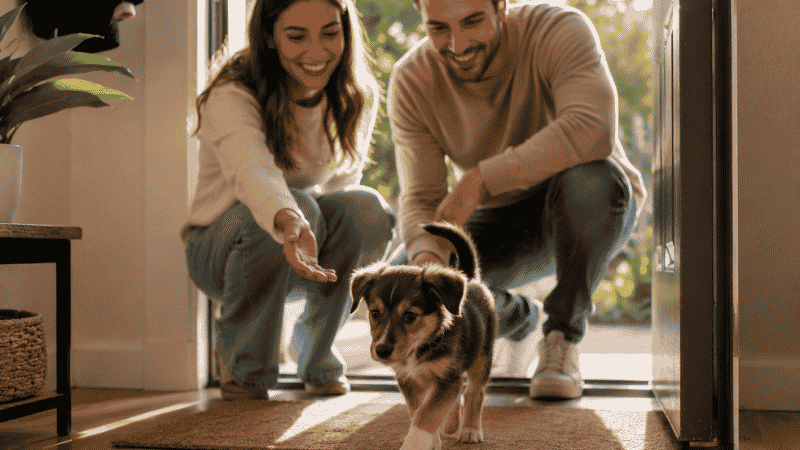
Day 0 (Pickup Day): Bring your puppy directly to their outdoor potty spot before going inside. Don’t let excitement override this — the earlier you establish where “outside” means business, the faster potty training goes. Keep the first few hours calm and quiet. Resist the urge to invite everyone over.
Days 1–3: Focus on routine, not training. Feed at the same times. Take outside at the same times (after waking, after eating, after playing, before sleeping). Let your puppy nap as much as they want — puppies need 16–18 hours of sleep per day and an under-rested puppy is a chaotic puppy.
Days 3–5: Start simple name recognition and the first basic commands. “Sit” can be introduced in 5-minute sessions using treats. Keep sessions short — a puppy’s focus window is measured in seconds, not minutes.
Days 5–7: First vet visit. Bring any paperwork from the breeder or rescue (vaccine records, deworming history, microchip information). Ask your vet to show you what the puppy’s body condition score looks like right now so you have a baseline.
Budget Reality Check: What Does the First Year Actually Cost?
This is the section most puppy checklists avoid, and it’s the one that causes the most first-year regret.
| Category | Realistic Range |
|---|---|
| Initial supplies (all Must-Haves) | $200–$500 |
| First-year food | $400–$900 |
| First vet visit + vaccine series | $200–$400 |
| Spay or neuter | $200–$500 |
| Training classes (recommended) | $150–$400 |
| Unexpected vet visits | $300–$800 |
| Ongoing treats, toys, replacement items | $200–$400 |
| Total First-Year Estimate | $1,650–$3,900 |
The biggest financial surprise for most new owners isn’t the food or the toys — it’s the unexpected vet visits. A puppy that eats something they shouldn’t, develops a respiratory infection, or has a reaction to a vaccine can generate a $400–$1,500 vet bill on a random Wednesday. Pet insurance for puppies averages $30–$50 per month and is worth serious consideration in year one when the risk of accidents is highest.
Red Flags in the First Week: When to Call Your Vet
New owners often don’t know the difference between “puppy being a puppy” and “something might actually be wrong.” Here’s the honest breakdown.
Normal in week one:
- Loose stools for 1–2 days (diet change and stress)
- Sleeping 16–18 hours per day
- Occasional sneezing
- Crying or whining in the crate at night
Call your vet if you see:
- Vomiting more than once in a day, or any blood in vomit
- Diarrhea lasting more than 48 hours, or diarrhea with blood
- Complete refusal to eat for more than 24 hours
- Lethargy that doesn’t lift after a nap
- Pale, white, or bluish gums (go immediately — this is an emergency)
- Straining to urinate or defecate with nothing coming out
- A swollen, hard belly
When in doubt, call. Most vet offices have a nurse line that can help you assess whether something needs to be seen today or can wait for a scheduled appointment.
FAQ: What New Puppy Owners Actually Google
What do I need for a new puppy checklist? The essentials are: a properly-sized crate, food and water bowls, age-appropriate puppy food, a collar with ID tag, a leash, enzymatic cleaner, and a designated puppy zone. Everything else can be added during the first week.
How much does it cost to get everything for a new puppy? Initial supplies typically run $200–$500. Budget $1,650–$3,900 for the full first year including food, vet care, and training.
What should I do the first day I bring my puppy home? Take them to their outdoor potty spot first. Keep the environment calm and quiet. Limit visitors. Stick to whatever feeding schedule the breeder or rescue used. Let them sleep.
What do puppies need in their crate? A crate pad or thin blanket, and optionally a worn t-shirt with your scent to reduce separation anxiety. Skip the water bowl in the crate for young puppies — it tips over and makes accidents more likely. Offer water outside the crate after every nap.
Is it okay if my puppy cries the first night? Yes, and it’s normal. Don’t take them out of the crate every time they cry or you’ll teach them that crying opens the door. Do take them out for a quick potty trip if they’ve been crated for more than 2–3 hours. Put the crate near your bed so they can hear and smell you — this reduces crying significantly.
What’s the most important thing to buy for a new puppy? Enzymatic cleaner. Not glamorous, but you’ll use it every single day for the first month, and the right cleaner is the difference between a puppy that keeps having accidents in the same spots and one that breaks the habit within weeks.
When should I take my new puppy to the vet? Within the first week home, ideally within 48–72 hours. Book this appointment before your puppy arrives if possible.
The Bottom Line: Preparation Beats Perfection
The goal isn’t to have every possible puppy product before your dog walks through the door. The goal is to have what you actually need, to have your home safely set up, and to have a vet appointment already booked.
Everything else you’ll figure out as you go — and honestly, that figuring-out process is part of what makes the first year so memorable.
Your puppy doesn’t need the perfect crate or the most expensive food. They need a safe space, a consistent routine, and someone who shows up for them every day. You’ve already started doing that by preparing.

References
- American Veterinary Medical Association. (2024). Pet Ownership and Demographics Sourcebook. avma.org
- Reiter, A.M. (2012). Dental and oral diseases in dogs. Veterinary Clinics of North America: Small Animal Practice, 42(3), 531–549.
- Appleby, D., Bradshaw, J.W.S., & Casey, R.A. (2002). Relationship between aggressive and avoidance behaviour by dogs and their experience in the first six months of life. Veterinary Record, 150(14), 434–438.
- American Animal Hospital Association. (2023). AAHA Puppy and Kitten Guidelines. aaha.org