
As cat parents, we obsess over the highest quality grain-free kibble and the most interactive feather wands. We curate their climbing trees and monitor their water intake. Yet, the most critical piece of health equipment in your home is often the most overlooked: the cat litter box.
In 2026, we are seeing a major shift in how feline veterinarians view the “bathroom environment.” It’s no longer just a place for waste; it is a diagnostic center and a sanctuary for your cat’s territorial security. However, for many cats, their litter tray is a source of silent stress, hidden bacteria, and microscopic irritants that can lead to chronic health issues like Feline Lower Urinary Tract Disease (FLUTD).
As a health-focused pet blogger, I’ve spent years investigating why some cats suddenly “rebel” against their trays. What I discovered is that the material of the box itself—specifically the ubiquitous plastic tub—is often the silent culprit behind recurring odors and behavioral strikes. Let’s peel back the layers on why upgrading your cat litter box is the single most impactful wellness move you can make this year.
The Plastic Problem: Hidden Bacteria and Odor Traps
If you walk into your laundry room and still smell that sharp, ammonia-like scent despite just cleaning the tray, you aren’t imagining it. The traditional plastic cat litter box has a strict expiry date that most owners ignore.
Micro-scratches and the “Biofilm” Fortress
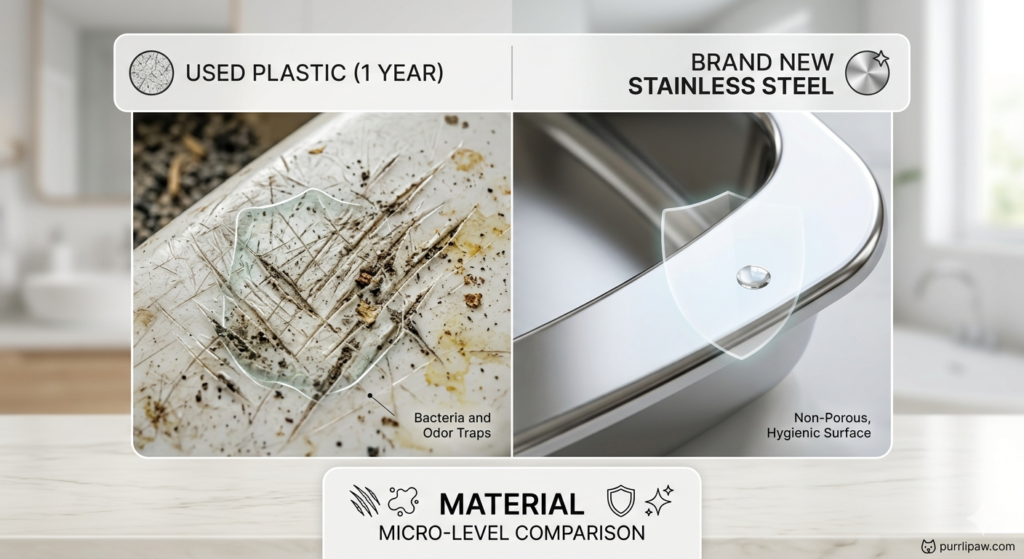
Cats are instinctive diggers. Every time your cat buries their business, their sharp claws create thousands of microscopic scratches on the plastic surface. These tiny fissures are the perfect “apartments” for bacteria. Studies show that Staphylococcus and E. coli can form mature biofilms—a protective slimy layer—within 24-48 hours inside these scratches. This biofilm resists standard soap and water, meaning a two-year-old plastic tray is never truly sanitized.
The Porosity Trap and Sensory Overload
Plastic is naturally porous. It absorbs organic compounds and feline pheromones over time. For a cat—whose sense of smell is roughly 14 times stronger than ours—a scratched plastic tray smells like a permanent billboard of old waste. This sensory clutter can overwhelm a territorial cat, leading directly to litter box aversion.
The 2026 Hygiene Revolution: Switching to a Stainless Steel Cat Litter Box
If you visit a medical-grade veterinary surgical suite, you won’t see plastic trays; you’ll see stainless steel. This is because steel offers a level of sanitation that plastic simply cannot match. In 2026, a stainless steel cat litter box is no longer a luxury—it’s the gold standard for long-term feline hygiene.
Bacteria-Proof and Non-Porous
The primary advantage of a stainless steel cat litter box is its non-porous surface. Bacteria cannot find a foothold. Without micro-scratches to hide in, odors don’t linger. When you wash a steel tray, you are truly sanitizing it, creating a neutral-scent environment that makes the tray much more inviting for a finicky feline.
Durability and Odor Control
A plastic box should be replaced every 12 to 18 months due to degradation and odor absorption. A stainless steel cat litter box, however, is effectively a “buy it for life” item. It doesn’t stain, it won’t crack, and it doesn’t react with the acidic ammonia in cat urine. It’s an investment in both your cat’s health and an eco-friendly lifestyle.
At-a-Glance Material Comparison
| Feature | Old-School Plastic | Modern Stainless Steel (304) |
| Bacterial Resistance | Low (absorbs biofilm) | Extremely High (non-porous) |
| Odor Containment | Poor (leaks smell over time) | Perfect (zero absorption) |
| Lifetime Cost | High (replacement every 1.5 yrs) | Low (one-time purchase) |
| Ease of Cleaning | Requires hard scrubbing | Rinse & Go |
Troubleshooting Behavior: Why is My Cat Pooping Outside the Litter Box?
It’s the question that keeps cat parents up at night. When your feline friend starts “protesting” outside the tray, they aren’t being spiteful—they are communicating a distress signal.
Medical vs. Environmental Triggers
First, always rule out medical issues. Constipation or a UTI can make a cat associate the box with pain. If medical red flags are cleared, the issue is environmental. The answer to why is my cat pooping outside the litter box? almost always lies in one of two factors: cleanliness or material sensitivity.
Material Sensitivity and “Paw Feel”
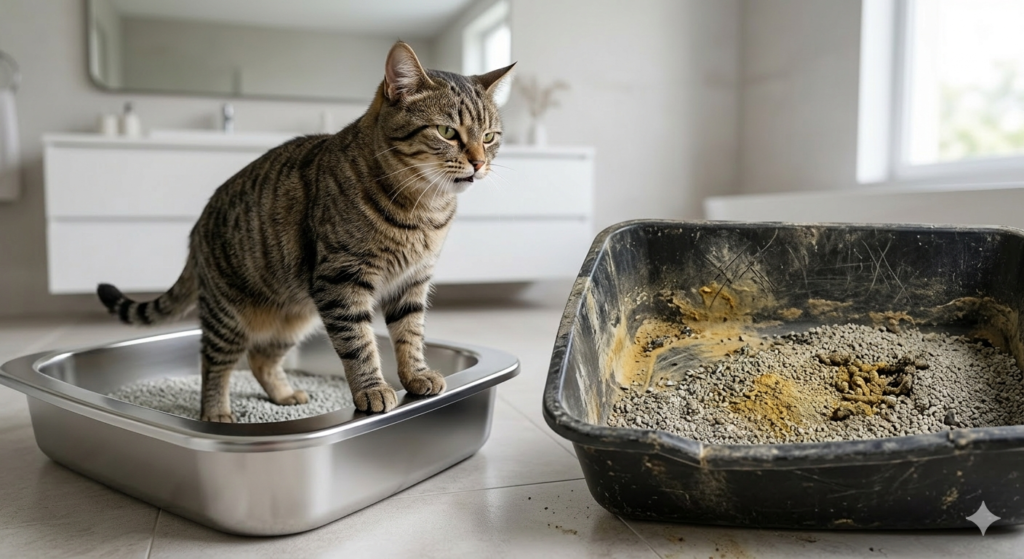
If you are using an old plastic cat litter box, the lingering scent of past waste might be overwhelming. Furthermore, cats are highly sensitive to “paw feel.” A smooth, clean surface is inviting; a textured, bacteria-laden one is repulsive. Upgrading to a stainless steel cat litter box provides a sensory reset. Its cooling surface and complete lack of residual pheromones communicate safety, often solving the “out-of-box” problem within a few days.
Optimization Guide: Location, Size, and Maintenance
Material is crucial, but it’s not the only factor. To ensure your cat loves their new cat litter box, follow these optimization rules:
- The Box+1 Formula: For multi-cat homes, always have one box per cat, plus one extra. (3 cats = 4 boxes).
- Location is Key: Place the tray in a quiet, accessible area—never near noisy appliances like a washing machine. The天性 is to poop away from water and food sources.
- Size Matters: The tray should be at least 1.5 times the length of your cat from nose to tail. Cramped spaces increase stress and bad aim.
Cleaning Hacks for a Stainless Steel Tray
- The “Rinse & Go” Method: For daily maintenance, just dump the old litter, rinse the tray with warm water, and wipe it dry. No hard scrubbing required.
- Monthly Deep Clean: Once a month, use a mild, pet-safe enzymatic cleaner to remove any invisible biofilms. Avoid abrasive pads that could scratch the steel.
(The Ultimate Litter Setup)
- The 7cm Depth Rule: Maintain a consistent litter depth of 5-7cm (2-3 inches). Too shallow, and their claws will scrape the basin (increasing anxiety); too deep, and they may feel unstable.
- UV Light Audit: Use a UV flashlight to check the area around the cat litter box. This reveals hidden splatter that normal cleaning missed.
Frequently Asked Questions (FAQ)
Q: Will a stainless steel box be too cold in the winter? A: No. Litter is an excellent insulator. Unless you keep the box in an unheated garage, the temperature won’t bother your cat.
Q: Do cats prefer open or covered boxes? A: Most behaviorists recommend open-top boxes. Covered boxes trap odors (creating a “porta-potty” effect) and block escape routes, which can make a submissive cat feel trapped.
Q: I have three cats. Can I get away with just two large boxes? A: It’s risky. Cats are territorial; a bully may block access to a box. Stick to the Box+1 rule for peace and harmony.
Conclusion: Investing in Your Cat’s Long-Term Wellness
A cat litter box is more than just a place for waste; it is a fundamental component of your cat’s health, comfort, and peace of mind. By prioritizing medical-grade hygiene and upgrading to a stainless steel cat litter box, you eliminate hidden odor traps and create a truly sanitary sanctuary.
Mild suggestion: If your cat is currently “on strike,” a sensory reset with a steel tray might be the best investment you make this year. Your nose—and your cat’s wellness—will thank you.