
You did the research. You read the articles. You bought the crate, the food, the toys. You felt ready.
And then your puppy found the phone charger behind the bedside table, the bottle of ibuprofen that had rolled under the bathroom vanity, and the pothos plant you’ve had for three years and didn’t once think to look up.
This is the universal new puppy owner experience. Not because you weren’t careful — but because puppy proofing your home requires you to see your space through the eyes of a creature who investigates everything with their mouth, has zero concept of what’s dangerous, and can access places you forgot existed.
Most puppy proofing guides give you the obvious list: put away medications, cover electrical cords, check your plants. This guide goes further. It covers the things that don’t make it onto standard checklists — the rolled-under items, the scent-attractive objects, the hazards hiding in plain sight — organized room by room so you can actually work through your home systematically before your puppy arrives.
Key Takeaways
- Get on the floor. Literally. Crawl around your home at puppy eye level and you will see hazards you’d never notice standing up. This is the single most effective puppy proofing technique.
- Scent drives danger. Puppies don’t chew randomly — they go for things that smell interesting. Your socks, your shoes, your bag strap, your phone charger (which smells like you) are more attractive than any toy.
- Toxic plants are everywhere. Pothos, philodendron, peace lily, aloe vera, and snake plant — some of the most common houseplants — are toxic to dogs. Check every plant before your puppy arrives.
- “Out of reach” changes as your puppy grows. What’s safe at 8 weeks may not be safe at 16 weeks. Puppy proofing is not a one-time event.
- If your puppy ingests something toxic: ASPCA Animal Poison Control is 888-426-4435, available 24 hours. Save this number in your phone now, before you need it.
Before You Start: The Crawl Test
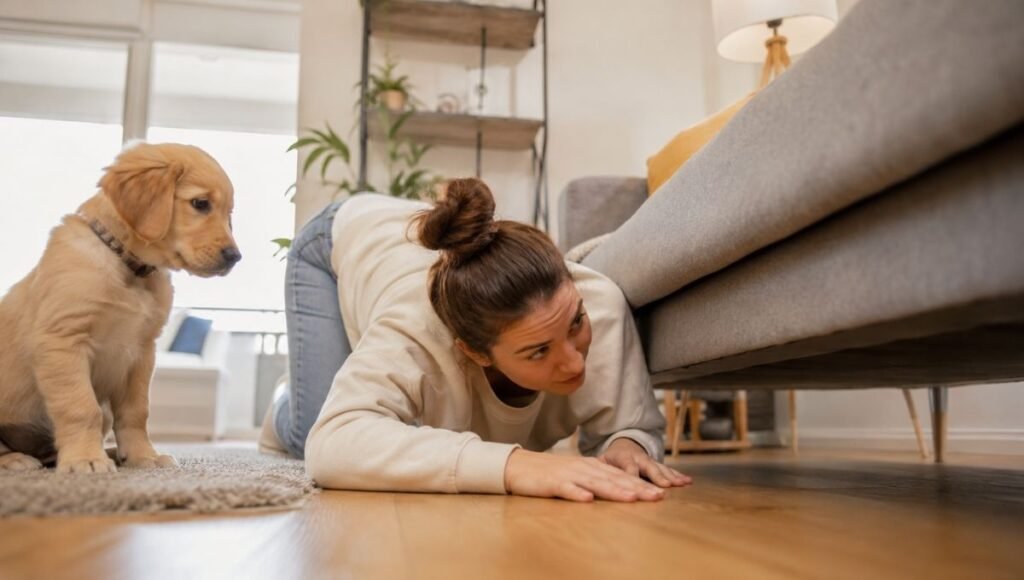
Before working through the room-by-room checklist, do this first: get on all fours in each room and spend 30 seconds looking around.
The perspective shift is dramatic. From floor level you’ll see the power strip behind the bookshelf you’d forgotten about. You’ll notice the gap under the sink cabinet where things roll and accumulate. You’ll spot the baseboards with paint that’s chipping. You’ll find the corner of the rug that’s been lifting for months.
This is your puppy’s entire world. Everything at floor level, under furniture, behind appliances, and in low cabinets is accessible and potentially interesting. The crawl test is not optional — it’s the fastest way to identify hazards that no checklist will predict for your specific home.
The Kitchen: The Most Dangerous Room in Your Home
The kitchen is where most puppy emergencies originate, and it’s not always because of food. The combination of cleaning products, human medications that end up in drawers, plastic bags, and trash makes it the highest-risk room for any new puppy.
Food Hazards: Beyond the Obvious
Everyone knows chocolate is toxic. Most new owners also know about grapes and raisins. What’s less commonly known is the scope of what’s actually dangerous:
Common kitchen foods toxic to dogs:
- Xylitol — found in sugar-free gum, some peanut butters, baked goods, mouthwash. Even small amounts cause dangerous blood sugar drops and liver failure.
- Onions and garlic — toxic in all forms: raw, cooked, powdered. Causes red blood cell damage that builds up over time.
- Macadamia nuts — cause weakness, tremors, hyperthermia
- Avocado (skin, pit, and flesh) — toxic in large amounts; pit is a choking and obstruction hazard
- Grapes, raisins, and currants — can cause acute kidney failure in unpredictable amounts. A single grape has killed small dogs.
- Coffee grounds and tea bags — caffeine toxicity
- Unbaked bread dough — yeast expands in the stomach, produces alcohol as it ferments
The xylitol point deserves extra emphasis. Many owners use peanut butter as a Kong filler or training treat, and some brands contain xylitol. Check the ingredients on every peanut butter before giving it to your puppy. The brands Jif and Skippy are typically safe; always verify before purchasing.
The Trash Can Situation
A standard kitchen trash can with a swing-top lid will not contain a motivated puppy for long. The smells emanating from your kitchen trash — meat wrappers, fruit peels, coffee grounds, spoiled food — are essentially a siren song.
Invest in a trash can with a locking or step-open lid before your puppy comes home. Keep it inside a lower cabinet if possible. The trash can situation is one where the hassle of upgrading now is dramatically less than the consequences of not doing so.
Under the Sink: The Hidden Medicine Cabinet
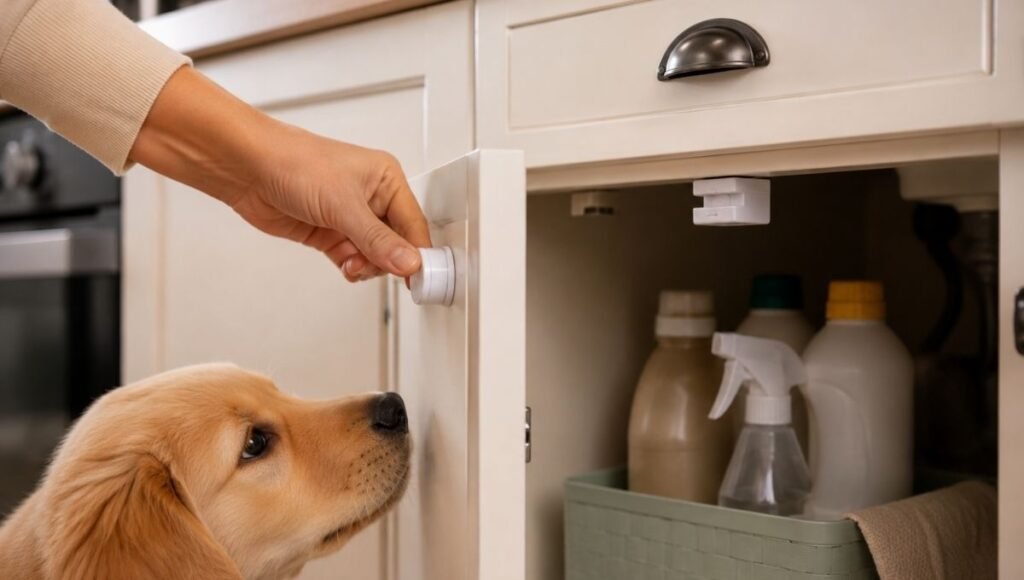
Most people keep cleaning products under the kitchen sink. Many people also keep dishwasher pods, drain cleaners, and pest control products in the same cabinet.
Standard childproof cabinet latches are your minimum requirement here. More secure options include magnetic cabinet locks or simply moving everything out of lower cabinets entirely for the first year. Whatever you choose, do it before your puppy comes home — not after the first time you find the cabinet open.
One thing that surprises new owners: dishwasher pods are particularly dangerous. They’re brightly colored, they smell like soap, and they look intriguing. A puppy who gets into a dishwasher pod can develop severe chemical burns in the mouth and esophagus. This is an emergency vet situation.
The Living Room: The Room You Think Is Safe
Living rooms feel harmless. There’s usually no food, no cleaning products, no medications. But the living room is actually where many chewing incidents happen precisely because owners let their guard down.
Electrical Cords: The Underestimated Hazard
Electrical cords are irresistible to puppies for two reasons: they move, and they smell like the humans who handle them constantly. A puppy who bites through a live wire can be electrocuted or burned; a puppy who bites through an unplugged cord can ingest plastic that causes intestinal obstruction.
The solutions:
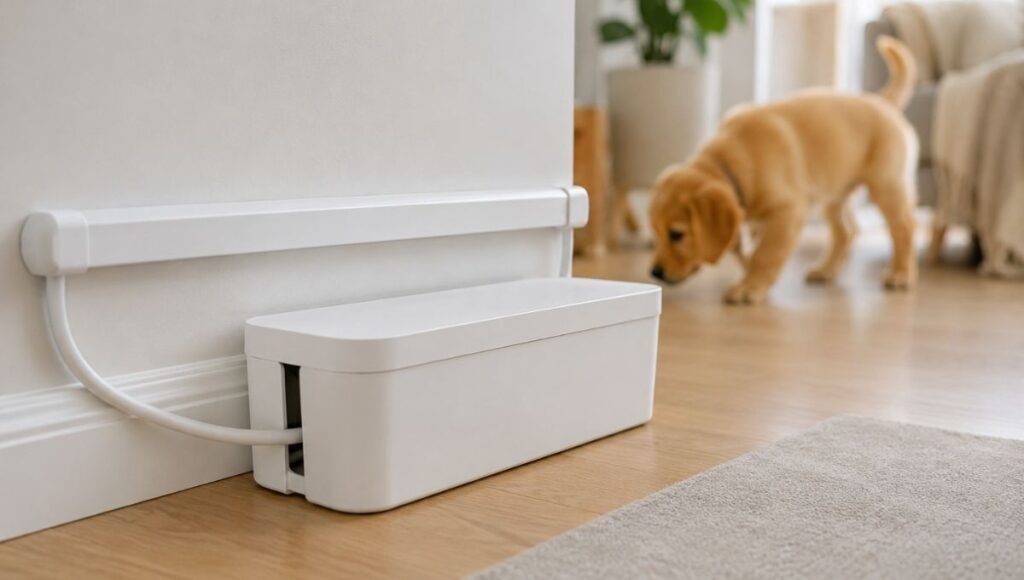
Cable concealers — plastic tubing that encases multiple cords and runs along baseboards. Available at any hardware store for under $20. This is not the most elegant solution but it works.
Cord shorteners and winders — reduce the length of accessible cord. Dangling cords are more attractive than taut ones.
Cord management boxes — box-style enclosures for power strips and excess cord. Blocks direct access.
Furniture positioning — the simplest solution when possible. A sofa or bookshelf placed against the wall with cords behind it removes the temptation entirely.
The important clarification: unplugged cords are also dangerous. The cord itself — the rubber and plastic coating — is a chewing and ingestion hazard even when not connected to power. Management means making cords inaccessible, not just unplugging them.
Plants: The Hazard That Catches Everyone
This is the one that gets most new puppy owners. You’ve had your houseplants for years. You don’t think of them as hazards. They’re part of your decor, not something you’d associate with a veterinary emergency.
The reality: many of the most popular houseplants are toxic to dogs, some severely so.
Toxic plants extremely common in homes:
- Pothos — one of the most popular houseplants in the world. Causes oral irritation, vomiting, drooling, difficulty swallowing
- Philodendron — causes mouth pain and swelling, vomiting, drooling
- Peace lily — causes oral irritation, vomiting; can cause more severe symptoms in large amounts
- Aloe vera — toxic to dogs despite being safe for humans. Causes vomiting, diarrhea, lethargy
- Snake plant (Sansevieria) — causes nausea, vomiting, diarrhea
- Sago palm — one of the most toxic plants for dogs. Even a few seeds can cause acute liver failure and death.
- ZZ plant — mildly toxic; causes vomiting and diarrhea
- Dracaena — toxic to dogs and cats; causes vomiting, drooling, loss of appetite
The practical response: go through every plant in your home before your puppy arrives. Cross-reference against the ASPCA’s complete toxic plant database (aspca.org/pet-care/animal-poison-control/toxic-and-non-toxic-plants). Move toxic plants to rooms your puppy won’t have access to, or rehome them. This is not an exaggeration — the sago palm point alone is worth taking seriously.
Non-toxic plants that are safe with dogs: Boston fern, spider plant, orchids, African violet, and most succulents (though eating any plant in quantity can cause stomach upset).
Coffee Tables and Low Surfaces
Everything on your coffee table is at puppy height. Books, remote controls, coasters, candles, lip balm, coins — all of it. Assume that anything within your puppy’s reach will be chewed or knocked over in the first month. Clear low surfaces and keep them clear until you have a reliable understanding of your specific puppy’s behavior around these items.
The Bedroom: The Room Where People Let Their Guard Down
Bedrooms feel personal and safe, which is why they’re often the last room people puppy proof — and the first room where unexpected incidents happen.
Medications: The Most Serious Hazard in Any Room
Human medications are among the most common causes of pet poisonings reported to the ASPCA Animal Poison Control Center. The specific list of dangerous medications is long, but a few stand out:
- Ibuprofen and naproxen (Advil, Motrin, Aleve) — severely toxic to dogs. Cause gastrointestinal ulcers and acute kidney failure. Even a single regular-strength ibuprofen tablet can cause serious illness in a small puppy.
- Acetaminophen (Tylenol) — causes liver damage
- Antidepressants — neurological symptoms
- ADHD medications — stimulant toxicity
- Sleep aids and antihistamines — neurological symptoms
The problem is not just the medicine cabinet. Medications end up in nightstands, in bags and purses, in coat pockets, in drawers where they’ve been put “temporarily.” A pill that drops and rolls under the bed might as well not exist from your perspective — and it’s exactly what your puppy will find.
Go through your bedroom with the crawl test specifically looking for dropped pills, supplements, or anything medication-related that has ended up on the floor or in a low drawer.
Laundry and Fabric Items
Socks are the most commonly ingested fabric item in dogs — they’re small enough to swallow, they smell intensely of their owner, and they’re often left accessible. Intestinal obstruction from a swallowed sock is a surgical emergency.
The same applies to: underwear, small clothing items, elastic from waistbands, fabric scraps, and yarn. Keep laundry contained in a hamper with a lid. Keep bedroom floors clear. This is a habit worth building from day one, because it’s much easier to maintain than to establish after a crisis.
Charging Cables
Bedside phone and laptop chargers are extremely high-risk items. They’re at floor level, they run across accessible surfaces, they smell like hands, and they’re often plugged in — meaning chewing through them is not just a choking hazard but an electrocution risk.
The solution: cable management on your bedside table, or simply storing chargers in a drawer when not in use. Many people find that a charging station mounted at outlet height keeps cables off the floor entirely.
The Bathroom: Small Room, High Danger
Bathrooms are concentrated hazard zones: medications, cleaning products, toiletries, dental products, and sharp objects in a small space that puppies often find fascinating.
The Medicine Cabinet Is Not Enough
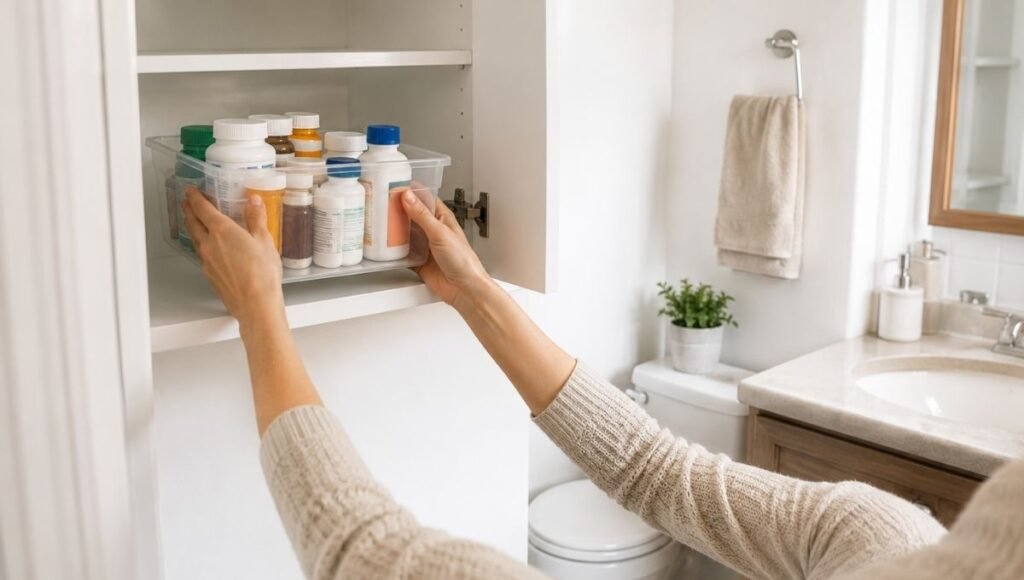
Medications kept in a medicine cabinet above the sink are generally safe — puppies can’t access upper shelves. What’s not safe: anything that fell out and landed somewhere, travel-sized medications in bags on the floor, vitamins and supplements on the counter, or anything stored in lower bathroom cabinets.
Go through every drawer, every lower cabinet, and the floor around and behind the toilet. Bathrooms are small enough that a single dropped item can roll to an inaccessible spot that becomes very accessible when a puppy’s nose leads them there.
Dental Products
Toothpaste containing xylitol — which includes many whitening toothpastes and some natural brands — is toxic to dogs. Keep toothpaste, mouthwash, and dental floss stored inside drawers or inside the medicine cabinet, never left on counter surfaces.
Dental floss and hair ties are particularly dangerous because they can become “linear foreign bodies” if ingested — wrapping around the intestines and causing life-threatening damage that requires emergency surgery.
Cleaning Products and Toilet Bowl Cleaners
Toilet bowl cleaning products — both drop-in tablet types and manual cleaners — are toxic to dogs who drink from the toilet. Keep the toilet lid down consistently, or use a toilet lid lock.
Cleaning products stored under the bathroom sink need the same cabinet locks as your kitchen cabinets.
Apartment Puppy Proofing: The Specific Challenges
Apartments present particular puppy proofing challenges that house guides don’t fully address.
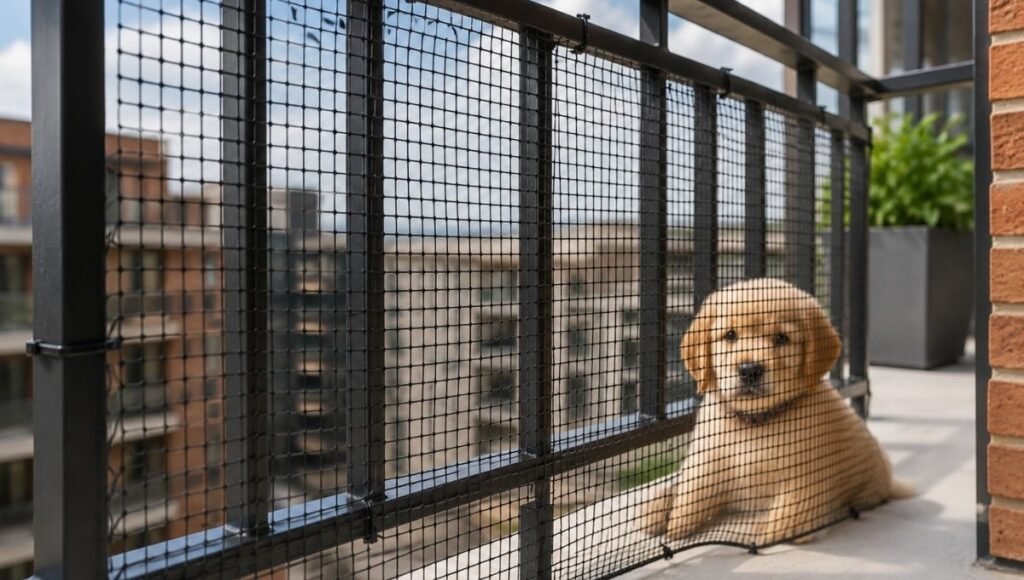
Balconies: Check the spacing of balcony railings. Many apartment balconies have railing gaps wide enough for a small puppy to slip through or get stuck. A temporary mesh or plexiglass barrier attached to the railing solves this.
Smaller spaces and higher density: In a smaller apartment, everything is more accessible because there’s less room to separate hazardous items from puppy territory. Be ruthless about identifying a “puppy zone” and keeping it clean and hazard-free.
Shared laundry areas: If your laundry is in a shared space, be careful about products left on shared surfaces that other residents might use, and watch for detergent pods that may have been dropped on the floor.
Elevators and hallways: Before your puppy’s vaccinations are complete, carry them through shared building spaces rather than letting them walk on surfaces where unknown dogs have been.
Neighbors with toxic plants in shared spaces: Gardens or shared outdoor areas that you don’t control may have plants that are toxic to dogs. Keep your puppy supervised and on leash in any shared outdoor area.
The Puppy Proofing Checklist: Before Day One
Use this as a working checklist to work through your home. Check off each item before your puppy arrives.
Kitchen
- [ ] Trash can replaced with locking or step-open lid
- [ ] All cleaning products in locked or high cabinets
- [ ] Dishwasher pods in secured cabinet
- [ ] All medications moved from kitchen drawers to locked storage
- [ ] Check peanut butter for xylitol
- [ ] Food items identified as toxic moved out of reach
- [ ] Under-sink cabinet secured with child locks
Living Room
- [ ] All electrical cords covered or managed
- [ ] Power strips enclosed or placed behind furniture
- [ ] Every houseplant checked against ASPCA toxic plant list
- [ ] Toxic plants moved to inaccessible rooms or rehomed
- [ ] Coffee table and low surfaces cleared
- [ ] Small objects (coins, buttons, batteries) off the floor
- [ ] Remote controls and similar items stored at height
Bedroom
- [ ] All medications checked — including anything that may have dropped
- [ ] Charging cables managed at bedside and desk
- [ ] Laundry hamper with closed lid in place
- [ ] Floor cleared of fabric items (socks, underwear)
- [ ] Under-bed area checked for small objects
- [ ] Bags and purses stored off the floor (medication risk)
Bathroom
- [ ] Toilet lid down or toilet lock installed
- [ ] All medications in secured medicine cabinet or drawer
- [ ] Dental floss and hair ties in closed drawer
- [ ] Cleaning products under sink locked
- [ ] Floor checked for dropped pills or small items
- [ ] Xylitol-free toothpaste only accessible to puppy areas
Throughout the Home
- [ ] Crawl test completed in every room
- [ ] All houseplants verified as non-toxic
- [ ] Baby gates identified for doorways or stairs
- [ ] ASPCA Poison Control number saved: 888-426-4435
- [ ] Nearest emergency vet location and hours confirmed
What to Do If Your Puppy Gets Into Something
Despite thorough preparation, ingestion incidents happen. Here’s what to do:
If your puppy ingests something potentially toxic:
- Don’t induce vomiting unless specifically directed by a vet or poison control — some substances cause more damage coming back up
- Call ASPCA Animal Poison Control: 888-426-4435 (24 hours, note fee applies)
- Or call your veterinarian or emergency vet immediately
- If possible, bring the packaging or take a photo of the label
- Note the approximate time and amount of ingestion
Signs of poisoning in puppies:
- Vomiting or diarrhea (especially if sudden or severe)
- Excessive drooling
- Tremors or seizures
- Loss of coordination
- Pale gums
- Sudden collapse or extreme lethargy
- Difficulty breathing
Any of these symptoms after a suspected ingestion warrants immediate emergency veterinary care.
Puppy Proofing Is Not Permanent — But It Does Evolve
One thing worth knowing: puppy proofing is not a fixed state that you achieve once and then forget. As your puppy grows, their reach extends, their jumping ability increases, and their interest in specific objects changes.
A puppy who can’t reach the kitchen counter at 8 weeks can often reach it by 5 to 6 months. A puppy who wasn’t interested in the bookshelf at 3 months may discover it’s climbable at 5 months. Reassess your home setup every 4 to 6 weeks during the first year, particularly as your puppy’s size and mobility change.
The good news: by around 12 to 18 months, most owners find that their puppy has developed reliable enough habits and understanding that the intensive management phase can relax. The home you had before is, mostly, restored. Just with a dog in it.
FAQ: What New Puppy Owners Actually Search For
How do I puppy proof my house on a budget? Focus on the highest-risk items first: cabinet locks for under-sink storage ($10 to $15 for a pack), a locking trash can ($30 to $60), and cord concealers ($15 to $25). Baby gates — a significant expense if bought new — can often be found secondhand. Free actions like clearing floors, moving plants, and doing the crawl test cost nothing and prevent the majority of incidents.
What plants are safe to have with a puppy? Boston ferns, spider plants, orchids, African violets, prayer plants, and most succulents (with the exception of aloe) are generally considered non-toxic to dogs. For a complete current list, use the ASPCA’s Toxic and Non-Toxic Plants database, which is the most comprehensive and regularly updated resource available.
Is it safe to have a puppy in an apartment? Yes, with appropriate preparation. Apartment puppy proofing requires the same steps as house puppy proofing with additional attention to balcony railings, shared spaces, and the higher density of items in smaller rooms. Many puppies thrive in apartments.
How do I keep my puppy out of certain rooms? Baby gates are the most reliable solution for doorways. For rooms with doors, keeping them consistently closed is the most effective approach — but requires everyone in the household to comply consistently. Exercise pens create a larger contained area within a room for puppies who need supervised floor time in spaces you can’t fully secure.
What’s the most dangerous thing in a home for a puppy? Human medications — particularly ibuprofen, naproxen, acetaminophen, and anything involving xylitol — are responsible for a significant proportion of serious puppy poisonings. The danger isn’t just from obvious medicine cabinets but from dropped pills, medications in bags and purses, and supplements in accessible drawers.
How long does puppy proofing need to stay in place? The intensive phase typically lasts 6 to 12 months, depending on your individual puppy’s behavior and how reliable they become around household items. Most owners find that by 12 to 18 months, their puppy has enough understanding of household rules that management can relax significantly. Some individual items — like keeping toxic plants permanently out of reach — are worth maintaining indefinitely.
The Bottom Line
Puppy proofing your home is not about creating a sterile, joyless environment. It’s about identifying and addressing the specific hazards in your specific home before your puppy finds them — which they will, with impressive creativity and speed.
The crawl test. The plant audit. The medication sweep. The cord management. These four actions, done thoroughly before your puppy arrives, prevent the majority of incidents that send new owners to the emergency vet in their first month.
You don’t have to do all of it perfectly. But doing it intentionally — working through your home room by room rather than hoping you’ve covered the obvious things — is what separates the puppy owners who navigate the first months smoothly from the ones who spend them scrambling.
Do it before the puppy comes home. It’s much harder to do with a puppy underfoot.
What to Read Next
Puppy proofing is the foundation. These guides cover what comes next:
- New Puppy Checklist: Everything You Need Before Day One — The complete preparation guide including supplies, vet booking, and setup checklist
- Pet Safe Cleaning Products: What’s Actually Safe, What’s Secretly Toxic — What to replace in your cleaning routine before your puppy arrives
- What Puppy Kennel Do You Actually Need? — How to set up a safe confinement space that works alongside your puppy proofing
- How to Potty Train a Puppy: The Step-by-Step Guide — The training system that keeps your puppy in supervised spaces where you can manage their environment
- Puppy Development Stages: Week-by-Week Guide — How your puppy’s physical capabilities change, and why puppy proofing needs to be reassessed as they grow
References
- ASPCA Animal Poison Control Center. (2026). Toxic and Non-Toxic Plants. aspca.org/pet-care/animal-poison-control/toxic-and-non-toxic-plants
- ASPCA Animal Poison Control Center. (2026). People Foods to Avoid Feeding Your Pets. aspca.org
- Pet Poison Helpline. (2026). Top 10 Pet Toxins. petpoisonhelpline.com
- Cortinovis, C., & Caloni, F. (2016). Household food items toxic to dogs and cats. Frontiers in Veterinary Science, 3, 26.
- American Kennel Club. (2026). Poisonous Plants for Dogs. akc.org