
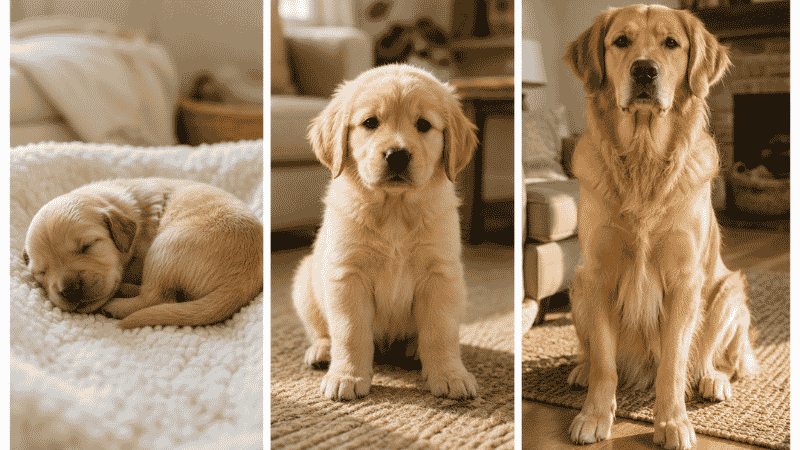
Your puppy is not a small adult dog. They are a rapidly developing creature whose brain, body, immune system, and emotional capacity are changing week by week in ways that directly affect how you care for them, train them, and understand their behavior.
The puppy who cries inconsolably on night one is not the puppy who will be jumping on your guests at four months. The puppy who bites everything at ten weeks is not predicting a lifelong aggression problem. The adolescent dog who seems to have forgotten every command they learned is not broken — they are going through a neurological phase that every dog navigates.
Understanding what stage your puppy is in, what is biologically happening during that stage, and what your role is at each step transforms the entire experience of early puppyhood. Instead of reacting to behaviors you didn’t anticipate, you can prepare for them, respond to them appropriately, and make the decisions — about training, health care, socialization, and nutrition — that are timed to when they will have the most impact.
This guide covers every developmental stage from birth through two years, with the biological context behind each one and the specific actions that matter most at each age.
Key Takeaways
- Puppy development follows seven distinct stages, each with specific biological changes, behavioral windows, and health priorities.
- The critical socialization window — the period when positive exposure to the world is most easily encoded — opens at 3 weeks and closes between 12 and 16 weeks. Missing this window cannot be fully compensated for later.
- Two fear periods occur during puppyhood — roughly at 8 to 10 weeks and again at 6 to 14 months — when frightening experiences are more likely to create lasting fear responses. Knowing these windows helps you navigate them deliberately.
- Large and small breeds develop at dramatically different rates. A Great Dane is still a puppy at 18 months; a Chihuahua is essentially an adult at 10 months. Breed size should inform every decision from food to exercise to training expectations.
- The first 16 weeks with your puppy are the most consequential of their entire life. The habits, health foundations, and behavioral patterns established during this window are among the most durable they will ever form.
Stage 1: Neonatal Period — Birth to 2 Weeks
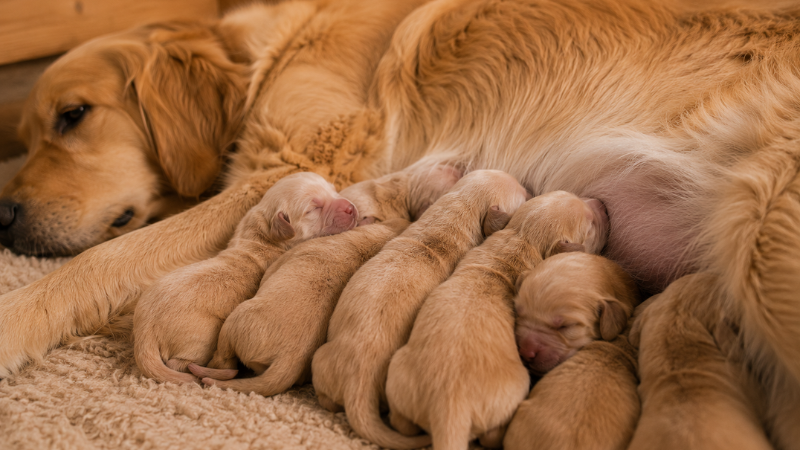
Your puppy arrives in the world completely helpless. Eyes sealed shut. Ears closed. Unable to regulate their own body temperature. Unable to eliminate without stimulation from their mother. The entire repertoire of their existence consists of finding a nipple, feeding, and sleeping — which they do for approximately 90 percent of the day.
What’s happening biologically
The neonatal brain is extraordinarily underdeveloped at birth. The senses of touch and taste are present, but vision, hearing, and smell are not yet functional. Neurological development is happening rapidly, but almost entirely at the level of basic survival functions.
One exception: early tactile handling. Research from the U.S. Military Working Dog Program and multiple subsequent studies shows that gentle handling of neonatal puppies for 3 to 5 minutes daily — gentle touching, positioning them on their backs briefly, exposing them to mild cold — produces measurable differences in stress response, adrenal development, and learning capacity later in life. Breeders who practice Early Neurological Stimulation (ENS) during this period are giving their litters a developmental advantage.
What this means for new owners
Most owners don’t have their puppy at this stage — they arrive at 8 weeks. But if you’re evaluating breeders, ask about their handling practices during the neonatal period. A breeder whose puppies spend the first two weeks in minimal human contact is starting them at a disadvantage.
Health priorities at this stage
- The mother’s vaccination status matters: she passes antibodies through colostrum (first milk) that provide the puppy’s only initial protection against disease.
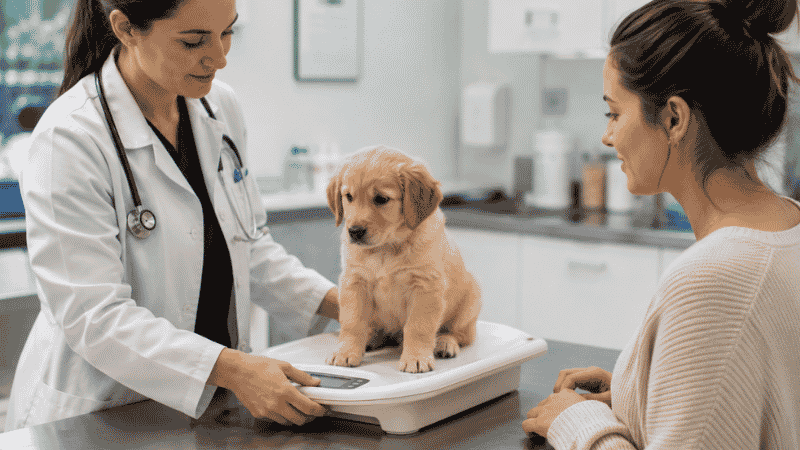
- Puppies should gain weight daily. Any puppy losing weight in the first two weeks requires immediate veterinary attention.
- Temperature regulation is entirely external — the environment must be kept warm.
Stage 2: Transitional Period — 2 to 4 Weeks
This is one of the most dramatic developmental transitions a puppy will make. In approximately 14 days, they go from essentially sensory-deprived creatures to dogs who can see, hear, smell, walk, wag their tail, and bark for the first time.

The milestones
Week 2 (Days 10–14): Eyes begin to open. Vision is initially blurry — more light sensitivity than actual sight. Ears begin to open; puppies can hear for the first time. The mother’s licking continues to stimulate elimination.
Week 3 (Days 14–21): Vision sharpens. Hearing fully develops. Baby teeth begin emerging. Puppies begin attempting independent elimination. Walking, though wobbly, begins. Tail wagging appears. The first social interactions with littermates begin.
Week 4 (Days 21–28): Puppies are walking with increasing confidence. Barking begins. Play behaviors — the foundation of social learning — emerge in earnest. Weaning begins as the mother introduces the pups to solid food.
What this means for new owners
Again, most owners receive their puppy after this stage. But understanding that a puppy’s socialization capacity is already developing by week 3 explains why good breeders begin introducing varied sounds, surfaces, and gentle human handling during weeks 3 and 4. Puppies from enriched early environments arrive at their new homes with a head start.
Stage 3: Socialization Period — 3 to 12 Weeks
This is the most consequential developmental window in a dog’s entire life, and understanding it is the foundation of everything that follows.

The biology behind the window
During the socialization period, the puppy’s brain is in a state of extraordinary plasticity — new experiences are being processed and encoded with unusual depth and permanence. Crucially, the fear response is suppressed: novel stimuli trigger curiosity rather than alarm. A puppy who encounters a bearded man, a skateboard, a slippery floor, or a thunderstorm during this window has a far greater capacity to process it as normal than the same puppy at 6 months.
Dr. John Paul Scott and Dr. John Fuller’s foundational research at the Jackson Laboratory established the socialization window as ending between 12 and 16 weeks. After this point, the fear response matures, and unfamiliar experiences begin triggering genuine alarm rather than curiosity. You can still habituate a dog to new things after 16 weeks — but it takes significantly more time, more repetition, and produces less complete results.
The first fear period — 8 to 10 weeks
Within the socialization window sits a paradox: just as puppies are entering their peak socialization period and being brought home, they are also entering their first fear period.
Between 8 and 10 weeks, puppies become more sensitive to frightening experiences than at any other point during the socialization window. An experience that would be mildly startling at 6 weeks can create a lasting fear response at 8 weeks. This is not because something has gone wrong — it is an evolved mechanism, presumably protective, that makes young puppies more cautious as they begin exploring beyond the nest.
What this means in practice:
- The week you bring your puppy home (usually 8 weeks) requires the most careful management of new experiences
- Keep introductions brief, positive, and below your puppy’s stress threshold
- A puppy who has a genuinely frightening experience at 8 to 10 weeks — a painful vet procedure, an aggressive dog interaction, a severe fright — may develop a lasting fear response to that specific trigger
- “Jolly them through it” if something startles them: calm, cheerful reassurance that communicates “this is not dangerous”
What to prioritize during the socialization window (8–16 weeks)
Every positive experience introduced during this window is being encoded with unusual durability. Every experience missed is a gap that becomes progressively harder to fill.
People: Men, women, children of all ages, people with beards, hats, hoods, sunglasses, uniforms, mobility aids. The more varied the better.
Environments: Indoor and outdoor spaces, urban sidewalks, quiet nature, stores, vehicles, public transportation, elevators.
Surfaces: Hardwood, tile, carpet, grass, gravel, concrete, grates, slippery floors, wet pavement.
Sounds: Traffic, crowds, construction, doorbells, vacuum cleaners, thunderstorm recordings at low volume (paired with treats), children playing.
Handling: Every body part — ears, paws, tail, mouth — touched gently and regularly. This is the foundation of lifetime tolerance for veterinary examinations and grooming.
Other animals: Vaccinated, friendly adult dogs. Cats if applicable. Birds, livestock at safe distance.
On disease risk during this period: the AVSAB is explicit that the behavioral risks of under-socialization outweigh the disease risks of careful pre-vaccination exposure. Carry your puppy in high-risk areas. Visit vaccinated dogs in clean homes. Attend puppy classes held in sanitized facilities that require vaccination documentation.
→ For the complete socialization checklist including pre-vaccination safety protocol and how to read puppy stress signals, read: Puppy Socialization: The Complete Guide
Health priorities at this stage
Vaccination series begins. The first DHPP (protecting against Distemper, Hepatitis, Parvovirus, and Parainfluenza) is given at 6 to 8 weeks. This is followed by boosters at 10 to 12 weeks and 16 to 18 weeks, with rabies at 16 weeks. The schedule is precisely timed to catch the puppy as maternal antibody protection fades.
Why the series cannot be compressed: Maternal antibodies — the temporary immunity passed through the mother’s milk — interfere with vaccine effectiveness. Because different puppies lose maternal immunity at different rates, the series of doses ensures that at least one dose lands during the window when the puppy’s immune system can fully respond.
Parvo is the most urgent disease risk during this stage. The virus can survive in soil and outdoor environments for 6 months to a year. Unvaccinated puppies who encounter it face mortality rates of 68 to 92 percent without treatment. Early symptoms — lethargy, reduced appetite, vomiting — are easy to miss. Bloody diarrhea with a distinctive foul odor signals advanced disease and requires immediate emergency care.
→ For the complete vaccination schedule including costs, what to expect after each shot, and the parvo warning signs in detail, read: Puppy Vaccination Schedule: Every Shot Your Puppy Needs
→ For the parvo symptom timeline, how to distinguish it from regular stomach upset, and treatment costs, read: Parvo Symptoms in Puppies: Early Warning Signs and What to Do
Parasite screening should happen at the first veterinary visit. Most puppies carry intestinal parasites from birth — this is normal, treatable, and requires a fecal test to identify.
Microchipping is best done during this period — ideally at the first vet visit.
Nutrition at this stage
Puppies 8 to 12 weeks old need three to four meals daily. Their stomachs are small, their metabolic rate is high, and blood sugar drops quickly if they go too long between meals — particularly in small breeds, where hypoglycemia (dangerous low blood sugar) is a real risk.
Choose a puppy food with an AAFCO statement for “growth” or “all life stages.” Large breed puppies require a large breed puppy formula — standard puppy food has too much calcium for their developing skeletal system, increasing the risk of developmental orthopedic disease.
→ For the complete guide to puppy food labels, what ingredients matter, and when to switch to adult food, read: What to Feed a Puppy: The No-Confusion Food Guide
Stage 4: Juvenile Period — 3 to 6 Months
The socialization window is narrowing and then closing. Your puppy is growing rapidly in both physical size and cognitive capacity. This is simultaneously the most productive training period and the beginning of the behavioral challenges that catch many new owners off guard.
What’s happening biologically
The fear response is maturing. New experiences still can be positive — but frightening experiences at this stage are more likely to create lasting fear responses than the same experiences at 8 to 10 weeks. The flip side: positive experiences are still being encoded with significant durability. This is still an excellent window for socialization, just a more careful one.
Baby teeth are present through approximately 12 weeks. Then the teething process begins: 28 baby teeth fall out, 42 adult teeth emerge. This process runs from approximately 12 to 20 weeks and produces genuine gum discomfort. A puppy in the teething phase bites more, chews more, and is more easily frustrated — not because something has gone wrong, but because their mouth hurts and chewing helps.
Brain development at this stage is increasingly sophisticated. Learning capacity — the ability to form associations between cues, behaviors, and outcomes — is at its peak. This is the single most efficient window for training.
Training at this stage
The most commonly repeated mistake in puppy ownership: waiting until 6 months to begin formal training. By 6 months, your puppy has spent 4 months developing habits — some of which you’ll spend the following year trying to undo.
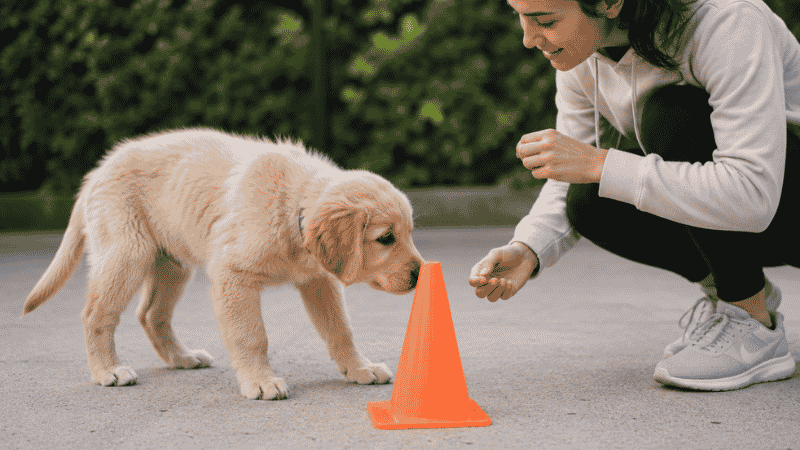
Training begins at 8 weeks. Not complex obedience training — 3 to 5 minute sessions of name recognition, sit, come, and kennel comfort. But these early deposits into the training account are what produce the reliable adult behaviors that feel effortless later.
By 3 to 4 months, puppies are ready for more structured training: stay, leave it, leash introduction, basic impulse control. The 5-minute rule still applies — sessions of 3 to 5 minutes, multiple times daily, always ending on success.
→ For the complete age-by-age training guide including the 5-minute rule, what to teach at each stage, and how to diagnose when training isn’t working, read: When to Start Training a Puppy: Age-by-Age Guide
The biting peak
Teething plus increased play drive plus still-developing bite inhibition creates the biting peak most new owners describe as the hardest part of early puppyhood. Puppies at 12 to 16 weeks bite harder, more frequently, and with more persistence than at any other stage.
The correct response: stop all interaction the moment teeth contact skin, wait 3 to 5 seconds of calm, redirect to a chew toy. Frozen rubber toys and frozen Kongs are particularly effective during teething because the cold provides gum relief simultaneously with the chewing outlet.
→ For the complete biting guide including the age-by-age breakdown, family consistency plan, and when to seek professional help, read: How to Stop Puppy Biting: The Positive Reinforcement Guide
Potty training — the foundation period
Between 3 and 6 months, bladder control is developing but not complete. A reliable schedule — outdoors immediately upon waking, within 15 minutes of meals, after every play session, every 2 to 3 hours — is what produces reliable results. Most puppies are consistently house-trained by 4 to 6 months with consistent management.
→ For the complete potty training schedule by age and the apartment management guide, read: How to Potty Train a Puppy: The Step-by-Step Guide That Actually Works
Health priorities at this stage
Vaccination series completes. The final DHPP dose and rabies vaccination are given at 16 to 18 weeks. After this visit, your puppy has full initial immunity and can safely visit dog parks, boarding facilities, and communal pet areas.
Heartworm, flea, and tick prevention begins during this stage. Monthly preventive medication — discuss options with your veterinarian based on your geographic region — prevents diseases that are significantly more costly to treat than to prevent.
Spay or neuter timing: this is an evolving area of veterinary guidance. The traditional recommendation was 6 months for most breeds. Current evidence, particularly for large and giant breeds, suggests that waiting until skeletal maturity (12 to 24 months depending on size) may reduce long-term orthopedic risk. Discuss the timing with your veterinarian in the context of your specific breed and circumstances.
Dental care: baby teeth falling out during this period and adult teeth emerging creates the most accessible window for establishing a toothbrushing habit. Starting dental hygiene now — even just brief gentle touches with a soft brush — creates tolerance for a routine that significantly reduces the risk of periodontal disease in adulthood.
Safe home environment: a puppy this age is chewing everything. Electrical cords, toxic plants, cleaning products, medications, and small objects are all hazards. Review your home for risks.
→ For the complete guide to safe cleaning products and what household chemicals are dangerous for puppies, read: Pet Safe Cleaning Products: What’s Actually Safe, What’s Secretly Toxic
Stage 5: Adolescence — 6 to 18 Months
This is the stage that surprises owners most, and the one that most commonly causes them to question everything they’ve done so far.
What’s happening biologically
Adolescence is driven by hormonal changes and significant ongoing brain development — specifically in the prefrontal cortex, the region responsible for impulse control, sustained attention, and deliberate decision-making. In dogs, this region is one of the last to fully mature.
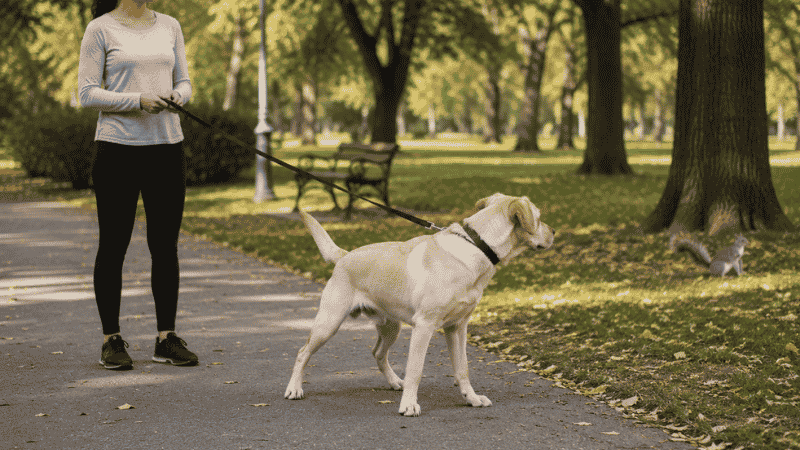
The practical result: a puppy who sat reliably at 4 months may seem to have completely forgotten the command at 7 months. A puppy who was making consistent progress in potty training may suddenly have a regression. A dog that accepted new experiences calmly may become more reactive or fearful of specific things.
This is not training failure. This is neuroscience.
The second fear period — 6 to 14 months
Within the adolescent phase, most puppies experience a second fear period — sometimes called the “adolescent fear period” — that can appear suddenly and affect things that previously caused no concern. A dog that walked confidently past garbage trucks at 4 months may startle dramatically at them at 8 months. Familiar environments may suddenly feel threatening.
The second fear period is less predictable than the first and can occur multiple times between 6 and 14 months. It is temporary. The correct response:
- Do not force your dog through things that are frightening them
- Reduce exposure to known triggers until the fear passes
- Continue positive, gradual exposure at low intensity — distance first, then closer
- Consult a certified trainer if fear responses are severe or generalize widely
Managing adolescence
The most important advice for this stage: maintain training even when it feels like it’s not working. The puppies who emerge from adolescence as reliably well-mannered dogs are the ones whose owners kept showing up — with 5-minute sessions, with consistent rules, with patience — through the hardest months.
What helps:
- Maintain the routine. The structure established in early puppyhood provides ballast during adolescence.
- Use management over repeated correction. A dog with low impulse control can’t fully comply with expectations they’re neurologically struggling to meet. Management — keeping the leash on, keeping the kennel available, limiting unsupervised access — prevents the rehearsal of unwanted behaviors while the brain finishes developing.
- Reinforce recall heavily. “Come” is the most likely command to break down in adolescence and the one with the highest safety stakes.
- Continue socialization. New experiences during adolescence — done calmly and positively — continue to matter for long-term behavioral stability.
Physical development during adolescence
Small breeds (under 20 lbs adult weight): Adult height and weight essentially complete by 9 to 12 months. Sexual maturity typically between 6 and 9 months.
Medium breeds (20–50 lbs adult weight): Growth plates close around 12 to 14 months. Sexual maturity between 6 and 12 months.
Large breeds (50–90 lbs adult weight): Skeletal development continues through 12 to 18 months. Mental and behavioral maturity often lags behind physical development, with some large breeds remaining “puppyish” in behavior well into their second year.
Giant breeds (90+ lbs adult weight): Skeletal development may continue through 18 to 24 months. These breeds are at the highest risk for developmental orthopedic disease if over-exercised or fed incorrect nutrition during growth.
The exercise rule during development: Until growth plates close, avoid high-impact repetitive exercise — distance running, jumping, stair repetitions — that puts sustained stress on developing bone and cartilage. Short, frequent activity is safer than long endurance sessions.
Health priorities at this stage
The one-year booster visit is the most commonly missed veterinary appointment. At 12 to 16 months, your puppy needs booster vaccinations for DHPP and rabies — transitioning them from the puppy series to the adult vaccination schedule. Mark this on your calendar from the day of the final puppy shot.
Dental cleaning assessment. By 12 months, your veterinarian can assess whether professional dental cleaning is indicated based on tartar accumulation.
Spay/neuter if not yet done. Discuss timing with your veterinarian based on breed size, sex, and the latest evidence.
Parasite prevention continues. Monthly heartworm, flea, and tick prevention remains essential through adulthood.
Stage 6: Young Adulthood — 1 to 2 Years
For most breeds, this is the final phase of active development and the period when the dog you’ve been building begins to fully emerge.
What’s happening
The prefrontal cortex — that region of the brain responsible for impulse control — is finally reaching maturity in most dogs between 12 and 24 months (later for large and giant breeds). This is why owners often notice a shift around 18 months to 2 years where their dog suddenly seems “easier” — calmer, more focused, more reliably responsive to training.
This is not luck. This is the payoff of the work done during the first 18 months.
What to focus on
Training consolidation: the commands learned during early puppyhood are now being generalized and proofed — practiced in varied environments, at greater distances, around higher levels of distraction. A dog who “knows” sit in the living room and a dog who reliably sits in a dog park with other dogs running past are in very different places, and getting from the first to the second requires continued deliberate practice.
Independence development: this is the right time to gradually give your dog more unsupervised freedom in the home, expanding access as reliability is confirmed. The kennel, which was a management tool for safety and potty training, may transition to a voluntary retreat — somewhere your dog goes on their own when they want to rest.
Separation tolerance: dogs who have been continuously accompanied through early puppyhood and into adolescence may show signs of separation anxiety when routine changes. Building genuine comfort with alone time — starting with brief absences and building gradually — is more effective at this stage than it was in early puppyhood, but still important.
→ For signs of true separation anxiety versus normal alone-time distress and the full treatment protocol, read: Puppy Separation Anxiety: What’s Normal, What’s Not, and How to Actually Fix It
Health priorities at this stage
Annual wellness exam. Adult dogs benefit from annual veterinary check-ups to monitor weight, dental health, parasite status, and early detection of any developing health concerns.
Transition to adult food (if not already completed): small breeds at 9 to 12 months, medium breeds at 12 months, large breeds at 12 to 18 months, giant breeds at 18 to 24 months.
Exercise calibration. Growth plates are now closed for most breeds. Gradually increasing endurance exercise — distance walking, swimming, fetch — is appropriate as long as your dog’s condition is monitored.
How Long Will Your Puppy’s Development Take — And What Comes Next
The question behind every development stage question is ultimately: how long does all of this last? When does my puppy become a dog?
The honest answer varies enormously by size:
| Breed Size | Physical Maturity | Behavioral Maturity |
|---|---|---|
| Toy (under 10 lbs) | 9–10 months | 12–14 months |
| Small (10–25 lbs) | 10–12 months | 12–18 months |
| Medium (25–50 lbs) | 12–14 months | 18–24 months |
| Large (50–90 lbs) | 14–18 months | 24–36 months |
| Giant (90+ lbs) | 18–24 months | 30–48 months |
Behavioral maturity — the point at which your dog reliably responds to training, shows consistent impulse control, and handles new situations with stable confidence — typically lags behind physical maturity by 6 to 12 months.
And after all of this development? The lifespan that follows varies just as significantly by size — a fact that shapes how you think about health care decisions throughout your dog’s life.
→ For the complete guide to canine lifespan by breed size, and the health decisions that most influence longevity, read: How Long Do Dogs Live? A Puppy Owner’s Guide to Lifespan
Is My Puppy Developing Normally? A Quick Reference Guide
This is the question most new owners are really asking. Here is a practical reference for the most common concerns:
| Concern | Normal? | Action |
|---|---|---|
| Eyes not yet open at 2 weeks | Normal | Watch; consult vet if still closed at 3 weeks |
| Crying on first night home | Normal | Place kennel near bedroom; avoid bringing to bed |
| Not eating first day home | Usually normal (stress/transition) | Observe 24 hours; consult vet if continues |
| Soft stool on first few days | Usually normal (diet change/stress) | Monitor; consult vet if bloody or persists 48+ hours |
| Hiccupping frequently | Normal | No action needed |
| Trembling or shaking | Normal in some (small breeds, cold, excitement) | Consult vet if accompanied by other symptoms |
| Biting everything at 10–16 weeks | Normal (teething) | Redirect to appropriate chew toys |
| Forgetting commands at 6–8 months | Normal (adolescence) | Continue training; consult trainer if severe |
| Sudden fear of familiar things | Normal (second fear period) | Reduce pressure; positive gradual re-exposure |
| Sleeping 16–20 hours daily | Normal for young puppies | Only concern if lethargic during awake hours |
Symptoms that always warrant a veterinarian call:
- Any bloody stool or vomit
- Complete refusal to eat for more than 24 hours
- Lethargy that worsens over hours rather than improving
- Difficulty breathing
- Pale, white, or grey gums
- Inability to stand or walk normally
- Known ingestion of toxic substances
FAQ: What New Puppy Owners Actually Search For
When do puppies open their eyes? Puppies’ eyes begin opening at approximately 10 to 14 days of age. Vision is initially blurry and light-sensitive; clear sight develops by around 5 weeks.
When do puppies start walking? The first tentative walking attempts appear around 2 to 3 weeks. Confident, coordinated walking develops by 4 weeks.
When do puppies lose their baby teeth? Baby teeth begin falling out around 12 weeks, with the full adult dentition (42 teeth) typically in place by 6 to 7 months. Intense chewing during the teething phase (12 to 20 weeks) is normal and expected.
When is the socialization window for puppies? The critical socialization window opens at 3 weeks and closes between 12 and 16 weeks of age. The most important phase for new owners — from the time they bring the puppy home — is 8 to 16 weeks.
What is the puppy fear period? There are two fear periods. The first occurs at approximately 8 to 10 weeks — right when most puppies come home. The second, less predictable fear period occurs somewhere between 6 and 14 months. During these periods, frightening experiences are more likely to create lasting fear responses.
When do puppies calm down? Most owners notice a meaningful change in energy and impulse control somewhere between 18 months and 3 years, depending on breed size. Adolescence (6 to 18 months) is typically the most demanding behavioral period. Large and giant breeds tend to mature later than small breeds.
Is my puppy growing normally? Weight gain should be steady and consistent in the early weeks. Your veterinarian will track growth at each wellness visit during the first year. The growth rate varies significantly by breed — consult breed-specific charts for reference, but always discuss concerns with your veterinarian.
When is my puppy fully grown? Physical growth: 9 to 10 months for toy breeds, 12 to 14 months for medium breeds, 14 to 18 months for large breeds, 18 to 24 months for giant breeds. Behavioral maturity typically follows 6 to 12 months after physical maturity.
The Bottom Line
Puppy development is not a single arc — it is a series of distinct stages, each with its own biology, its own priorities, and its own version of what “doing it right” looks like.
The neonatal puppy needs warmth and milk. The 9-week puppy needs socialization, gentle training, and a carefully managed introduction to the world. The teething 14-week puppy needs appropriate chew outlets and consistent redirection. The adolescent 8-month dog needs the continuation of every routine their owner was tempted to abandon when it stopped feeling like it was working.
At every stage, the most important thing you can do is understand what your puppy is experiencing and respond to that — rather than to the puppy you expected them to be or the timeline you hoped they would follow.
They are developing exactly as dogs do. Your job is to understand it well enough to work with it.
Go Deeper: The Complete Puppy Health & Care Library
This guide covers the developmental overview. These articles go deeper into each health priority:
- Puppy Vaccination Schedule: Every Shot Your Puppy Needs in Year One — Complete first-year vaccine timeline, core vs. non-core, costs, and what to watch for after each visit
- Parvo Symptoms in Puppies: Early Warning Signs and What to Do — The symptom timeline, how to distinguish parvo from a regular upset stomach, treatment, and prevention
- Pet Safe Cleaning Products: What’s Actually Safe, What’s Secretly Toxic — What to replace in your home before your puppy arrives
- How Long Do Dogs Live? A Puppy Owner’s Guide to Lifespan — Lifespan by breed size and the decisions that influence longevity
- Puppy Socialization: The Complete Guide — Week-by-week socialization checklist, pre-vaccination protocol, and stress signal guide
- How to Stop Puppy Biting: The Positive Reinforcement Guide — The teething-phase biting solution, by age
- How to Potty Train a Puppy: The Step-by-Step Guide — The schedule and protocol by age, with apartment guidance
- When to Start Training a Puppy: Age-by-Age Guide — What to teach at each developmental stage
- What to Feed a Puppy: The No-Confusion Food Guide — How to choose the right food for your puppy’s size and stage
- Puppy Separation Anxiety: Signs, Causes and How to Fix It — When alone-time distress is normal and when it requires intervention
References
- Scott, J.P., & Fuller, J.L. (1965). Genetics and the Social Behavior of the Dog. University of Chicago Press.
- American Veterinary Society of Animal Behavior. (2021). AVSAB Position Statement on Puppy Socialization. avsab.org
- Howell, T.J., King, T., & Bennett, P.C. (2015). Puppy parties and beyond: the role of early age socialization practices on adult dog behavior. Veterinary Medicine: Research and Reports, 6, 143–153.
- Siracusa, C., VMD, PhD, DACVB. (2024). Puppy Development Stages: Week by Week. University of Pennsylvania School of Veterinary Medicine.
- American Animal Hospital Association. (2022). AAHA Canine Vaccination Guidelines. aaha.org
- Overall, K.L. (2013). Manual of Clinical Behavioral Medicine for Dogs and Cats. Elsevier Mosby.
- Serpell, J. (Ed.). (2017). The Domestic Dog: Its Evolution, Behavior and Interactions with People (2nd ed.). Cambridge University Press.