
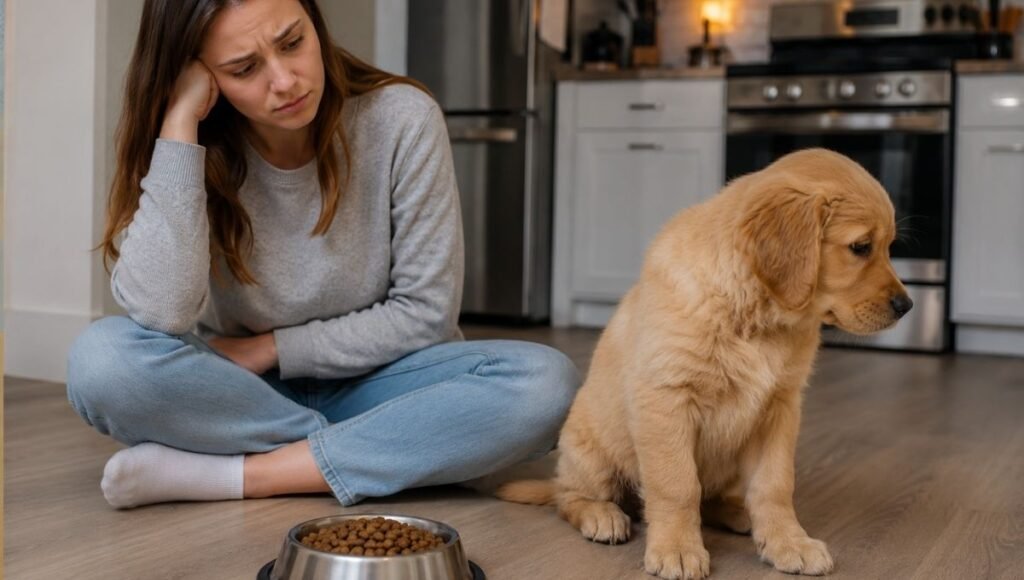
Day two with your new puppy. You’ve set out the food — the exact same brand the breeder was using, in the exact same type of bowl — and your puppy walked over, sniffed it, and walked away. You tried again at the next meal. Same result. Now you’re sitting on the kitchen floor watching them sleep, wondering if you should be panicking.
Or maybe your puppy has been home for a month and was eating fine until three days ago, when they just… stopped. They’re still bouncy, still interested in treats, still running circuits around the living room. But the food bowl? Completely ignored.
The fear that comes with a puppy not eating is entirely understandable. You know they need to eat to grow. You know they’re small. You’ve Googled it and found everything from “perfectly normal, don’t worry” to “call the emergency vet immediately” — and somehow both feel true at the same time.
Here’s what this guide actually gives you: a clear way to assess your specific situation, understand what’s driving the refusal, know exactly what to try at home, and recognize the specific warning signs that mean you genuinely do need veterinary care. No vague reassurances. Just useful information.
Key Takeaways
- A puppy not eating for 24 to 48 hours in the first days home is extremely common and is almost always stress and adjustment-related, not illness.
- Puppies cannot go as long as adult dogs without food. Under 12 weeks: call your vet after 12 hours without eating. Over 12 weeks: 24 hours is the general threshold. Small and toy breeds: even sooner.
- Eating treats but refusing meals is almost always a behavioral issue — the puppy has learned that holding out produces more exciting food options. This is solvable.
- The warning signs that require a vet call are specific: vomiting alongside food refusal, bloody diarrhea, profound lethargy, pale gums, or known ingestion of something toxic.
- Never try to manage a very young puppy’s food refusal without veterinary guidance if it persists past 12 to 24 hours. The risk of hypoglycemia — particularly in small breeds — is real and moves quickly.
Is It Normal for Puppies to Not Eat? The Honest Framework
Before diving into causes, here’s the most useful thing to understand: the answer to “is this normal” depends almost entirely on what else is happening alongside the food refusal.
A puppy who isn’t eating but is alert, responsive, interested in their surroundings, willing to take treats, and producing normal waste is a very different situation from a puppy who isn’t eating and is also lethargic, vomiting, having diarrhea, or showing any other sign of illness. The food refusal is the same in both scenarios. Everything else is completely different.
This distinction — what’s happening around the food refusal — is the core of every decision you’ll make about whether to watch and wait or pick up the phone.
The Most Common Reasons Puppies Stop Eating
Reason 1: New Environment Stress — The Most Frequent Cause
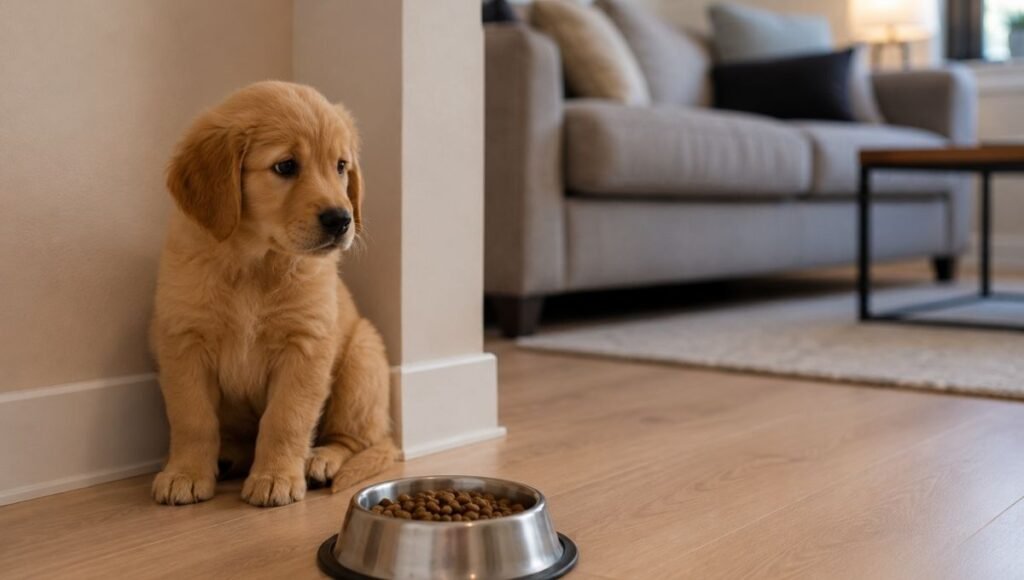
If your puppy has been home for 3 days or fewer and isn’t eating, there’s a very high probability this is what’s happening.
Think about it from your puppy’s perspective. They’ve just been separated from their mother and littermates — the only social environment they’ve ever known — transported to a completely unfamiliar place with new smells, new sounds, new people, and new routines. The stress of this transition suppresses appetite just as it does in humans. A first-year university student who can’t eat much the first week because everything is overwhelming isn’t sick — they’re adjusting.
Most new puppies show some degree of food reluctance in the first 1 to 3 days home. The majority begin eating normally within 48 to 72 hours as the environment becomes familiar and the stress hormone response settles.
What helps:
- Feed in a quiet, consistent location away from household activity
- Use the exact same food the breeder or rescue was feeding — even if you plan to switch brands, do it later, not now
- Reduce handling and social stimulation at mealtimes
- Put the food down for 15 to 20 minutes, then remove it. Don’t hover. Don’t coax. Your anxiety communicates itself.
- If your puppy was eating from a specific bowl type or in a specific position at the breeder’s, try to replicate it
What not to do: Don’t immediately introduce exciting new foods, wet food toppers, or treats to entice eating. This can accidentally teach your puppy that refusing kibble produces more exciting options — which creates a picky eater problem that outlasts the adjustment period.
Reason 2: They’re Eating Treats But Not Meals — The Picky Eater Problem
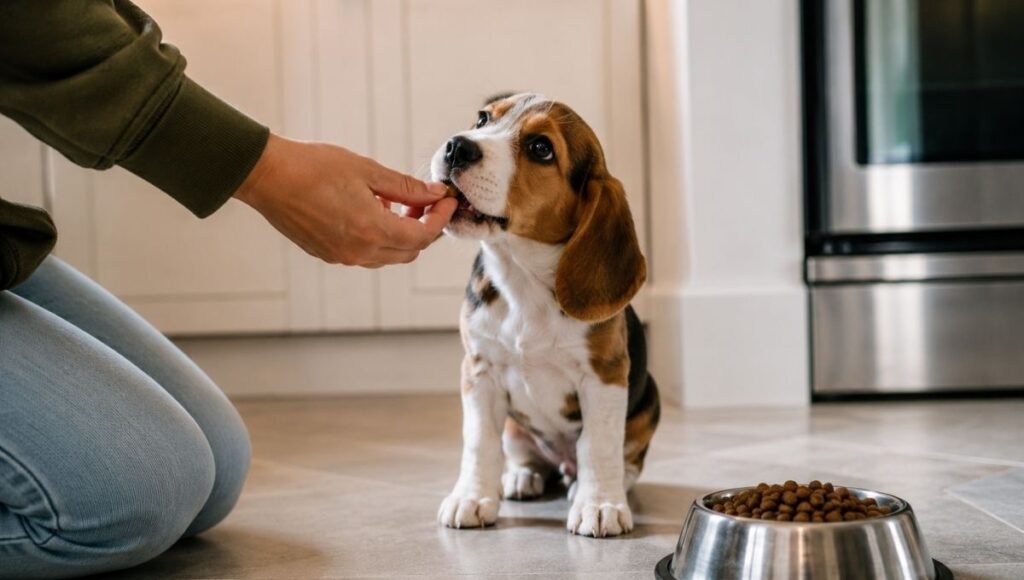
This is one of the most common descriptions owners give when they reach out to vets or online forums: “She won’t touch her food but she’ll eat treats fine.”
A puppy who selectively refuses meals while enthusiastically eating treats is almost certainly not medically unwell — they’ve learned that the treats are more appealing than the kibble, and that not eating produces escalating offers of better options.
This pattern develops faster than most owners expect. A few days of offering wet food, chicken, or high-value treats to coax a reluctant eater is enough to teach a puppy that holding out is a viable strategy.
The solution is uncomfortable but effective: Stop offering alternatives. Put down the kibble. Give 15 to 20 minutes. Remove it. Do not offer anything else until the next scheduled meal. Most healthy puppies capitulate within 1 to 3 days of this approach. A hungry puppy who is offered their regular food and nothing else will eat it.
The caveat: this only applies to puppies who are otherwise healthy and alert. A truly ill puppy refusing food needs veterinary assessment, not a behavioral feeding protocol.
Editor’s note: This is the hardest part for most new owners. Watching your puppy ignore a full bowl and looking at you like you’ve served them sawdust requires nerves of steel. But every time you swap the bowl for something more exciting, you’re training the behavior to continue.
Reason 3: Teething Discomfort
From approximately 12 weeks to 6 to 7 months, puppies are losing baby teeth and growing 42 adult teeth. The gumline is inflamed and tender during this process. Chewing hard kibble on sore gums is genuinely uncomfortable, and some puppies respond by eating more slowly, chewing less thoroughly, or avoiding food for short periods.
Teething-related appetite changes are usually not complete refusal — more of a reduction in enthusiasm and eating pace — but they can be significant in some puppies.
What helps:
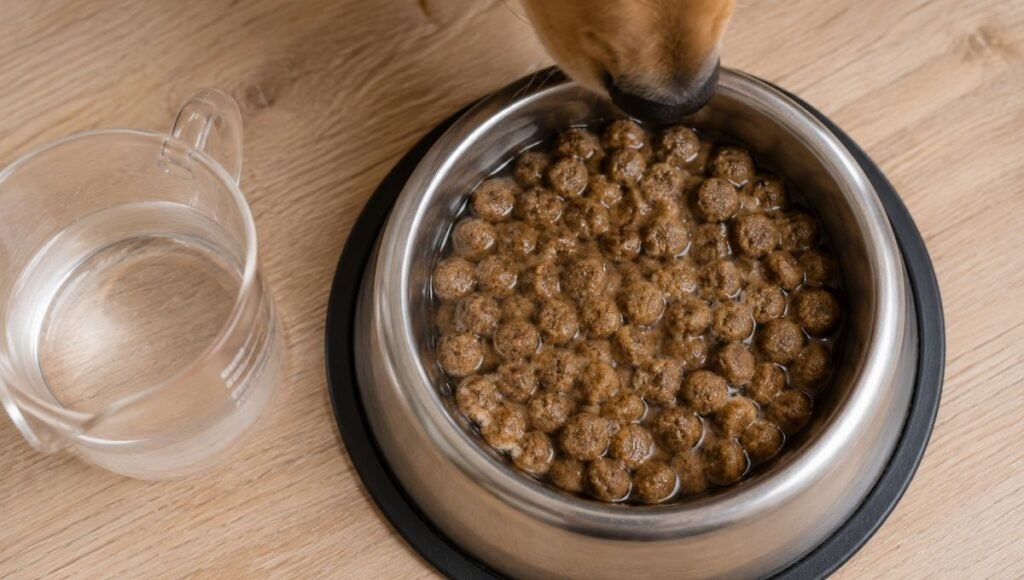
- Soak kibble in warm water for 5 to 10 minutes before serving. Softened kibble is significantly easier on sore gums.
- Mix a small amount of wet food with the kibble (without making it the permanent expectation)
- Frozen chew toys before meals can help soothe gums and make subsequent eating more comfortable
- Offer food at room temperature or slightly warm — cold food can be more uncomfortable on inflamed gums
Reason 4: Recent Vaccination
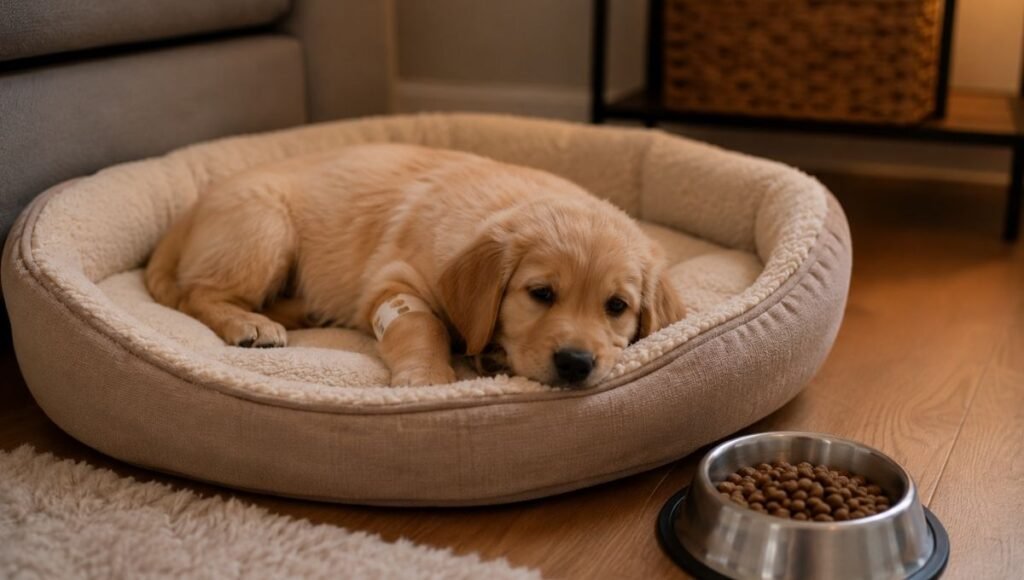
It’s common and completely expected for puppies to have reduced appetite for 12 to 24 hours following a vaccine appointment. The immune response triggered by vaccination produces mild systemic effects — similar to how humans might feel slightly off after a flu shot — and appetite suppression is one of them.
If your puppy had vaccines within the last 24 to 36 hours and isn’t eating, this is the most likely explanation. Most puppies return to normal appetite within a day.
When to call your vet after vaccination: If appetite suppression persists beyond 48 hours, or if your puppy is also vomiting, having significant diarrhea, showing facial swelling, difficulty breathing, or extreme lethargy. These can indicate a vaccine reaction that requires veterinary attention.
Reason 5: Food-Related Issues
Sometimes the food itself is the problem, not the puppy.
Stale or spoiled food: Kibble that has been stored incorrectly or left in the bowl too long can become stale or rancid. Dogs have significantly better olfactory detection than humans — what smells fine to you may be off enough to be off-putting to your puppy. Check the expiration date. Store kibble in an airtight container rather than in the original bag. Discard anything that has been in the bowl for more than 30 minutes.
Bag switch within the same brand: Even switching between bags of the same food can cause temporary refusal in some puppies, particularly if the new bag was from a different production run or has been stored differently. If you’ve recently opened a new bag, this is worth considering.
Wrong type for the life stage: Verify that the food you’re using has an AAFCO statement for “growth” or “all life stages.” A food formulated for adult maintenance doesn’t have the caloric density a puppy needs, and some puppies seem to sense this and eat less.
Reason 6: Overfeeding Treats During Training
This is a sneaky one that catches new owners off guard, particularly during intensive training periods.
If you’re doing multiple training sessions per day with food rewards, the cumulative treat calories can be substantial — enough to meaningfully reduce your puppy’s appetite at mealtimes. A puppy who has had 40 training treats over the course of a morning isn’t going to be particularly hungry at lunch.
The 90/10 rule is worth revisiting: no more than 10% of daily caloric intake from treats. On heavy training days, reduce the meal portion to compensate. Track roughly how many treats you’re giving — it’s often more than you realize.
Reason 7: Illness or Medical Issue
This is the cause that everyone fears and that is, in most cases, not what’s happening. But it’s important to know what it looks like.
Medical causes of appetite loss in puppies include: intestinal parasites (extremely common — most puppies carry them and need fecal testing), parvovirus (serious and life-threatening, particularly in unvaccinated puppies), gastrointestinal upset from dietary indiscretion, respiratory infections that reduce the ability to smell food, pain from injury, and congenital issues.
The key differentiator: medically-driven appetite loss almost always comes with other symptoms. A puppy who is just not eating but is otherwise completely normal — energetic, interested in their environment, producing normal waste — is very unlikely to be seriously ill. A puppy who is not eating AND is lethargic, vomiting, having bloody diarrhea, or showing other changes is a different situation entirely.
How Long Can a Puppy Go Without Eating?
This is the most searched question in this topic, and the answer depends on age and breed size.
Under 12 weeks: Maximum 12 hours without food before veterinary guidance is warranted. Very young puppies have minimal fat reserves and immature blood sugar regulation.
12 to 16 weeks: 24 hours is a reasonable observation window for a puppy who is otherwise alert and well. Call your vet at 24 hours regardless of how normal they seem.
Over 16 weeks: 24 hours for most medium and large breeds. Call your vet for guidance.
Small and toy breeds at any age: More conservative timelines apply. A toy breed puppy who hasn’t eaten for 12 hours should be assessed, because the risk of hypoglycemia — dangerously low blood sugar — is higher in very small dogs. Signs of hypoglycemia include weakness, wobbliness, trembling, glazed eyes, and in severe cases, seizures or collapse. This is a medical emergency.
What to Do at Home When Your Puppy Won’t Eat
If your puppy is alert, active, and producing normal waste — and the food refusal is not yet at the threshold for veterinary contact — here’s what to do.
Do this first: assess without intervening for one meal. Put the food down. Set a timer for 15 to 20 minutes. Walk away. Check back. If they’ve eaten, excellent. If not, remove the bowl calmly and don’t offer anything else until the next meal. This is information-gathering — you’re establishing whether this is a consistent refusal or a missed meal.
Try these adjustments if refusal continues:
Warm the food slightly. Adding a tablespoon of warm water to kibble and letting it sit for 5 minutes releases aroma and softens texture. Many reluctant puppies respond to this.
Feed in a quieter location. Some puppies won’t eat with household activity happening nearby. Move the bowl to a quieter spot.
Remove the bowl from sight between meals. The food bowl being permanently available — even when empty — can actually reduce the urgency around mealtimes. Put it away between meals.
Check for bowl-related issues. Some puppies are sensitive to the sound of metal tags hitting a metal bowl, or don’t like their whiskers touching bowl edges. Try a wider, shallower ceramic or silicone bowl.
Reduce treats completely for 48 hours. If treats have been frequent, eliminating them entirely for two days while offering nothing but meals often resets appetite quickly.
What not to do:
- Don’t add chicken, wet food, or other high-value foods after a single missed meal — this teaches the behavior
- Don’t force-feed or add appetite-stimulating supplements without veterinary guidance
- Don’t leave uneaten food down indefinitely — it becomes stale and removes the mealtime association
Warning Signs That Need a Vet Call Today
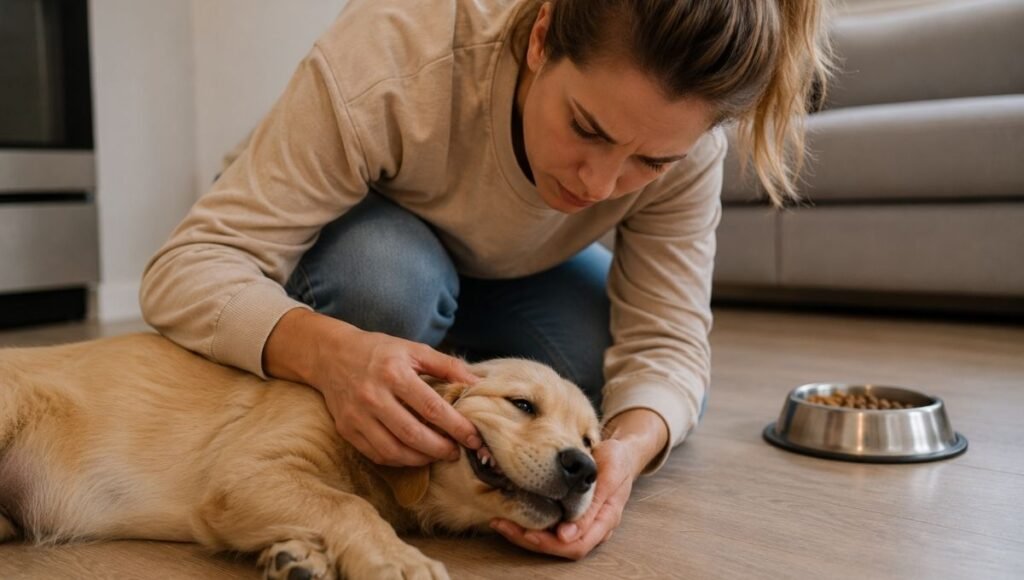
These are the specific signals that should prompt you to pick up the phone — not tomorrow, today.
Call your vet immediately if your puppy:
- Is not eating AND is also lethargic — noticeably less responsive, hard to rouse, not interested in interaction
- Has vomited more than once alongside food refusal
- Has bloody or very dark diarrhea (parvovirus warning sign in unvaccinated puppies)
- Shows signs of hypoglycemia — weakness, wobbliness, trembling, glazed expression
- Has pale, white, or grey gums
- Is under 12 weeks and hasn’t eaten for 12 hours
- Is a small or toy breed who hasn’t eaten for 12 hours at any age
- Has known or suspected ingestion of something toxic alongside the refusal
- Was recently vaccinated and is showing more than mild appetite reduction with other symptoms
The parvo consideration: If your puppy is unvaccinated or has not completed their full vaccination series, and they’re not eating combined with ANY of the following — lethargy, vomiting, diarrhea (especially bloody and foul-smelling) — this warrants emergency veterinary contact. Parvovirus progresses rapidly and the window for effective treatment is narrow.
If Your Puppy Is Eating Some Food But Much Less Than Usual
This is different from complete refusal and is worth addressing separately.
A puppy who is eating 50 to 70% of their normal amount but is otherwise well is usually experiencing one of the behavioral or environmental causes above. Gradual reduction in food acceptance is common during:
- Adjustment periods
- Growth plateaus (a puppy who was in a rapid growth phase and has temporarily slowed may genuinely need slightly less)
- Hot weather (heat reduces appetite in dogs as in humans)
- Low-stimulation days (less active = less caloric demand)
Monitor weight weekly during any period of reduced eating. Use the body condition check: you should be able to feel ribs with gentle pressure but not see them. If weight is stable and body condition is appropriate, watchful waiting is reasonable. If weight is dropping noticeably, the veterinarian conversation happens sooner.
Only Have 10 Minutes? Do This Right Now
If you’re in the middle of a puppy-not-eating situation and short on time:
- Check how long it’s been since they last ate. Under 12 hours with a puppy over 12 weeks and no other symptoms? Watch and wait one more meal cycle.
- Check what they’re doing besides not eating. Alert, moving around normally, interested in their environment? The urgency is lower. Lethargic or unusual in any other way? Call your vet now.
- Remove all treats for the next 24 hours. Nothing except their regular food at scheduled mealtimes.
- Add a tablespoon of warm water to their kibble. Put it down for 15 minutes. Walk away.
- Note the time. If they haven’t eaten by 24 hours from now, call your vet regardless of how otherwise normal they seem.
FAQ: What New Puppy Owners Actually Search For
Is it normal for a puppy not to eat the first day home? Yes, extremely common. The stress of transitioning to a new environment suppresses appetite in most puppies for the first 24 to 48 hours. A puppy who is alert and active but not eating in the first day or two home is almost certainly adjusting, not ill. Maintain the same food and routine, minimize coaxing, and most puppies begin eating normally within 48 to 72 hours.
My puppy won’t eat kibble but will eat treats — why? Your puppy has figured out that refusing kibble produces more exciting options. This is a behavioral pattern that develops quickly when owners offer alternatives after a missed meal. The solution: stop offering treats entirely for 48 hours and offer only the regular kibble at scheduled meals. Most healthy puppies will eat within 1 to 2 days of this approach.
How long can a puppy go without eating before it’s dangerous? Under 12 weeks or small/toy breeds: 12 hours maximum before veterinary contact. Over 12 weeks, medium/large breeds: 24 hours is the general threshold. These timelines assume the puppy is otherwise alert and well — any additional symptoms like vomiting or lethargy shorten the window significantly.
My puppy stopped eating after vaccines — is this normal? Yes. Mild appetite suppression for 12 to 24 hours after vaccination is a normal and expected side effect of the immune response. Most puppies return to normal eating within a day. Contact your vet if appetite suppression lasts beyond 48 hours or is accompanied by vomiting, severe lethargy, or facial swelling.
Should I add wet food or chicken to get my puppy to eat? Only as a temporary measure during teething or illness recovery, and only for a few days. Adding high-value food toppers in response to pickiness teaches the puppy that refusing kibble works. For medically healthy puppies who are simply being selective, the better approach is removing all alternatives and waiting.
My puppy is eating less than the bag says — do I need to worry? Feeding chart amounts are guidelines, not guarantees. Some puppies need more than the chart suggests; others need less. The better indicator is body condition: if you can feel your puppy’s ribs with gentle pressure but not see them, and if they’re growing appropriately for their age, the amount is likely correct for that individual puppy. Consult your vet at the next wellness visit if you’re consistently feeding much less than the chart recommends.
When should I take my puppy to the vet for not eating? Immediately if: vomiting alongside refusal, bloody diarrhea, lethargy, pale gums, or signs of hypoglycemia. Within 24 hours if: refusal has lasted more than 24 hours in a puppy over 12 weeks. Within 12 hours if: refusal in a puppy under 12 weeks or a small/toy breed at any age.
The Bottom Line
A puppy not eating is scary. The fear makes sense — you know how much is at stake in the first months of their life, and you can’t ask them what’s wrong.
The reality in most cases: the first days home are the most common time for food refusal, and most of it resolves on its own as your puppy adjusts. The behavioral picky-eater pattern is common, solvable, and doesn’t require veterinary intervention. Teething reduces enthusiasm for hard kibble temporarily. Vaccines cause short-term appetite changes.
What you’re really doing when your puppy isn’t eating is watching for the specific combination of food refusal plus something else — lethargy, vomiting, diarrhea, pale gums, behavioral change — that signals this is more than adjustment. That combination is your cue to call the vet. The food refusal alone, in an otherwise alert and active puppy, is usually something time and consistency will resolve.
Keep track of how long it’s been. Watch what else is happening. Know your timelines. And when in doubt — call your vet. That’s what they’re there for.
What to Read Next
Understanding appetite connects directly to your puppy’s broader nutritional picture:
- How Much to Feed a Puppy: Complete Chart by Age and Weight — The correct portion sizes that prevent both underfeeding and overfeeding — and how to tell if your puppy’s intake is actually appropriate
- How Often to Feed a Puppy: Complete Schedule by Age — The meal frequency that supports blood sugar stability and makes refusals easier to identify
- Puppy Diarrhea: What’s Normal, What’s Not, and Exactly What to Do — When appetite loss is accompanied by digestive symptoms that need attention
- Puppy Development Stages: Week-by-Week Guide — How appetite needs change across the first two years alongside physical development
- Puppy Vaccination Schedule: Every Shot Your Puppy Needs — Understanding the vaccine timeline that can cause temporary appetite changes
References
- Preventive Vet / Veterinary Team. (2025). Why Your Puppy Isn’t Eating & What You Can Do. preventivevet.com
- Daily Paws / Gale, J., BVetMed, Mars Petcare Expert. (2026). Is Your Puppy Not Eating? Here’s What You Can Do to Help. dailypaws.com
- Rover / Cortright, S., DVM, Fear Free Certified. (2025). What To Do If Your Puppy Refuses To Eat. rover.com
- PetMD / Koehler, R., DVM. (2023). Why Is My Dog Not Eating? Causes and What to Do. petmd.com
- ASPCA Animal Poison Control Center. (2026). Animal Poison Control. aspca.org
- Cesar. (2026). 6 Reasons Why Your Puppy Isn’t Eating. cesar.com