
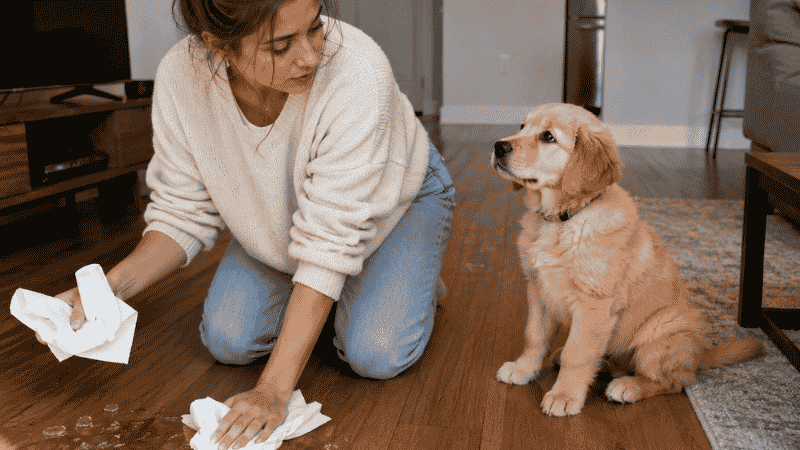
You’ve just cleaned up the third puddle this morning. Your puppy looks up at you with those innocent eyes, completely unbothered, while you’re standing there wondering whether this is a normal puppy thing or the beginning of something you should be genuinely worried about.
The honest answer? It could be either. And that’s exactly the problem — puppy diarrhea is one of the most common health concerns new owners face, but also one of the most variable. Sometimes it resolves completely within 24 hours with zero intervention. Sometimes it’s the first sign of parvovirus, which can be fatal without urgent treatment.
Knowing which situation you’re in is everything. And that knowledge doesn’t come from panicking and Googling symptoms at midnight — it comes from understanding what’s actually happening in your puppy’s gut, what the different presentations mean, and having a clear decision framework that tells you “watch and wait” versus “call the vet right now.”
That’s what this guide is for. By the end, you’ll be able to look at your puppy’s situation and make a calm, informed decision — whether that’s adjusting their diet, monitoring for 24 hours, or heading straight to an emergency clinic.
Key Takeaways
- Puppy diarrhea is extremely common — most cases are mild and resolve within 24 to 48 hours without veterinary intervention.
- The three most common causes in puppies are dietary changes or indiscretion, intestinal parasites (particularly giardia and roundworms), and stress from environmental changes like coming home to a new family.
- Bloody diarrhea, severe lethargy, vomiting alongside diarrhea, and puppies under 12 weeks with any diarrhea all require immediate veterinary contact — don’t wait these out at home.
- Parvovirus is the most serious disease to rule out in unvaccinated or incompletely vaccinated puppies with diarrhea. It progresses rapidly and is often fatal without treatment.
- Most mild cases can be supported at home with a brief bland diet period, hydration monitoring, and 24 to 48 hours of observation.
Why Puppies Get Diarrhea So Easily
If it feels like your puppy’s digestive system is made of tissue paper, you’re not entirely wrong. Compared to adult dogs, puppies have immature gastrointestinal tracts that are more reactive to change, more susceptible to parasites, and less able to maintain the bacterial balance that keeps digestion running smoothly.
Their intestinal lining is still developing the protective mechanisms that filter out pathogens. Their gut microbiome — the community of bacteria that supports healthy digestion — is fragile and easily disrupted by changes in food, environment, or stress. And their immune systems, while growing rapidly, don’t yet have the full defensive capacity of an adult dog.
Add in the fact that puppies are biologically wired to investigate the world mouth-first — meaning they eat things they shouldn’t, frequently and enthusiastically — and you’ve got a digestive system that’s working overtime from day one.
This doesn’t mean every bout of diarrhea is a crisis. It means you need to understand context: why it’s happening, how severe it looks, and how your puppy seems beyond just what’s coming out of them.
The Most Common Causes of Puppy Diarrhea
Dietary change or indiscretion — The most frequent culprit
If your puppy has had any change in food recently — switching brands, transitioning from what the breeder fed, adding treats, or getting into something they shouldn’t have — dietary upset is the most likely explanation.
Puppies’ digestive systems adapt slowly to new foods. Even switching from one high-quality puppy food to another identical-looking food can trigger loose stools for 3 to 5 days simply because the bacterial composition of the gut is adjusting. This is why any food transition should happen gradually over 7 to 10 days, mixing increasing proportions of the new food with the old.
Dietary indiscretion — the polite term for “your puppy ate something disgusting” — is equally common. Grass, soil, mulch, another pet’s feces, garbage, or any of the thousands of things puppies put in their mouths can all trigger a bout of diarrhea that passes within 24 to 48 hours once the offending item is through their system.
What this looks like: Soft to loose stools, possibly with some mucus, starting within a few hours to a day of the dietary change or suspected ingestion. Your puppy is otherwise alert, eating, drinking, and behaving normally.
Intestinal parasites — Extremely common in puppies
The statistics here might surprise you: the vast majority of puppies are born with intestinal parasites or acquire them very early in life. Roundworms, hookworms, whipworms, giardia, and coccidia are all common in puppies, and most don’t cause dramatic symptoms until the burden becomes significant or the puppy’s immune system is additionally stressed.
Giardia in particular is widespread and commonly underdiagnosed — a puppy can carry it for weeks with intermittent soft stools before anyone connects the dots. It’s transmitted through contaminated water and environment, and is highly prevalent in multi-dog households, rescue environments, and anywhere puppies have access to outdoor areas used by other dogs.
This is one of the primary reasons the first vet visit — which should happen within the first week of bringing your puppy home — includes a fecal examination. A simple stool test identifies the parasites present and guides treatment. Most are easily treated with appropriate medication; the key is knowing they’re there.
What this looks like: Intermittent soft or loose stools, sometimes greasy in appearance, occasionally with mucus. Your puppy may seem slightly less energetic than usual, or completely normal. Weight that seems lower than expected for the age can be a sign of significant parasite burden.
Stress and environmental change — The overlooked cause
Moving to a new home is, from a puppy’s perspective, an enormous event. Everything familiar — their mother, their littermates, the smells and sounds of the environment they grew up in — is gone. The gut-brain axis is well-documented in veterinary research: stress directly affects intestinal motility and the composition of the gut microbiome.
A puppy who arrives in a new home and has loose stools for the first 2 to 5 days is often experiencing stress-related digestive upset, not illness. This is particularly common in the first 48 hours after adoption, and usually resolves as the puppy settles into their new routine.
The challenge is distinguishing this from something more serious — which is why the behavior and energy level of your puppy matters as much as the stool quality. A stressed-but-healthy puppy is alert, curious (even if anxious), eating, and drinking. A sick puppy shows declining energy, disinterest in food, or additional symptoms like vomiting.
What this looks like: Loose to soft stools beginning within the first day or two of coming home, with no blood, no significant vomiting, and a puppy who otherwise seems engaged and responsive.
Viral infections — Parvovirus is the critical one
This is the cause that makes puppy diarrhea genuinely dangerous territory for unvaccinated or incompletely vaccinated puppies.
Parvovirus is a highly contagious viral disease that attacks the lining of the small intestine and the bone marrow. It’s devastating in puppies: mortality rates in untreated cases range from 68 to 91 percent. The virus can survive in the outdoor environment for 6 months to a year and is resistant to most common household cleaners.
Early parvo symptoms look remarkably like mild gastrointestinal upset — lethargy, reduced appetite, soft stools. Within 24 to 48 hours, it progresses to severe, bloody, and characteristically foul-smelling diarrhea, persistent vomiting, and rapid deterioration. By the time the classic symptoms appear, the puppy is already critically ill.
This is why vaccination status matters so much in the context of any puppy diarrhea. An unvaccinated or incompletely vaccinated puppy with diarrhea and any degree of lethargy needs veterinary evaluation much sooner than a fully vaccinated puppy with the same symptoms.
What this looks like: Early: lethargy, reduced appetite, mild to moderate diarrhea. Progressive: vomiting, severe bloody diarrhea with an extremely foul and distinctive odor, rapid deterioration in condition, refusal to eat or drink.
Bacterial infections
Bacterial causes of puppy diarrhea — including Salmonella, Campylobacter, and Clostridium — are less common than parasites or viral causes but can produce significant illness. These are more commonly associated with raw meat diets, exposure to contaminated environments, or contact with wildlife.
Bacterial diarrhea tends to be more severe, often bloody, and accompanied by other signs of illness. It typically requires veterinary diagnosis and targeted antibiotic treatment.
The 3-Level Severity Framework: What to Do Right Now
This is the practical tool most guides skip. Instead of a vague “call your vet if concerned,” here’s a clear framework for deciding your next step.
Level 1 — Watch and Wait (24 to 48 hours at home)
Your puppy:
- Is alert, curious, and engaged
- Is drinking water normally
- Has had 1 to 3 episodes of soft or loose stool, no blood
- Is not vomiting (or vomited once and seems fine now)
- Is eating, or mildly off food but not refusing completely
- Is vaccinated or in the process of completing their series
What to do: Implement the bland diet protocol (see below). Monitor hydration. Limit exercise. Watch for any progression toward Level 2 symptoms over the next 24 hours. If stools are improving by the second day, continue the bland diet and gradually reintroduce regular food over 2 to 3 days.
When to reassess: If no improvement after 48 hours of bland diet, or if any Level 2 signs appear.
Level 2 — Call Your Vet Today (within hours, not days)
Your puppy:
- Has been having diarrhea for more than 24 to 48 hours with no improvement
- Has diarrhea with mucus or small amounts of fresh blood
- Is vomiting alongside the diarrhea
- Is noticeably less energetic than normal
- Is refusing food for more than 12 hours
- Has soft stools that are more frequent than normal
- Is unvaccinated or has not completed the vaccine series
What to do: Call your veterinarian during business hours and describe the symptoms in detail. They will advise whether an office visit is needed today, and likely want a fresh stool sample for parasitology testing. Don’t wait until tomorrow to make this call.
Level 3 — Emergency Veterinary Care Now
Your puppy:
- Has profuse, watery, or bloody diarrhea
- Is severely lethargic — too tired to lift their head, unwilling to move
- Is vomiting persistently
- Has pale, grey, or white gums
- Is under 12 weeks old with any diarrhea and vomiting
- Is unvaccinated with severe symptoms (suspected parvo)
- Shows signs of dehydration: sunken eyes, skin that doesn’t spring back when pinched, extremely dry gums
- Has ingested a known toxin or foreign object
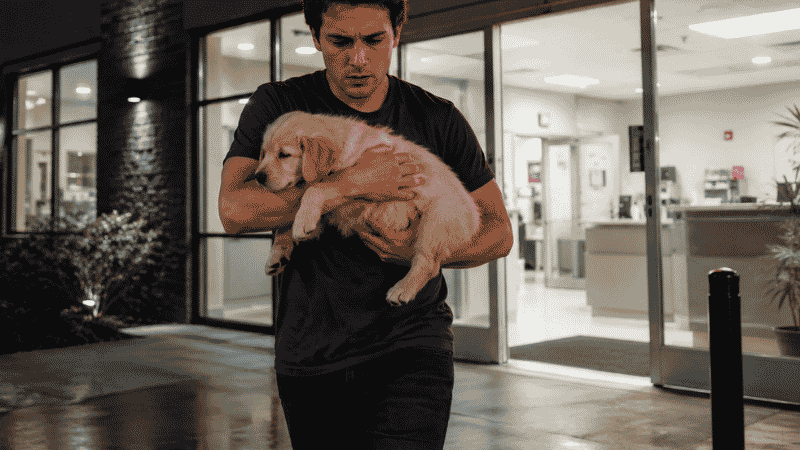
What to do: Go to an emergency veterinary clinic immediately. Do not wait for a morning appointment. Call ahead if possible so the clinic can prepare for your arrival.
What to Do at Home for Mild Puppy Diarrhea
If your puppy falls squarely in Level 1, here’s the practical protocol.
Step 1: The bland diet
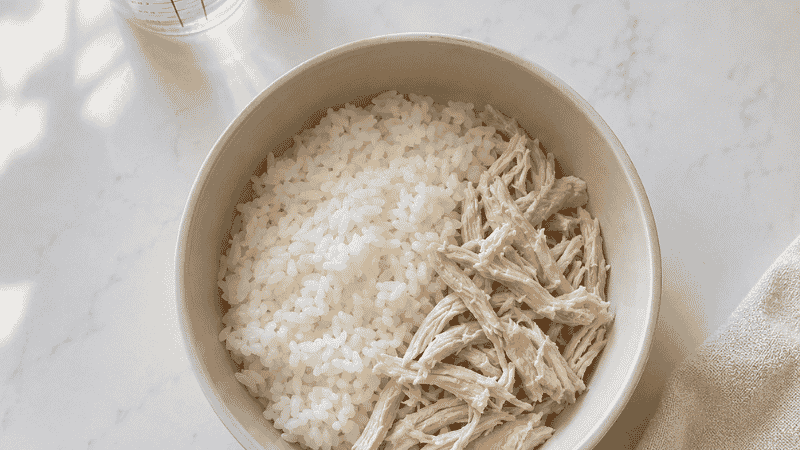
The goal of a bland diet is to rest the digestive system while providing easily processed nutrition. The classic combination is plain boiled chicken (no seasoning, no skin, no bones) and plain cooked white rice in a 1:3 ratio — one part chicken to three parts rice.
Offer small, frequent meals — three to four times per day — rather than normal portion sizes. This reduces the digestive workload at each meal while keeping blood sugar stable.
Continue the bland diet until stools have been normal for 24 hours, then gradually transition back to regular puppy food over 2 to 3 days by mixing increasing proportions of the kibble with the bland diet.
What not to do: Don’t fast your puppy for 24 hours as older advice sometimes suggested. Young puppies, particularly small breeds, are at risk of low blood sugar if they go without food for extended periods. Feed small amounts of bland food, not nothing.
Step 2: Monitor hydration
Diarrhea causes fluid loss. For a puppy, dehydration can become significant faster than most owners realize — particularly in very young or very small puppies.
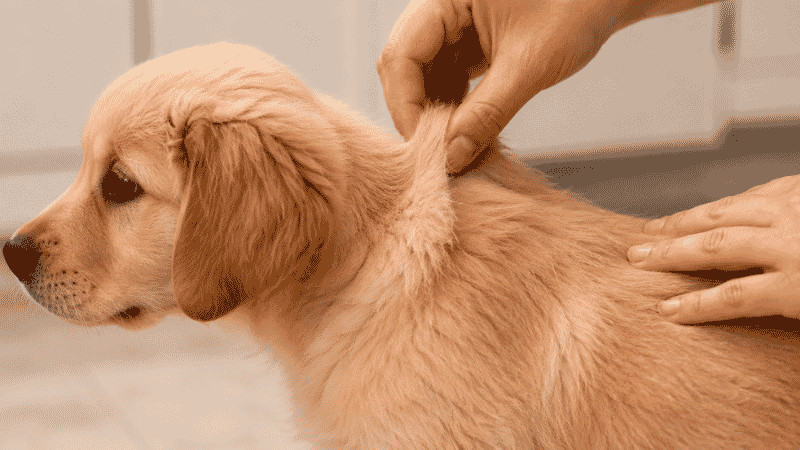
The pinch test: gently pinch the skin between your puppy’s shoulder blades and release. In a well-hydrated puppy, the skin springs back immediately. Skin that returns slowly or stays tented indicates dehydration.
Check the gums: they should be moist and pink, not dry or pale. Dry, tacky gums are an early sign of dehydration.
Ensure fresh water is always available. If your puppy isn’t drinking voluntarily, offer small amounts from your hand or a dropper. If they’re vomiting water back up immediately, this becomes a Level 2 or Level 3 situation.
Step 3: Keep a record
Note the time, frequency, and appearance of each episode. This sounds overly clinical, but having this information ready when you call your vet saves time and helps them make better recommendations. Note whether there’s any blood, mucus, or unusual color. Note your puppy’s energy level between episodes.
Step 4: Probiotics — A reasonable supplement
Veterinary-formulated probiotics can help restore the gut microbiome during and after a bout of diarrhea. Products specifically designed for dogs (not human probiotics) are the appropriate choice. They’re not a treatment for underlying causes, but they can support faster recovery in mild cases.
Ask your veterinarian which product they recommend — there’s significant variation in quality among commercially available options.
When Diarrhea in a New Puppy Is Actually Normal
This section is for the owners who just brought their puppy home last week and are now wondering if they did something wrong.
Loose to soft stools in the first 3 to 7 days after adoption are extremely common and often completely unrelated to illness. The combination of a new environment, new food, new smells, new people, and the stress of transition creates a perfect storm for temporary digestive upset.
If your brand-new puppy has soft stools but is otherwise alert, eating, drinking, and engaging with their environment — some anxiety and exploration notwithstanding — what you’re most likely seeing is a normal stress response. The digestive system is exquisitely sensitive to the gut-brain axis, and a puppy adjusting to the biggest change of their life will often show it in their stool first.
This doesn’t mean you do nothing. It means you implement the bland diet, monitor closely, and give it 48 hours. If the puppy is thriving in every other way and stools are improving, you’re almost certainly dealing with adjustment, not illness.
Parvo: The Specific Thing to Know
Because it’s the most serious outcome of puppy diarrhea, parvovirus deserves its own clear section.
Parvo is most dangerous for unvaccinated puppies under 6 months of age. The disease is caused by Canine Parvovirus Type 2 (CPV-2), which attacks rapidly dividing cells — primarily in the intestinal lining and bone marrow. The result is a gut that can no longer absorb nutrients or water, combined with a collapsed immune system.
The critical window: symptoms develop 3 to 7 days after exposure. By the time the obvious signs appear — profuse bloody diarrhea with a distinctive, extremely foul odor — the puppy is already in serious trouble. Earlier signs are subtle: a puppy who seems quieter than usual, skips a meal, or has one or two episodes of soft stool. In an unvaccinated puppy, these subtle early signs warrant a call to the vet without waiting to see if things get worse.
Treatment requires hospitalization with IV fluid support, anti-nausea medication, and intensive nursing care. It’s expensive — commonly $1,500 to $5,000 depending on severity and location — and not guaranteed even with treatment. Survival rates with aggressive care are approximately 85 to 90%.
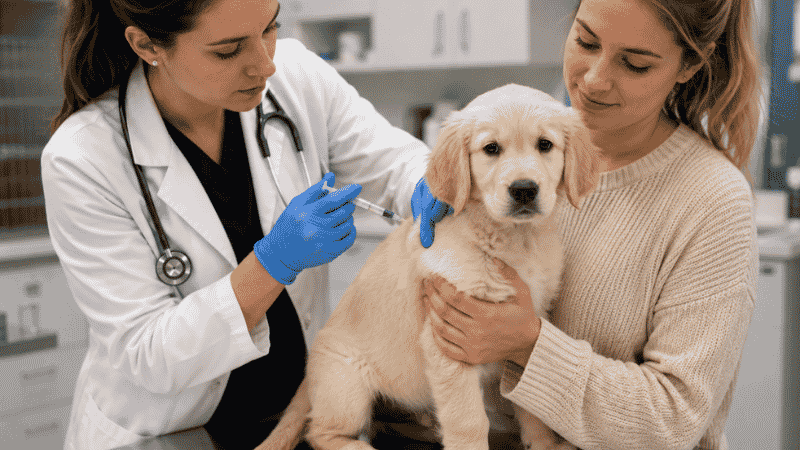
The vaccine is the only reliable protection. Completing the full DHPP series — doses at 8, 12, and 16 weeks — gives strong immunity. Until the series is complete, limiting your puppy’s exposure to unknown dogs and potentially contaminated environments (dog parks, pet store floors) meaningfully reduces risk.
FAQ: What New Puppy Owners Actually Search For
Is it normal for puppies to have diarrhea? Yes — puppy diarrhea is very common and most episodes are mild and self-resolving. The immature digestive system, dietary sensitivity, and high parasite susceptibility of puppies makes loose stools a frequent occurrence. Most cases are not serious, but the exceptions can be severe, which is why monitoring and knowing the warning signs matters.
How long can puppy diarrhea last before seeing a vet? For mild cases with no blood, no vomiting, and a puppy who is otherwise alert and hydrated: 24 to 48 hours on a bland diet is a reasonable observation period. Any case lasting longer than 48 hours without improvement warrants a vet call. Any case with blood, severe lethargy, or vomiting alongside diarrhea needs veterinary attention sooner.
Can I give my puppy Pepto-Bismol or Imodium for diarrhea? No. Pepto-Bismol contains salicylate (related to aspirin), which can be toxic to dogs. Imodium (loperamide) is not safe for puppies and should not be given without explicit veterinary guidance. The safest home management for mild puppy diarrhea is the bland diet protocol — plain boiled chicken and white rice — and close monitoring.
What should puppy diarrhea look like versus normal stool? Normal puppy stool is formed and slightly moist, typically brown in color, firm enough to hold its shape when picked up. Diarrhea ranges from soft (loses shape but not completely liquid), to watery, to the bright red bloody or very dark (digested blood) stools that signal serious illness. Mucus coating is common with intestinal inflammation and worth monitoring but not always an emergency.
My puppy had diarrhea once and is fine now — do I still need to worry? A single episode that passes quickly, with a puppy who is otherwise behaving normally, is usually nothing to worry about. Monitor for recurrence over the next 24 hours. If it was a one-off and your puppy is eating, drinking, and energetic, watch and wait. Bring a stool sample to your next scheduled vet visit so they can check for parasites.
Can puppy diarrhea cause dehydration? Yes, and relatively quickly — especially in very young or small breed puppies. Watch for sunken eyes, dry or tacky gums, reduced skin elasticity (the pinch test), and low energy. Any signs of dehydration in a puppy upgrade the situation from Level 1 to at minimum Level 2.
Does puppy diarrhea mean they have parvo? Not automatically. Most puppy diarrhea is not parvo. But if your puppy is unvaccinated or incompletely vaccinated, and is showing diarrhea along with lethargy, vomiting, or loss of appetite, parvo must be ruled out promptly. A rapid antigen test at the vet produces results in under 15 minutes and can either confirm or rule out the diagnosis.
The Bottom Line
Most cases of puppy diarrhea are manageable, temporary, and not a sign of serious illness. The key is knowing which situation you’re in — using the severity framework in this guide to make a calm, informed decision rather than panicking at every soft stool or dismissing symptoms that genuinely need attention.
The practical steps are simple: assess severity, implement bland diet if appropriate, monitor hydration, and watch for the specific signs that tell you it’s time to call the vet. In the vast majority of cases, a 24 to 48 hour observation period with supportive care is both safe and appropriate.
What matters most is knowing the difference between normal puppy digestive turbulence and the signs that something more serious is happening. That knowledge — not anxiety, not dismissal, but calm informed observation — is the most useful tool a new puppy owner can have.
What to Read Next
Understanding puppy diarrhea connects directly to your puppy’s broader health picture:
- Puppy Vaccination Schedule: Every Shot Your Puppy Needs — How vaccines protect against parvo and other serious diseases that cause diarrhea
- Parvo Symptoms in Puppies: Early Warning Signs and What to Do — The complete guide to recognizing and responding to parvovirus
- What to Feed a Puppy: The No-Confusion Food Guide — How to choose the right food and transition correctly to avoid diet-related digestive upset
- Puppy Development Stages: Week-by-Week Guide — How your puppy’s digestive system matures alongside their overall development
- New Puppy Checklist: Everything You Need Before Day One — Including the first vet appointment within week one that includes fecal testing for parasites
References
- American Veterinary Medical Association. (2026). Parvovirus. avma.org
- PetMD / Veterinary Review Team. (2023). Puppy Diarrhea. petmd.com
- Cornell University College of Veterinary Medicine. (2024). Canine Parvovirus. vet.cornell.edu
- Marks, S.L., Rankin, S.C., Byrne, B.A., & Weese, J.S. (2011). Enteropathogenic bacteria in dogs and cats: Diagnosis, epidemiology, treatment, and control. Journal of Veterinary Internal Medicine, 25(6), 1195–1208.
- Tupler, T., Levy, J.K., Sabshin, S.J., Tucker, S.J., Greiner, E.C., & Leutenegger, C.M. (2012). Enteropathogens identified in dogs entering a Florida animal shelter with normal feces or diarrhea. Journal of the American Veterinary Medical Association, 241(3), 338–343.