
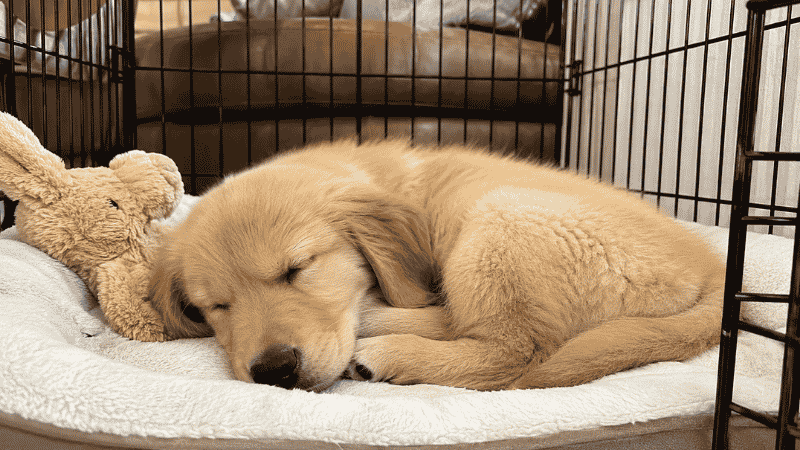
It’s day two with your new puppy. You spent the whole morning playing with them, introducing them to the house, taking approximately forty photos. And now they’re asleep. Again.
They’ve been asleep for the last two hours. Before that, they were asleep for ninety minutes. You’re starting to wonder if something is wrong.
Nothing is wrong. Your puppy is doing exactly what a puppy is supposed to do.
But here’s the thing most guides don’t tell you: the sleep isn’t just normal — it’s essential. And the amount your puppy sleeps, when they sleep, and how you manage their sleep schedule has a direct impact on their brain development, immune function, behavioral stability, and how quickly they learn everything you’re trying to teach them.
This guide covers all of it: how much sleep puppies need at every age, why they need so much, the counterintuitive truth about overtired puppies, how to build a sleep routine that works, and what to do when something genuinely seems off.
Key Takeaways
- Puppies need 18 to 20 hours of sleep per day between 8 and 16 weeks of age — not as one continuous block, but distributed across nighttime sleep and multiple daytime naps.
- Sleep is when brain development, muscle growth, immune function, and memory consolidation all happen. A puppy who isn’t sleeping enough isn’t just tired — they’re literally not developing properly.
- Overtired puppies don’t look tired. They look hyper, bitey, and out of control. If your puppy is suddenly frantic at 5pm, the answer is usually a nap — not more exercise.
- You should enforce nap times, not wait for your puppy to fall asleep on their own. Puppies don’t self-regulate sleep well, especially during the first few months.
- Sleep needs gradually decrease as your puppy grows: 18 to 20 hours at 8 weeks, 16 to 18 hours at 3 months, 14 to 16 hours at 4 months, and 12 to 14 hours by 6 months.
Why Puppies Sleep So Much — The Biology Behind It
Before getting into schedules and numbers, it helps to understand what’s actually happening while your puppy sleeps. Because it’s a lot.
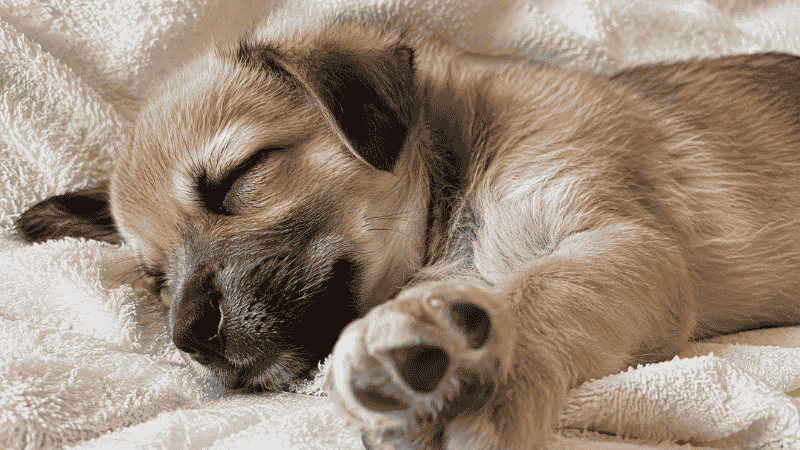
Brain development
A puppy’s brain at 8 weeks is extraordinarily active — forming new neural connections at a rate that won’t occur again in their lifetime. Every experience they have while awake — meeting a new person, learning a command, hearing a new sound — is being processed, organized, and stored during sleep.
Research on canine sleep suggests that dogs, like humans, experience both REM (rapid eye movement) sleep and non-REM sleep, and that memory consolidation primarily occurs during these cycles. This means the training session you did this afternoon? Your puppy is processing it tonight while they sleep. The socialization experience from this morning? Being encoded into long-term memory during that afternoon nap.
A puppy who doesn’t get adequate sleep isn’t just tired — they’re missing the biological window during which learning becomes permanent.
Physical growth
Growth hormone is released primarily during deep sleep. A puppy’s bones, muscles, cartilage, and connective tissue are all growing at a rate that won’t occur again — and most of that growth happens while they’re sleeping.
This is why veterinarians are so emphatic about not over-exercising young puppies: not only does high-impact exercise stress developing joints, but a puppy who is worn out from excessive exercise may paradoxically be depriving themselves of the deep, restorative sleep phases their growing body needs.
Immune system development
The immune system is largely built and maintained during sleep. For a young puppy whose immune system is still immature — still being shaped by vaccinations and early exposures — adequate sleep is directly tied to how effectively their body mounts and sustains immune responses.
A consistently sleep-deprived puppy has a measurably compromised immune function. This is one of the reasons that well-rested puppies tend to respond better to vaccinations and recover faster from minor illnesses.
How Much Do Puppies Sleep by Age
Sleep needs change significantly as your puppy develops. Here is what to expect at each stage.
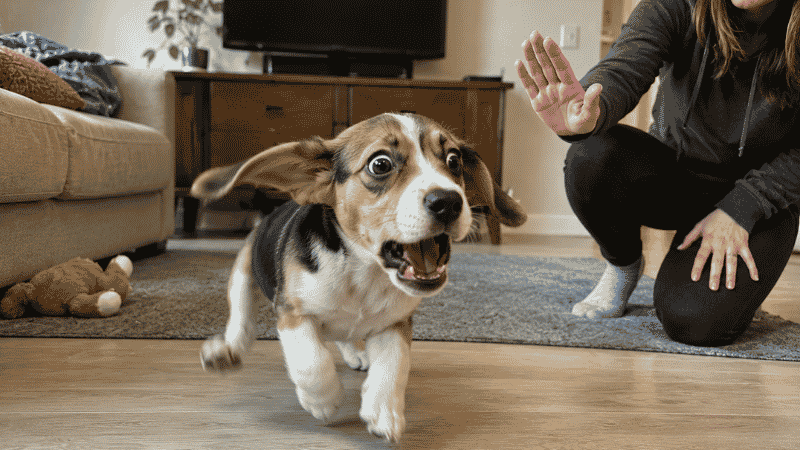
8 to 12 Weeks — 18 to 20 Hours Per Day
This is peak sleep territory. A healthy 8-week-old puppy sleeps somewhere between 18 and 20 hours out of every 24, which works out to roughly 4 to 6 hours of waking time distributed across the day in short bursts.
What this looks like in practice: your puppy wakes up, is active and engaged for 30 to 60 minutes, then needs to sleep again. This cycle repeats multiple times throughout the day, with a longer nighttime sleep block (typically 6 to 8 hours with one to two overnight potty breaks).
New owners frequently mistake this pattern for illness or unusual lethargy. It’s neither. It is the correct amount of sleep for this stage of development, and attempting to keep your puppy awake longer does not result in better nighttime sleep — it results in an overtired, dysregulated puppy who is harder to manage and harder to train.
12 to 16 Weeks — 16 to 18 Hours Per Day
By 3 months, puppies begin spending slightly more time awake. Play sessions can extend to 45 to 90 minutes before sleep is needed. The overnight sleep block typically lengthens, and many puppies begin managing 6 to 8 hours at night without a bathroom trip by 14 to 16 weeks.
The socialization window is still open during this period, which makes appropriate daytime activity genuinely important. But each activity period still needs to be followed by a rest period — the ratio of awake time to sleep time is still heavily weighted toward sleep.
4 to 6 Months — 14 to 16 Hours Per Day
The adolescent phase is beginning. Puppies at this age have more stamina, longer attention spans, and increased interest in the world. Two to three hours of activity before needing rest is more typical than the 30 to 60 minute windows of early puppyhood.
That said, 14 to 16 hours of sleep per day is still significantly more than most new owners expect. The nap schedule may shift from four or five daily naps to two or three, but the total sleep hours remain high.
This is also the stage where sleep disruptions from teething are most common — puppies in the 12 to 20 week teething window may sleep less soundly and wake more frequently as a result.
6 to 12 Months — 12 to 14 Hours Per Day
By 6 months, most medium-breed puppies are approaching adult sleep patterns — primarily overnight sleep with one to two daytime naps. Total daily sleep of 12 to 14 hours is typical.
Large and giant breeds continue to need more sleep during this period than smaller breeds, as they are still in active physical development. A 7-month-old Great Dane may genuinely need 14 to 16 hours of sleep daily — more than a 7-month-old Chihuahua who has largely completed their growth.
12 Months and Beyond — Adult Sleep Patterns
Most dogs settle into an adult pattern of 12 to 14 hours per day by 12 months, though this varies significantly by breed, energy level, and individual. Large breeds may not reach fully adult sleep patterns until 18 to 24 months.
It’s worth noting: adult dogs sleep more than most owners realize. The idea of a dog sleeping 8 hours at night and being active all day is not accurate for most breeds. Adult dogs sleep in multiple daily sessions and spend considerable time resting even when not technically asleep.
Puppy Sleep by Age — Quick Reference Chart
| Age | Daily Sleep Needed | Typical Awake Window |
|---|---|---|
| 8–12 weeks | 18–20 hours | 30–60 minutes |
| 12–16 weeks | 16–18 hours | 45–90 minutes |
| 4–6 months | 14–16 hours | 1.5–3 hours |
| 6–12 months | 12–14 hours | 3–5 hours |
| 12+ months | 12–14 hours | Adult patterns |
The Most Important Thing Most Guides Get Wrong: The Overtired Puppy Problem
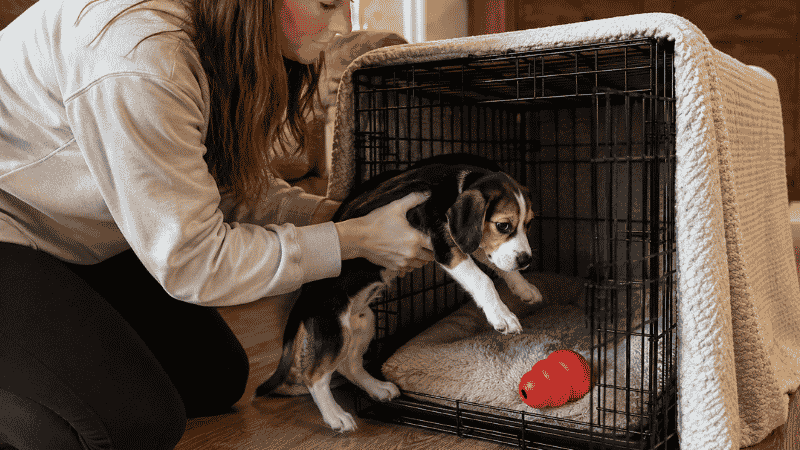
Here is the piece of information that most owners learn the hard way — usually at 5 or 6pm on day three, when their puppy suddenly transforms from a manageable creature into a frantic, biting, non-responsive chaos machine.
Overtired puppies don’t look tired. They look hyper.
When a puppy exceeds their capacity for sustained wakefulness, their body releases cortisol and adrenaline — stress hormones that produce hyperactivity, reduced impulse control, frantic movement, excessive biting, inability to focus, and general dysregulation. This is not a puppy who needs more exercise to burn off energy. This is a puppy whose nervous system is overwhelmed and who desperately needs sleep.
The most common response new owners have to a frantic, bitey puppy is to try to tire them out with more play. This is exactly the wrong move. More stimulation adds more fuel to an already overwhelmed nervous system. The correct response is to put the puppy in their kennel with a chew and walk away.
They will protest for a few minutes. Then they will fall asleep. When they wake up, they will be the manageable, trainable puppy you thought you lost.
Learning to recognize pre-overtired signals — before the meltdown begins — is one of the most valuable skills a new puppy owner can develop. Signs that a nap is needed:
- Yawning repeatedly in a non-tired context
- Mounting or humping (often a displacement behavior for stress/overstimulation)
- Biting escalating in intensity despite redirection
- Inability to settle or focus despite knowing a command
- Zoomies — frantic running in circles
- Turning away from interaction or hiding
If you see two or more of these signals, the awake window is ending. Nap time.
Why You Need to Enforce Nap Times (Not Wait for Them)
Most puppies will not simply fall asleep when they need to. The world is too interesting. You are too interesting. There is too much to see, smell, and chew.
This means that responsible sleep management requires you to actively enforce nap times — not waiting for the puppy to show extreme exhaustion, but proactively placing them in their crate or designated sleep space at regular intervals throughout the day.
This is not cruel. This is the puppy equivalent of putting a toddler down for a nap even when they insist they’re not tired. Their developing brains and bodies need the sleep whether they’re cooperating or not.
The practical rule: after every 1 to 2 hours of waking activity for a young puppy (under 12 weeks), the next activity is sleep. Not more play. Not training. Sleep.
This means your daily structure looks something like: wake → potty → play/explore → kennel nap → wake → potty → play/training → kennel nap → repeat.
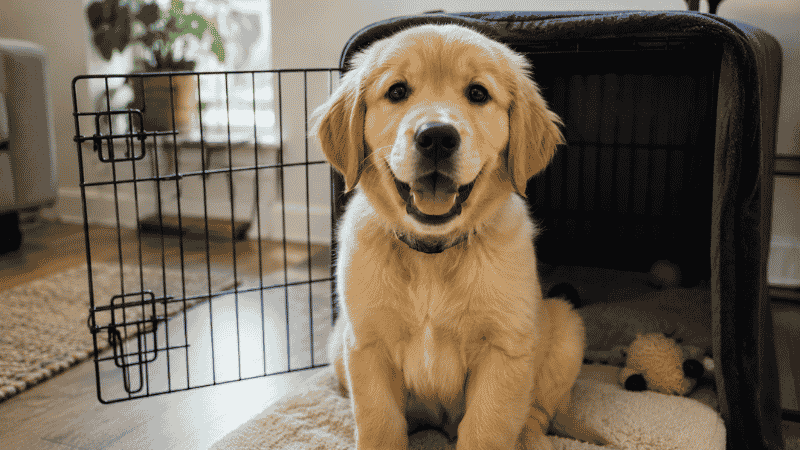
Building this rhythm from the first week home accomplishes two things simultaneously: it gives your puppy the sleep they need for healthy development, and it builds their comfort with the crate as a normal, predictable part of every day — which directly supports both potty training and separation tolerance.
Building a Puppy Sleep Schedule That Works
A consistent sleep schedule serves the same purpose for a puppy that it does for a human infant: it establishes biological rhythms that make falling asleep easier and waking predictable.
Here is a sample daily schedule for a puppy 8 to 12 weeks old, built around enforced nap times:
7:00 AM — Wake up, outside immediately for potty 7:15 AM — Breakfast 7:30 AM — Active time: play, brief training session, exploration 8:30 AM — Kennel nap (1.5 to 2 hours)
10:30 AM — Wake up, outside for potty 10:45 AM — Active time: play, socialization, exploration 12:00 PM — Kennel nap (1.5 to 2 hours)
2:00 PM — Wake up, outside for potty 2:15 PM — Active time: training, handling practice, play 3:30 PM — Kennel nap (1 to 1.5 hours)
5:00 PM — Wake up, outside for potty 5:15 PM — Active time: play, family interaction 6:00 PM — Dinner 6:20 PM — Outside for potty 6:30 PM — Calm activity: chewing, gentle interaction 7:30 PM — Kennel nap or settle
9:00 PM — Wake up if needed, outside for final potty 10:00 PM — Bedtime, kennel for the night
Overnight: Set an alarm for one or two potty breaks until your puppy can make it through the night (typically by 14 to 16 weeks).
Where Should Your Puppy Sleep?
At night
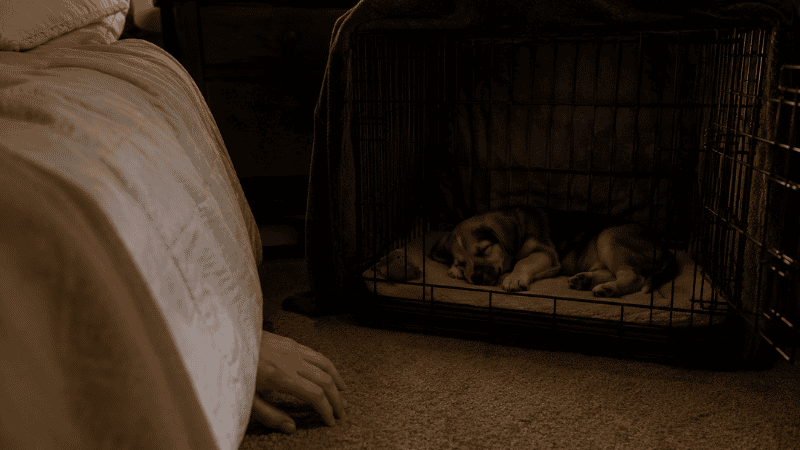
The single most effective intervention for first-night and first-week sleep distress is placing the kennel in or near your bedroom. Your breathing, your scent, and the ambient sounds of your presence tell your puppy that they are not alone — which dramatically reduces nighttime vocalization.
This does not commit you to a permanent arrangement. Once your puppy is sleeping through the night reliably, you can gradually move the kennel to wherever you want it to live long-term.
The crate/kennel is the strongly recommended sleeping location for the first year — not because it restricts your puppy unfairly, but because it provides safety, supports potty training, and gives your puppy a defined space they can learn to see as their own.
During the day
Day naps should happen in the same location as nighttime sleep when possible — consistency reinforces the association between the space and sleep. If a kennel isn’t practical for all naps, a quiet, confined area away from household activity works.
A common mistake: letting puppies nap on the sofa or in your lap during the day, then expecting them to be comfortable in their kennel at night. Each nap in the kennel is a deposit into the “kennel is safe and comfortable” account. Naps elsewhere are missed deposits.
Covering the crate
Covering three sides of a wire crate with a blanket creates a darker, more den-like environment that many puppies settle into faster. The darkness signals sleep, reduces visual stimulation, and creates a genuinely comfortable retreat. This is one of the simplest and most effective interventions for improving crate acceptance.
Common Sleep Problems — And What to Do
Crying at night
Night crying is normal, particularly in the first three to five nights. Your puppy has left their littermates — the only social environment they’ve ever known — and being alone is a genuinely new experience. The proximity of your bedroom (with the kennel near your bed) is the most effective single intervention.
What doesn’t help: removing the puppy from the crate every time they cry. This teaches that crying produces release from the crate, which intensifies and extends the crying behavior.
What does help: calm, quiet verbal reassurance without releasing the puppy. A hand resting near the crate. The kennel near your bed so your scent and sounds are present.
Waking too early
If your puppy is consistently waking before 6am, the most common causes are light (blackout curtains help significantly) and hunger. Ensure the last meal is timed appropriately — not too early — and consider whether the kennel location is getting early morning light.
Refusing to nap
A puppy who actively resists napping despite being clearly tired typically has a kennel association problem — the crate hasn’t been built as a positive space, and going into it feels like punishment rather than rest. Go back to basics: feed meals in the crate, provide high-value chews only in the crate, and make every kennel entry a positive event. Progress takes a few days of consistent effort.
Sleeping more than usual
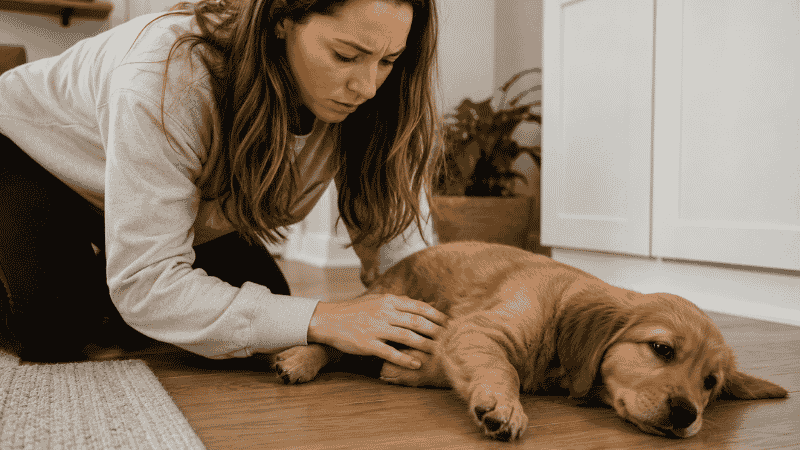
A sudden increase in sleep — particularly if accompanied by reduced appetite or lethargy when awake — warrants a call to your veterinarian. Most puppy sleep is normal and healthy, but a puppy who seems unusually flat or disengaged during waking hours should be assessed medically.
Is My Puppy Sleeping Too Much? A Practical Guide
This question is one of the most common in the first two weeks of puppy ownership. Here is a clear framework for answering it.
Almost certainly fine:
- Your puppy sleeps 18 to 20 hours per day but is energetic and engaged when awake
- Your puppy naps frequently but wakes alert and interested in food and play
- Your puppy sleeps more some days than others (activity level affects sleep need)
- Your puppy sleeps more after a vaccination appointment or a particularly stimulating outing
Worth monitoring:
- Your puppy seems lethargic during their awake periods, not just sleepy
- Appetite is reduced alongside increased sleep
- Sleep has suddenly increased significantly compared to their recent pattern
Call your vet:
- Your puppy cannot be woken easily, or is unresponsive when woken
- Sleep increase is accompanied by vomiting, diarrhea, or complete food refusal
- Your puppy seems weak, wobbly, or disoriented when awake
- You notice pale, white, or grey gums at any point
FAQ: What New Puppy Owners Actually Search For
How much do puppies sleep at 8 weeks? An 8-week-old puppy typically sleeps 18 to 20 hours per day. This is completely normal and necessary for healthy brain and body development. They will be awake in short bursts of 30 to 60 minutes between sleep periods.
Do puppies sleep through the night? Most puppies begin sleeping through the night — 6 to 8 hours without a bathroom break — by 14 to 16 weeks of age. Before that, expect one to two overnight potty breaks. Placing the kennel near your bedroom significantly reduces nighttime distress during this period.
Should I wake my puppy from a nap? Generally, no — let sleeping puppies sleep. The exception is if a nap extends beyond 3 to 4 hours and it’s disrupting overnight sleep, or if you need them awake to maintain the potty schedule. In those cases, gently waking them is fine.
Why is my puppy sleeping so much? Puppies sleep so much because their brains and bodies are developing at an extraordinary rate, and most of that development happens during sleep. If your puppy is energetic and engaged when awake, eating normally, and gaining weight appropriately — sleeping a lot is a sign of healthy development, not illness.
My puppy won’t sleep — what do I do? A puppy who resists sleep despite being tired is usually overtired and overstimulated — a paradox that makes them appear wired rather than sleepy. Place them in their kennel calmly with a chew or Kong, cover three sides of the crate, and walk away. They will protest briefly and then sleep.
How many naps does a puppy need per day? At 8 to 12 weeks, most puppies need 3 to 5 naps per day of 1 to 2 hours each. As they grow, this consolidates to 2 to 3 longer naps, eventually transitioning to one or two naps in adolescence and adulthood.
Is it okay for my puppy to sleep in bed with me? This is a personal choice with real tradeoffs. Co-sleeping can increase nighttime bonding but may create separation issues if your puppy becomes dependent on your presence to fall asleep. It also makes potty training harder, as you cannot monitor whether overnight accidents have occurred. A kennel near the bed provides proximity without the dependency.
The Bottom Line
Your puppy sleeping 18 to 20 hours a day is not a problem to solve. It is a biological imperative that is directly responsible for who they will become.
The puppies who grow into confident, well-trained, emotionally stable adult dogs are not the ones who had the most stimulation or the most exercise in early puppyhood. They’re the ones who had their sleep protected — by owners who enforced nap times before the meltdown, put them in their crate when they were done rather than pushing one more game, and understood that sleep was the foundation everything else was built on.
Build the schedule. Enforce the naps. Protect the sleep.
Everything else — the training, the socialization, the bonding — lands better when your puppy has had enough rest to actually absorb it.
What to Read Next
Sleep connects directly to your puppy’s development and daily routine:
- Puppy Development Stages: Week-by-Week Guide — How sleep needs change alongside physical and behavioral milestones from birth to adulthood
- What Puppy Kennel Do You Actually Need? — How to choose and set up the right kennel for sleep, and the 3-day positive introduction method
- How to Potty Train a Puppy: The Step-by-Step Guide — How to coordinate sleep schedule with potty breaks for faster house training
- Puppy Separation Anxiety: Signs, Causes and How to Fix It — When alone-time distress during naps signals something beyond normal adjustment
- New Puppy Checklist: Everything You Need Before Day One — Complete preparation guide including crate setup and the sleep environment to prepare before your puppy arrives
References
- American Kennel Club / Reisen, J. (2023). How to Make Sure Your Puppy Gets Enough Sleep. akc.org
- AKC GoodDog Helpline / Erb, H. (2022). Understanding Your Dog’s Sleeping Patterns. akcreunite.org
- Trupanion. (2026). How Much Do Puppies Sleep? A Guide by Age. trupanion.com
- Spot Pet Insurance / Alpeter, L. (2025). How Much Do Puppies Sleep? Puppy Sleep Needs by Age Explained. spotpet.com
- Clawmate. (2025). Puppy Sleep Schedule by Age: How Much Sleep Do Puppies Need? clawmate.com
- Overall, K.L. (2013). Manual of Clinical Behavioral Medicine for Dogs and Cats. Elsevier Mosby.