

Your puppy just turned one. You’re standing in the pet food aisle, staring at the wall of options, and you realize you have absolutely no idea whether it’s time to move on from puppy food — or whether they still need it.
You check the back of their current bag. It says “for puppies.” You check a few adult formulas. They say “for adult maintenance.” But your dog doesn’t feel like a puppy anymore, and they definitely don’t feel like a sedate adult dog either. They’re somewhere in between — still bouncy, still enthusiastic, but clearly not the tiny chaos machine you brought home at eight weeks.
Here’s the truth: the “when to switch puppy to adult food” question has no single universal answer, and the generic “switch at one year” advice that gets passed around is only correct for some dogs — and actively wrong for others. A Chihuahua who switches at 12 months has been on puppy food three months too long. A Great Dane who switches at 12 months has switched six months too early.
This guide gives you the actual answer for your specific dog: a clear timeline by breed size, a practical test to know whether your puppy’s body is ready, and a step-by-step transition plan that avoids the digestive chaos that catches so many owners off guard.
Key Takeaways
- The right switch time depends entirely on breed size — small breeds switch as early as 9 months, giant breeds may need puppy food until 24 months.
- The biological trigger for switching is reaching 80 to 90% of adult size, not a specific age.
- Too early is a real problem. Switching large breed dogs off puppy food before skeletal maturity increases the risk of joint disorders. Large-breed puppies need specially formulated puppy foods that contain less fat, calcium, and phosphorous to moderate their rate of growth, helping prevent skeletal diseases such as elbow and hip dysplasia that can result from growing too quickly.
- Too late is also a problem. Puppy food is calorie-dense by design — keeping small breeds on it past maturity contributes directly to obesity.
- Always transition gradually over 7 to 10 days. Abrupt switches are the most common cause of unnecessary digestive upset during food changes.
Why the Timing Actually Matters
Most owners treat the puppy-to-adult food switch as an administrative task — something you do at one year because that’s what the bag says, or because someone told you to. The reality is more consequential than that.
Puppy foods are higher in protein, fat, calcium, and phosphorous than adult dog foods. These macronutrients and minerals help support lean muscle and bone growth, and provide enough caloric density to enable the puppy to grow and perform basic bodily functions.
Adult food is formulated for maintenance, not growth. It has lower calorie density, lower protein levels, and different mineral ratios. When a puppy who is still actively growing eats adult food, they may not be getting enough of the specific nutrients their developing body needs.
The opposite problem is equally real. A dog who has reached full adult size but is still eating calorie-dense, high-protein puppy food is eating well beyond their maintenance needs. The result: excess weight that accumulates quietly over months, often without owners noticing because the gain is gradual.
Neither outcome is dramatic on day one. Both have consequences that compound over months and years. Getting the timing right is genuinely worth the attention.
When to Switch Puppy to Adult Food: The Timeline by Breed Size
Puppies will be ready for adult food when they reach about 80% of their adult size. Since breed size determines how long that growth takes, the switch timing varies dramatically.
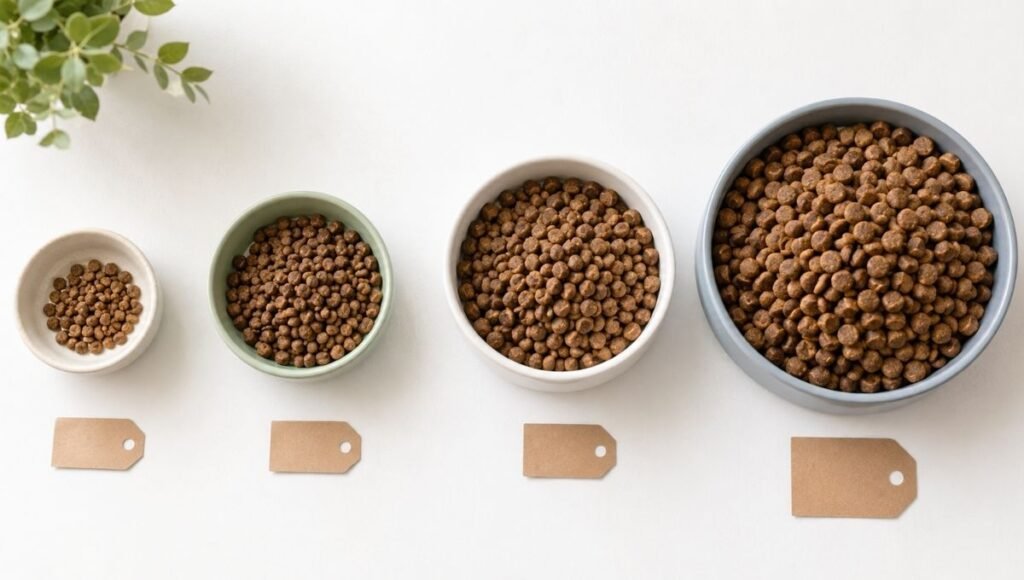
Small Breeds (Under 20 lbs Adult Weight)
Chihuahua, Yorkshire Terrier, Maltese, Toy Poodle, Shih Tzu, Pomeranian
Switch window: 9 to 12 months
Small-breed dogs that weigh 20 pounds or less when fully grown are usually ready to eat adult food at 9 to 12 months of age. Some very small toy breeds may reach full skeletal maturity as early as 7 to 8 months.
The urgency for small breeds: puppy food’s high calorie density becomes a liability very quickly once growth stops. Small dogs have small stomachs and fast metabolisms, but they don’t need the growth-phase caloric surplus once they’re adults. Because they stop growing so early, keeping them on high-calorie puppy food for too long can quickly lead to obesity.
If your small breed is approaching 9 months, start watching for the readiness signs (see next section). Most are ready well before their first birthday.
Medium Breeds (20 to 50 lbs Adult Weight)
Beagle, Cocker Spaniel, Border Collie, Australian Shepherd, Bulldog
Switch window: 12 to 14 months
Medium-breed dogs that weigh between 20 and 50 pounds as adults normally mature at 12 to 14 months of age. The first birthday is a reasonable landmark for beginning to assess readiness, though many medium breeds need the full 14 months.
Medium breeds are the most “average” in terms of timing, and the one-year guideline is closest to accurate for this group — though individual variation still matters. A Border Collie who has stopped growing at 11 months is ready earlier than a Bulldog who is still filling out at 13 months.
Large Breeds (50 to 90 lbs Adult Weight)
Labrador Retriever, Golden Retriever, German Shepherd, Boxer, Siberian Husky
Switch window: 12 to 18 months
This is where the “switch at one year” advice starts to fail. Large breed dogs continue growing significantly past 12 months — not just gaining weight, but developing skeletal structure, muscle mass, and joint architecture. Timing of a switch from puppy to adult dog food is crucial. You need to ensure that your puppy has the extra protein, fat, and minerals they need to support their growth and development and prevent various bone, joint, brain, and eye disorders.
Switching a large breed at 12 months — while they’re still actively developing — deprives them of the nutritional support their growing skeleton needs. Most large breeds are ready between 14 and 18 months, with 15 to 16 months being a common sweet spot.
Also critical for large breeds: they should have been on a large breed puppy formula throughout puppyhood, not a standard puppy food. The mineral balance in standard puppy food is calibrated for smaller breeds and can cause the very orthopedic problems you’re trying to prevent.
Giant Breeds (90+ lbs Adult Weight)
Great Dane, Saint Bernard, Newfoundland, Bernese Mountain Dog, Irish Wolfhound
Switch window: 18 to 24 months
Giant breed dogs have the longest developmental timeline of any group. Their massive skeletal structure takes nearly two full years to complete, and the nutritional needs during that growth phase are substantial. These dogs often need the specific mineral balance of puppy food for 18 to 24 months. While age is a great guideline, your dog’s body will also give you clues.
Switching a giant breed too early is the most consequential timing error in this entire guide. The joint disorders that result from premature food transitions in giant breeds — hip dysplasia, osteochondrosis, hypertrophic osteodystrophy — are expensive to treat, painful for the dog, and largely preventable with correct nutrition timing.
When in doubt with giant breeds, err on the side of waiting longer. An extra two months on puppy food won’t hurt. Switching six months too early might.
How to Tell If Your Puppy Is Actually Ready: The 3-Part Check
Age ranges give you a window. These three checks tell you whether your specific dog is ready within that window.
Check 1: The Growth Plateau Test
Has your puppy’s weight been stable for 4 to 6 weeks? Weigh your puppy on the same scale under similar conditions (before meals, at the same time of day) once a week for a month. If the weight is essentially unchanged — within a pound or two — their rapid growth phase has concluded.
If weight is still increasing noticeably week over week, they’re still actively growing and not yet ready for the switch.
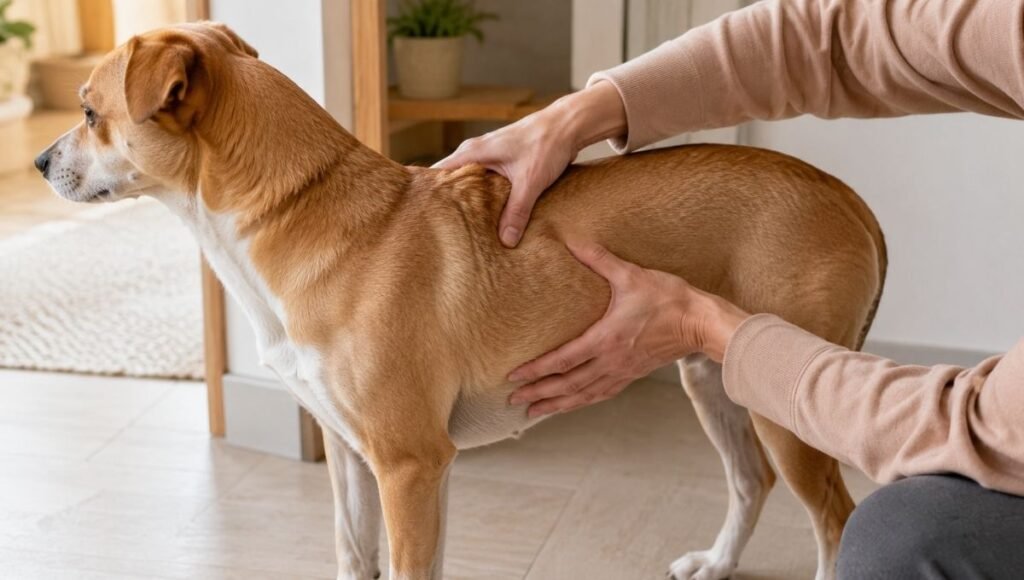
Check 2: The Rib and Waist Assessment
Run your hands firmly along your puppy’s ribcage. You should be able to feel individual ribs without significant pressure, but they shouldn’t be visible through the coat. Looking from above, there should be a visible waist — a narrowing behind the rib cage. From the side, the abdomen should tuck up slightly rather than hanging level with the chest.
A puppy should have a visible waist and ribs that are easy to feel but not sticking out. If your puppy meets this description and growth has plateaued, they’re physically ready.
This assessment also tells you something else: if your puppy is already carrying extra weight (ribs hard to feel, no visible waist), they may need the switch sooner rather than later — and potentially a slightly reduced portion of adult food to begin managing weight.
Check 3: The Breed Size Reference
Compare your puppy’s current weight to the typical adult weight range for their breed. Most breed standards include expected weight ranges for males and females. If your puppy is at or approaching the lower end of the adult weight range and growth has plateaued, they’re likely at 80 to 90% of adult size.
For mixed breeds, this is trickier. Your vet can provide a weight estimate based on your puppy’s current size, body structure, and any knowledge of parent breeds. If you’re unsure, this is worth a quick veterinary conversation — it takes less than five minutes and removes the guesswork.
The Special Case: Spaying and Neutering
Aside from breed size, you also need to consider whether they are spayed or neutered.
Spaying and neutering have a meaningful effect on metabolism — the procedure reduces the hormonal drivers of growth and activity, and most spayed/neutered dogs experience a metabolic slowdown in the months following surgery. This has two implications for food switching:
If your puppy is neutered before the typical switch age: The reduced metabolism means their caloric needs decrease. A puppy food that was appropriate before neutering may contribute to weight gain afterward even if the timing would otherwise be correct. Consider transitioning slightly earlier, and monitor weight carefully in the months following surgery.
If your puppy hasn’t been neutered yet: Wait until after the procedure is complete and your puppy has recovered before switching food. Adding a diet transition on top of surgical recovery creates unnecessary digestive and metabolic stress.
In both cases, discuss timing with your veterinarian at the spay/neuter appointment — they’ll have specific guidance based on your dog’s current condition and projected adult size.
How to Switch Puppy to Adult Food Without Digestive Drama
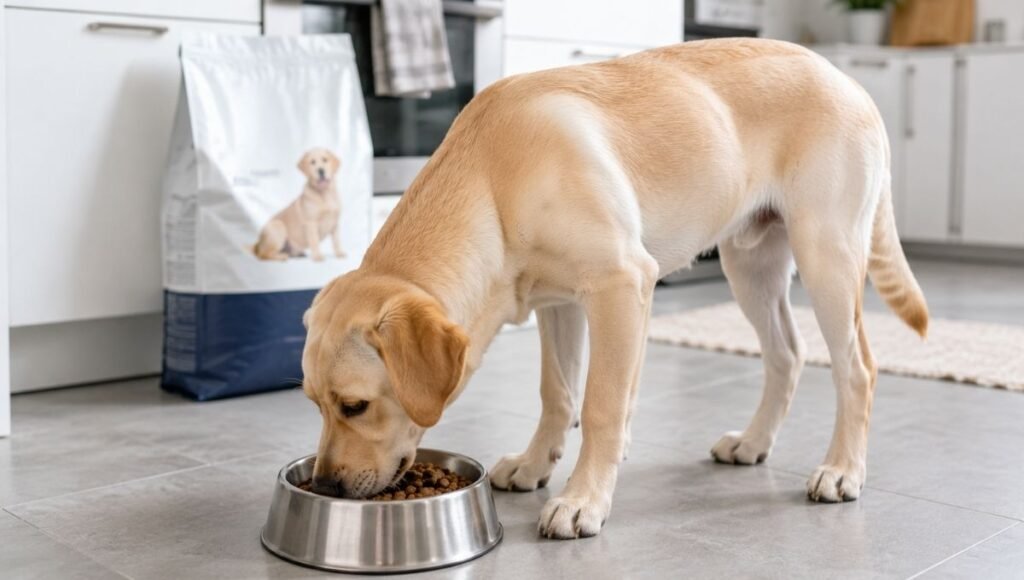
When it comes time to transition your puppy to adult food, change to the new food gradually over a period of 7 to 14 days to avoid digestive troubles.
The reason this matters: your dog’s gut microbiome — the community of bacteria that supports healthy digestion — is adapted to the specific composition of their current food. A sudden switch introduces new protein sources, different fat levels, and altered fiber content all at once. The result is often loose stools or vomiting, which owners then interpret as the new food being “wrong” for their dog, when in reality it’s just transition shock.
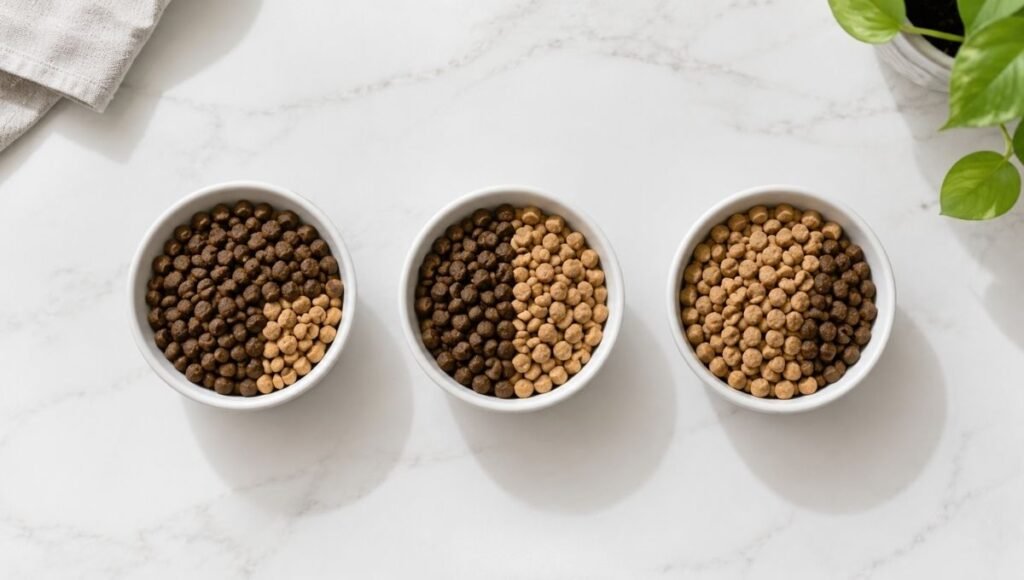
The 10-day transition schedule:
| Days | Old Puppy Food | New Adult Food |
|---|---|---|
| 1–3 | 75% | 25% |
| 4–6 | 50% | 50% |
| 7–9 | 25% | 75% |
| Day 10 | 0% | 100% |
Mix both foods thoroughly in the bowl — don’t serve them separately, as many dogs will eat around the food they find less interesting.
If you notice loose stools at any point, pause the progression and stay at the current ratio for an extra 2 to 3 days before continuing. This is normal and doesn’t mean the food is wrong — it means the transition pace needs to slow down.
What to watch during the transition:
Stool consistency is your primary feedback mechanism. Formed, firm stools indicate the transition is going well. Loose stools or diarrhea suggest slowing down. Vomiting or complete food refusal is less common but warrants a call to your veterinarian if it persists for more than 24 hours.
Adjusting Portion Size When You Switch
This is the step most owners miss, and it’s where the post-switch weight gain happens.
Adult food has a different calorie density than puppy food. The feeding chart amounts for adult food are not the same as the amounts you were feeding on puppy food — and you cannot simply serve the same cup quantity and assume the calories are equivalent.
When you begin feeding adult food at 100%, start at the lower end of the adult feeding chart’s recommended range for your dog’s current weight. Assess body condition monthly using the rib-and-waist assessment described above. Adjust portion size by 10% increments if needed.
For spayed and neutered dogs: most veterinary guidelines recommend feeding at approximately 20% fewer calories than the feeding chart suggests, as metabolic rate is lower following the procedure. Starting at 80% of the chart amount and adjusting from there is a sensible approach.
Signs You Switched Too Early
Sometimes despite best intentions, a switch happens before the body is fully ready. Watch for these signs in the months following the transition:
Slowing growth or lower-than-expected final size — rare, but if a large breed switched at 12 months continues growing for several more months, they may not have been getting adequate nutrition for that final growth phase.
Joint stiffness or movement issues in adolescence — in large and giant breeds, this can signal that developmental orthopedic needs weren’t fully supported. Discuss with your veterinarian if you notice lameness or reluctance to exercise in a young dog.
Persistent hunger — if your dog seems insatiable after switching to adult food at the same caloric intake, they may still have elevated growth-phase needs. Going back to puppy food temporarily, or consulting your vet about a high-protein adult formula, can help.
Signs You’ve Waited Too Long

Consistent weight gain without increased food intake — adult dogs eating puppy food are consuming a caloric surplus they don’t need. If your dog is gaining weight despite no change in the amount you’re feeding, the calorie-dense puppy formula may be contributing.
Body condition score drifting toward overweight — if ribs are becoming harder to feel and the waist definition is diminishing, the calorie density of puppy food may be the cause.
The good news: both of these are correctable quickly once you make the switch and adjust portions appropriately.
FAQ: What New Puppy Owners Actually Search For
When should I switch my puppy to adult food? Most dogs switch to adult food between 9 and 24 months of age, depending on their breed size. Small breeds mature faster and switch closer to 10 to 12 months, while giant breeds may need puppy nutrition for up to two years. The biological trigger is reaching 80 to 90% of adult size, not a specific calendar date.
Can I switch my puppy to adult food at 6 months? For most dogs, 6 months is too early to switch. Puppies are still undergoing significant bone and muscle development at this age and require the extra protein and minerals found in puppy-specific formulas. The only exception might be very small toy breeds who have visibly stopped growing, and even then, consulting your vet first is advisable.
What happens if I switch puppy food too early? For small and medium breeds, the primary risk is nutritional shortfall during final growth stages. For large and giant breeds, premature switching is associated with elevated risk of developmental orthopedic disease, including hip and elbow dysplasia. The specific mineral balance in large breed puppy food plays a protective role that adult food doesn’t replicate.
My dog has loose stools after switching food — what do I do? Slow the transition pace. If you’re on day 4 of the transition, go back to the day 1 ratio (75% old food, 25% new) for a few days, then progress more slowly. Loose stools during a food transition are common and not necessarily a sign that the food is wrong. If diarrhea persists beyond 48 hours or is accompanied by vomiting or lethargy, call your veterinarian.
Do I need to change portion size when I switch to adult food? Yes — this is critical and commonly overlooked. Adult food has different calorie density than puppy food. Start at the lower end of the adult food’s feeding chart recommendation and adjust based on body condition over the following month. For spayed/neutered dogs, start at approximately 20% below the chart recommendation.
Should I switch food before or after my puppy is spayed or neutered? After, ideally, once your puppy has fully recovered from the procedure. The surgical recovery period is not the right time to add a diet transition. If your puppy is approaching the typical switch age for their breed, discuss timing with your vet at the spay/neuter appointment.
Can I mix puppy food and adult food indefinitely? Not recommended as a long-term strategy. The nutritional profiles are formulated for specific life stages, and extended mixing means your dog isn’t getting the full benefit of either. The 7 to 10 day transition period is designed to support the gut microbiome adjustment — after that, completing the transition to adult food is the goal.
The Bottom Line

Switching from puppy food to adult food isn’t a one-size-fits-all moment — it’s a decision based on your specific dog’s size, developmental stage, and physical condition.
Small breeds switch earlier than you think. Giant breeds switch later than the bag suggests. And every dog in between has their own window based on when they actually stop growing, not when the calendar tells them to.
Use the three-part readiness check. Use the 10-day transition schedule. Watch portion sizes carefully after the switch. And if you have a large or giant breed and you’re genuinely unsure, your veterinarian can assess your dog’s body condition and give you a specific recommendation in under five minutes.
The switch is a milestone — a quiet acknowledgment that your puppy has become the adult dog they were always going to be. Get the timing right, and their nutritional foundation for the next decade is solid.
What to Read Next
Food transition connects directly to the rest of your puppy’s nutritional journey:
- What to Feed a Puppy: The No-Confusion Food Guide — How to choose the right puppy food, read labels, and understand what the AAFCO statement actually means
- How Much to Feed a Puppy: Complete Chart by Age and Weight — Portion sizing throughout puppyhood, including how to adjust as your puppy grows
- How Often to Feed a Puppy: Complete Schedule by Age — Meal frequency from 8 weeks through adulthood
- Puppy Development Stages: Week-by-Week Guide — How nutritional needs connect to physical and behavioral development milestones
- New Puppy Checklist: Everything You Need Before Day One — Complete preparation guide including feeding supplies and the first vet appointment
References
- PetMD / Hart, H., DVM. (2023). When Should You Switch From Puppy to Adult Dog Food? petmd.com
- IAMS. (2026). When to Switch Your Puppy to Adult Food. iams.com
- VCA Animal Hospitals / Veterinary Team. (2026). When to Switch Puppy to Adult Food. vcahospitals.com
- Association of American Feed Control Officials. (2026). AAFCO Dog Food Nutrient Profiles. aafco.org
- Larson, J., & Newman, S.J. (2020). Developmental Orthopedic Disease in Large Breed Dogs. Veterinary Clinics of North America: Small Animal Practice, 50(5), 1171–1183.